
SpaceX Can Launch the Chips. Lenders Still Can't Repossess Them.
Space data centers have mostly cleared the physics hurdle; the financing hurdle is legal, and lenders who cannot seize or resell an orbiting asset are reshaping who gets to build the orbital compute economy.
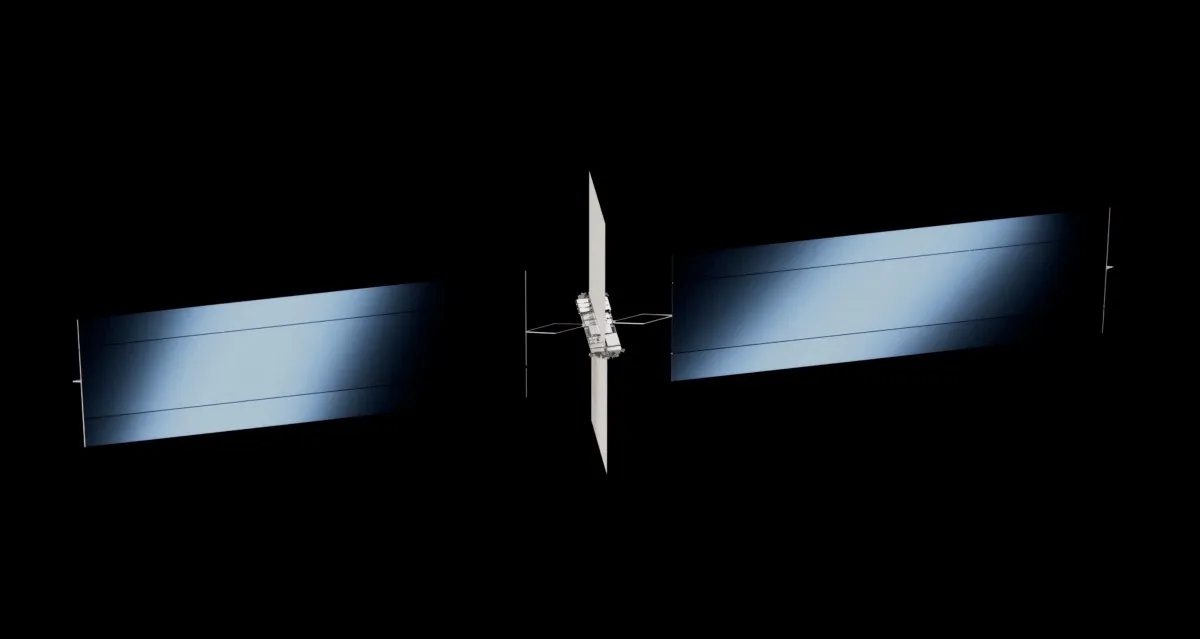
Chips can survive launch and the space environment, but the lenders asked to finance space data centers are balking because their collateral would sit in orbit, beyond any realistic repossession, with SpaceX doing the launching. That gap pushes orbital compute toward equity, sovereign and strategic capital instead of bank debt, and it will shape which projects actually get built.
Chips can survive the space environment. That is the claim the space data center crowd has largely won: silicon, properly hardened, can take the radiation, the thermal cycling and the vacuum and keep computing. The question that actually decides whether the industry gets built is the one TechCrunch puts right next to it: can the financing survive? Lenders, per that reporting, do not want SpaceX shooting their collateral into orbit. Read that again, because it is a stranger problem than it sounds. The company most responsible for making orbital compute physically possible is the same company that moves the borrower's security out of the lender's reach. For space data centers writ large, that is not a footnote. It is the constraint.
Secured lending rests on a remedy, not a promise. A bank will happily lend against a warehouse, a gas turbine or a rack of servers because if the borrower stops paying, someone can walk in, take the asset and sell it. That right of repossession is what turns metal into collateral, and it is what sets the interest rate. Orbit breaks the chain at the last link. There is no repo man for low Earth orbit, no auction house for a used compute payload, and no practical way to bring a depreciating asset back down on demand. A lender's worst case is not a discount on resale. It is a total loss it can watch from the ground in real time.
That legal gap is old and well documented. Under the 1967 Outer Space Treaty, the state that registers an object launched into space retains jurisdiction and control over it, which is a polite way of saying a creditor cannot simply send in the bailiffs. The machinery meant to fix this already exists on paper: the Cape Town Convention's Space Assets Protocol, adopted in 2012, was designed to create an international registry so lenders could perfect and enforce security interests in satellites and other space hardware. It has never entered into force. In practice, satellite financings have leaned instead on operator cash flows, export credit agency support, insurance and sponsor guarantees, all of which are claims on a company rather than on the thing in the sky.
Then there is the mismatch specific to compute. A communications satellite is typically built to operate for a decade or more, which gives a lender a long asset life to amortize against. The chips inside a space data center run on a much faster clock: compute silicon is usually obsolete in a handful of years, long before the spacecraft bus wears out. So the collateral loses value faster than the loan pays down, and refreshing it means paying for a new launch campaign rather than swapping a blade in a rack. Lenders underwrite the recoverable value of an asset in a default. For an orbiting cluster of aging processors, the honest answer is close to zero.
Regulation sharpens the picture further. US rules require satellites in low Earth orbit to be disposed of within roughly five years of the end of their mission, which means the collateral is, by design, scheduled to burn up. A lender holding a security interest in a spacecraft is therefore holding something regulators have already marked for destruction. Insurance can paper over part of this, and insurers have decades of experience pricing launch failure and on-orbit anomaly. But premiums are a running cost, not a substitute for collateral, and they rise with exactly the risks that make the asset hard to finance in the first place.
So who funds it? When bank debt steps back, equity steps forward. That points space data centers toward a capital stack assembled from venture and growth equity, sovereign and strategic money, customer prepayments, and vendors or launch providers willing to finance their own demand. That is not a disaster, but it has consequences. Equity is more expensive than debt, and it arrives with owners who want control, board seats and a say in strategy. It also favors whoever already has the balance sheet: the hyperscaler, the defense prime, the state-backed fund. The orbital compute economy may end up looking less like an open market and more like a handful of very well-capitalized landlords.
For the operators and CFOs building here, the practical lesson is that the financing problem is a design problem and a structuring problem at once. Ground-segment assets, customer contracts and take-or-pay offtake agreements are all things a lender can actually reach, and they can carry a deal the spacecraft alone cannot. Choosing a registration jurisdiction early, and lining up insurance and deorbit provisions before the first term sheet rather than after it, changes what a lender is willing to underwrite. None of that makes the physics easier. It simply recognizes where the bottleneck now sits: the chips already survive space, and until the paperwork catches up to them, that is the least impressive part of the story.
This story's Key Insights and Take-aways are locked.
Create a free account to unlock Executive Actions for one credit.
Register to UnlockAlways free for Executives Club members. Join the Club
More in Technology

Anthropic mathematician claims Claude helped crack the Riemann hypothesis
If the proof holds, AI has toppled math's most famous open problem; if it does not, it is a case study in announcing breakthroughs before anyone verifies them.

AI's $4 Trillion Wipeout Erases Nasdaq's Gains for the Year
A brutal week took roughly $4 trillion off the AI sector and left the Nasdaq flat for the year, and the damage ran the full length of the supply chain.

Anthropic mathematician says AI proved the Riemann hypothesis. Verification will take time.
A single unverified claim from inside Anthropic now sits against more than 160 years of open mathematics, and the gap between asserting a proof and surviving peer review is the entire story.