
SpaceX’s record-thin 0.75% IPO fee still leaves Goldman poised to win big
The gross spread is a bargain. The soft dollars and share-allocation power are where Goldman’s real upside hides.

SpaceX is set for a landmark IPO with a gross spread of 0.75% or less, matching a record-thin fee previously seen when the U.S. Treasury took General Motors public in late 2010. Fortune reports that Goldman Sachs, as lead-left underwriter, is positioned to capture disproportionate upside through both fees and the “soft dollars” linked to IPO underpricing.
SpaceX is aiming for a blockbuster IPO with a gross spread of just 0.75% or less, a percentage Jay Ritter of the University of Florida says ties the lowest conventional IPO percentage on record. For most public debuts that raise “tens of billions,” underwriting banks typically get 1% to 3%. In other words, the rocket and AI king is paying unusually little upfront for the banking machinery.
But here is why this is not a feel-good story for Wall Street clients. Ritter’s framework is that the real economics of IPOs often show up after the first trade, when underpricing kicks in and “soft dollars” flow back to the banks that are best positioned to allocate shares. In the GM example from late 2010, Ritter says Goldman Sachs matched a 0.75% fee offered by W.R. Hambrecht & Co. to win the deal. Now, Goldman appears again in the driver’s seat, this time as the lead-left underwriter for SpaceX.
Let’s make the money math concrete, using the numbers SpaceX disclosed in its latest, amended S-1. SpaceX plans to sell 555.6 million shares at $135 in the underwriting, for $75 billion, and it is aiming for a $1.75 trillion valuation, “biggest on record.” Banks also get an over-allotment allocation of 15% if investor demand proves strong once trading begins. That implies the full raise could run to 639 million shares and just over $86 billion.
Even with the low-sounding gross spread, the total fee dollars are enormous. Fortune reports that the firms distributing the shares will split approximately $646 million in fees. That figure would be more than twice the roughly $300 million Alibaba paid in its 2014 U.S. IPO, which previously held the largest spot. It would also dwarf the less than $100 million Uber paid and the around $200 million cost for Meta.
So yes, this looks like a win for the issuer versus typical 1% to 3% ranges. But in IPOs, “who gets what allocation” can matter as much as the headline spread. Ritter notes that even the banks that only distribute a few percentage points can still do well because the deal is so large and the fee split is proportional: if your allocation is 5%, you receive 5% of the roughly $646 million.
The roster is broad, because distributing shares requires a syndicate. Fortune names Goldman Sachs and Morgan Stanley among major underwriters, plus boutique banks Allen & Co. and William Blair, and universal foreign banks including Societe Generale, Santander, and Mizuho. SpaceX’s prospectus also lists 23 firms as part of the distribution effort. Ritter expects smaller banks may mainly get batches for their retail clients, but they still participate in the overall pie.
Where the leverage concentrates is the lead-left underwriter designation and the “lead left” authority over allocation decisions. Fortune explains that SpaceX shows Goldman Sachs at the top left on the front page of the IPO prospectus, with the four other joint book-running managers in the same top row: Morgan Stanley, B of A Securities, Citigroup, and J.P. Morgan. Ritter says the joint book-runners tend to receive more than average shares because they dominate the institutional part of the offering, which then boosts their fee take. However, they have little say in which specific hedge funds and brokers, insurers, and endowments receive shares.
That selection power is “mainly Goldman's purview.” Ritter puts it bluntly: “Goldman Sachs will allocate the vast majority of the shares on its own authority as lead-left underwriter.” That is a subtle but huge difference from a purely mechanical fee-for-services story. The allocation decision drives who owns the shares at the outset, which in turn can shape trading dynamics and the first-day pop that underwriters, through the system, can monetize.
And IPOs are, by design, prone to popping. Fortune reports that Ritter points out Wall Street’s practice of underpricing IPOs. The result, per Ritter: around three-quarters of offerings end day one above the underwriting price, and the average increase is 19%. SpaceX’s amended S-1 also includes a 5% reservation of shares for purchase at the offer price by employees, friends and family of executives, and people the company does business with. Ritter says that suggests Elon Musk would want a “pop,” reasoning that if employees immediately lose money, they are not happy.
That employee grouping also has a practical advantage. They are exempt from lock-up provisions that apply to pre-IPO shareholders including Musk and others in the C-suite, and they can sell as soon as hours after the opening bell rings on Nasdaq. If there is a first-day jump, those early buyers can crystallize gains quickly.
Now to the piece that turns “fees” into “windfall”: soft dollars. Fortune explains that in exchange for underpriced shares and immediate risk-free gains for portfolio holders, hedge funds and other money managers return part of the bounty to the lead underwriter in what's called “soft dollars.” Soft dollars are the amount that the commissions exceed the actual cost of executing trades, so they can be multiple times the execution costs. Ritter says about 30% of first-day profits typically boomerang back to the bankers in soft dollars, with most of the bounty going to the lead left underwriter.
Here is the hypothetical that makes the stakes painfully clear. Suppose SpaceX shares finish the first day $27 or 20% higher, at $162. In one session, the owners allocated by underwriters, chiefly by Goldman, would book profits of $17.3 billion, creating a record amount “left on the table.” The previous record was $8 billion from Alibaba’s 2014 offering. If roughly one-third of that typical first-day bump flows back to underwriters in soft dollars, a 20% pop could hand Wall Street over $5 billion, with Goldman as the biggest beneficiary because it decided who got the shares.
Fortune ties this to the near-term revenue pipeline too. Ritter expects “two tremendous quarters in sales and trading for Goldman and maybe Morgan Stanley and others” helped by SpaceX, plus profits from coming OpenAI and Anthropic IPOs. The key idea for operators, boards, and investors: the underpricing and allocation mechanics do not just affect the first day. They steer who captures value, how underwriting relationships deepen, and how capital markets teams position for the next high-profile listing.
Even if the gross spread is record-thin, the economics can still tilt heavily toward the bank with allocation control and the ability to monetize IPO underpricing through soft dollars. For anyone reading the headlines about low fees, the real question is not what the prospectus says, it is who gets to choose the initial owners of the shares, and what that choice can do to day-one outcomes.
This story's Key Insights and Take-aways are locked.
Create a free account to unlock Executive Actions for one credit.
Register to UnlockAlways free for Executives Club members. Join the Club
More in Business
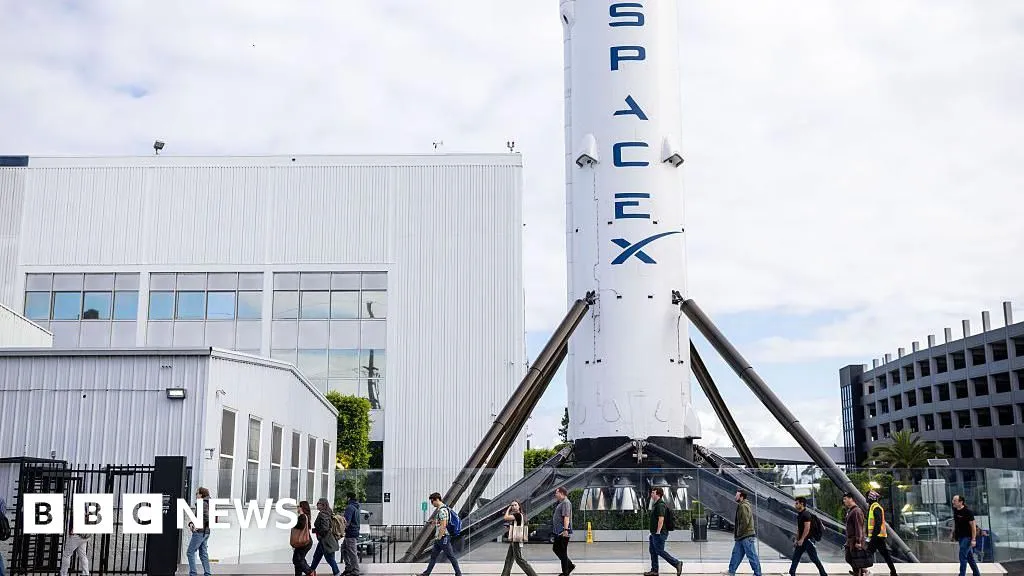
SpaceX raises $75bn in public sale, setting up Elon Musk’s record stock-market debut
A $75 billion public raise before a record listing turns SpaceX’s next chapter into a trillionaire test for markets.
SpaceX sets IPO at $135, selling 555M+ shares and launching trading Friday
Elon Musk's rocket company prices its world-scale IPO at $135 per share, moving into public markets immediately.
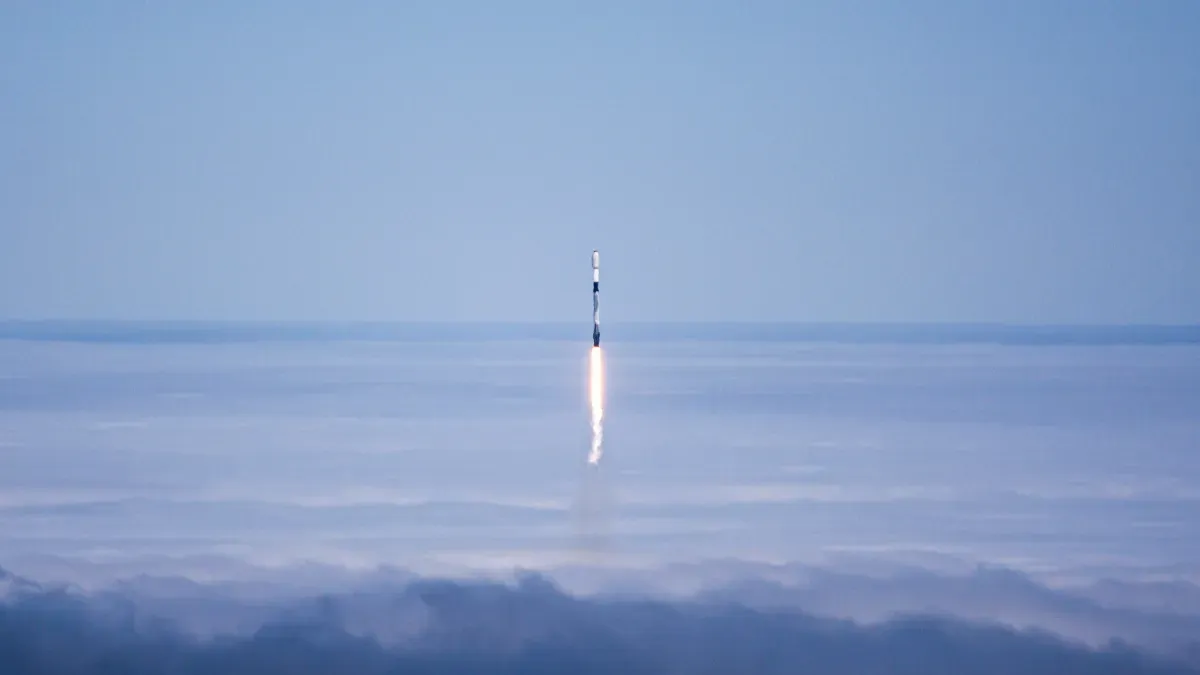
SpaceX prices IPO at $135 per share, starting the biggest listing ever
SpaceX moves from rumor to price point: $135 per share signals a new bar for private-market exits and public-market gravity.