
Starbucks China's Comeback Isn't Coffee. It's a $24 Handbag
A 158-yuan faux-leather bag went viral on Chinese social media, handing the chain a cultural win its discounting could not buy, and a live test of whether brand heat still converts into cups.
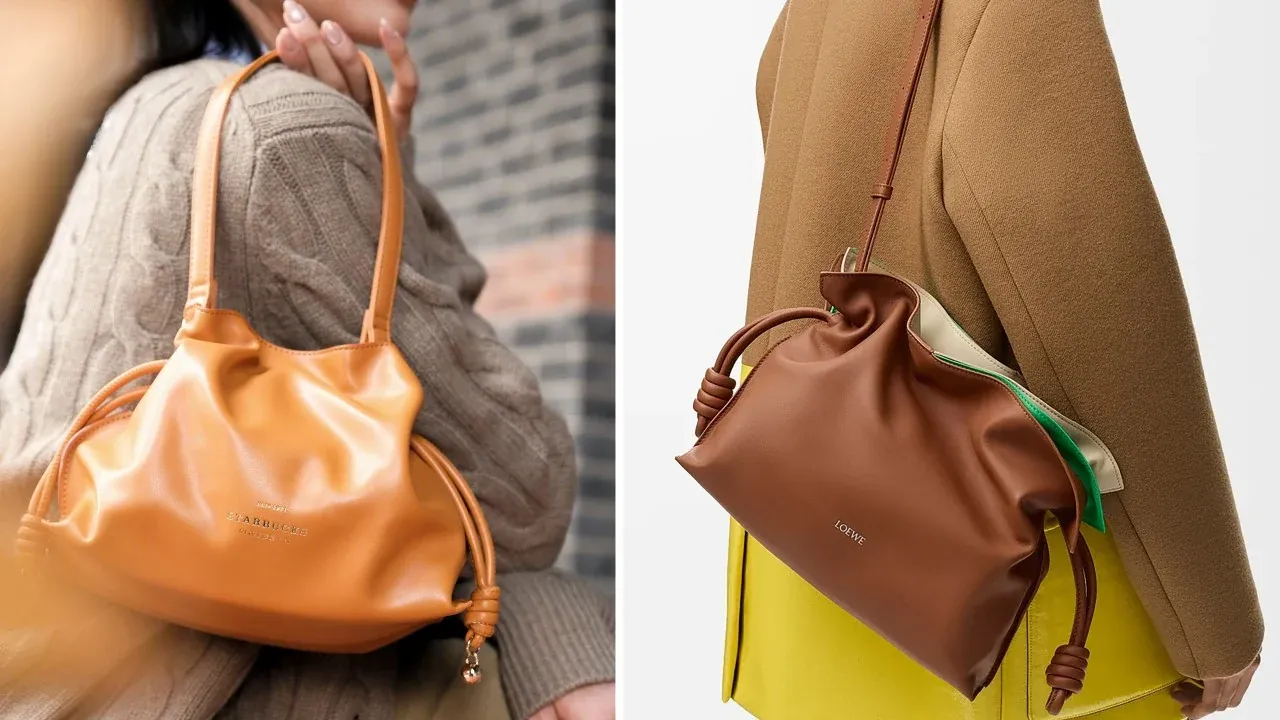
Starbucks China launched a 158 yuan (US$24) faux-leather handbag on the Chinese mainland last month and it has since gone viral, with shoppers reporting fierce competition to secure one before it sells out. The result reframes how a premium brand under sustained price attack can buy attention at full margin, and it puts pressure on rivals whose only real lever is discounting.
Starbucks China's most talked-about product right now is not a drink. It is a caramel-coloured faux-leather handbag, priced at 158 yuan (US$24), launched on the Chinese mainland last month and now viral across the country's social platforms. Shoppers have reported fierce competition to secure one before stock runs out, according to SCMP, and many consumers have pointed to a striking resemblance to another product, a detail that tends to travel fast on Chinese social feeds. That is the whole trick: a coffee chain with a coffee problem just sold a bag.
The math behind the hype is what should stop operators cold. Starbucks China has faced intense competition in the coffee market for years, a fight in which discounting, delivery promotions and relentless store expansion have compressed the premium the brand once charged for a cup. A US$24 accessory, by contrast, costs the company a fraction of what a beverage campaign does and travels further. It is wearable advertising: photographed, posted and argued over at no media cost. The chain did not win this round with espresso. It won with merchandise.
For context, China's coffee market has become one of the most crowded and least forgiving in the world. Domestic challengers, most visibly Luckin Coffee and Cotti Coffee, have historically built share through low prices, app-first ordering and store counts that scale faster than any premium brand can match. That dynamic has pushed Starbucks China into a defensive posture built on coupons, smaller-format stores and delivery partnerships. When your core product is being repriced by rivals every quarter, the fastest route back to cultural relevance is not another latte cut. It is selling something your rivals have no price for.
The mechanics of the bag are textbook, and worth studying closely. It is cheap enough to be an impulse purchase and scarce enough to function as a status object, and both conditions are typically required for a product to go viral. Consumers raced to secure one before stock ran out, and the resulting scarcity did the marketing. The resemblance angle adds a second layer: the item borrows the visual language of something far more expensive while sitting at a mass-market price, which is exactly the arbitrage that makes an object shareable. None of that is coffee. All of it is brand equity being converted into foot traffic.
Second-order effects usually arrive fast after a viral drop. Historically, limited-run merchandise from global brands in China has spawned resale listings at multiples of the original price, a wave of lookalike goods from third-party sellers, and a short window in which the brand must decide whether scarcity is a feature or a supply-chain failure. Each outcome carries a cost. Resale premiums invite counterfeiters, counterfeits dilute the design, and a restock can turn a status object into a commodity overnight. Starbucks will have to choose which side of that trade it wants, and the choice is not reversible once made.
The competitive read is uncomfortable for the pure price players. Luckin and Cotti can undercut a latte, but they cannot easily undercut a handbag that consumers want to be photographed holding. Merchandising has become a genuine customer-acquisition channel in China: it recruits buyers who might never have chosen the brand on taste alone, and it gives the chain something to sell at full margin while the beverage business is being discounted toward zero. For any consumer-facing company fighting a price war, that is the playbook worth copying. The bag is just the delivery vehicle.
There is a caveat, and boards should hold onto it. A viral accessory proves attention, not loyalty. The handbag may pull new customers into stores, or it may simply hand existing fans a cheap badge while the coffee business keeps ceding share to cheaper rivals. The source reporting does not quantify how much the bag lifted store traffic or drink sales, and until the chain shows that conversion, this is a marketing win rather than a turnaround. Cultural relevance is a leading indicator. It is not a P&L line.
The stakes for peers are straightforward. Premium brands in China are being squeezed from below on price and from the side by tea chains and lifestyle labels that treat merchandise as a core product line rather than a seasonal giveaway. The companies that hold their pricing power will be the ones that can sell identity, not just caffeine, and can do it without permanently training customers to wait for a coupon. Starbucks just proved it can still do that with a bag. The open question, and the one every competitor will be watching, is whether the same instinct shows up in the cup.
This story's Key Insights and Take-aways are locked.
Create a free account to unlock Executive Actions for one credit.
Register to UnlockAlways free for Executives Club members. Join the Club
More in Business

S&P 500 Enters Correction, Down 10% From Its High on AI Worries
The index's slide past the 10 percent line is a symbolic verdict on investor mood, and the AI trade that powered the rally is now the thing testing it.

Dow and S&P 500 enter correction as Nasdaq logs worst week since 2020
All 11 S&P 500 sectors fell more than 1% in the same week for the first time since April 2025, a breadth signal that matters more than any single index level.

Chip stocks lose $2.3 trillion in a week, worst run in 25 years
A $2.3 trillion weekly wipeout in semiconductors is forcing every board with an AI story to ask whether it owns a thesis or just a crowded trade.