
Strike on Zelensky's hometown kills 2 as drones set Russian ship ablaze
A missile attack wounds 60 in the Ukrainian president's birthplace while a drone strike on a Kaliningrad-bound cargo ship in the Gulf of Finland pushes Finland's prime minister to warn the war is spilling over.
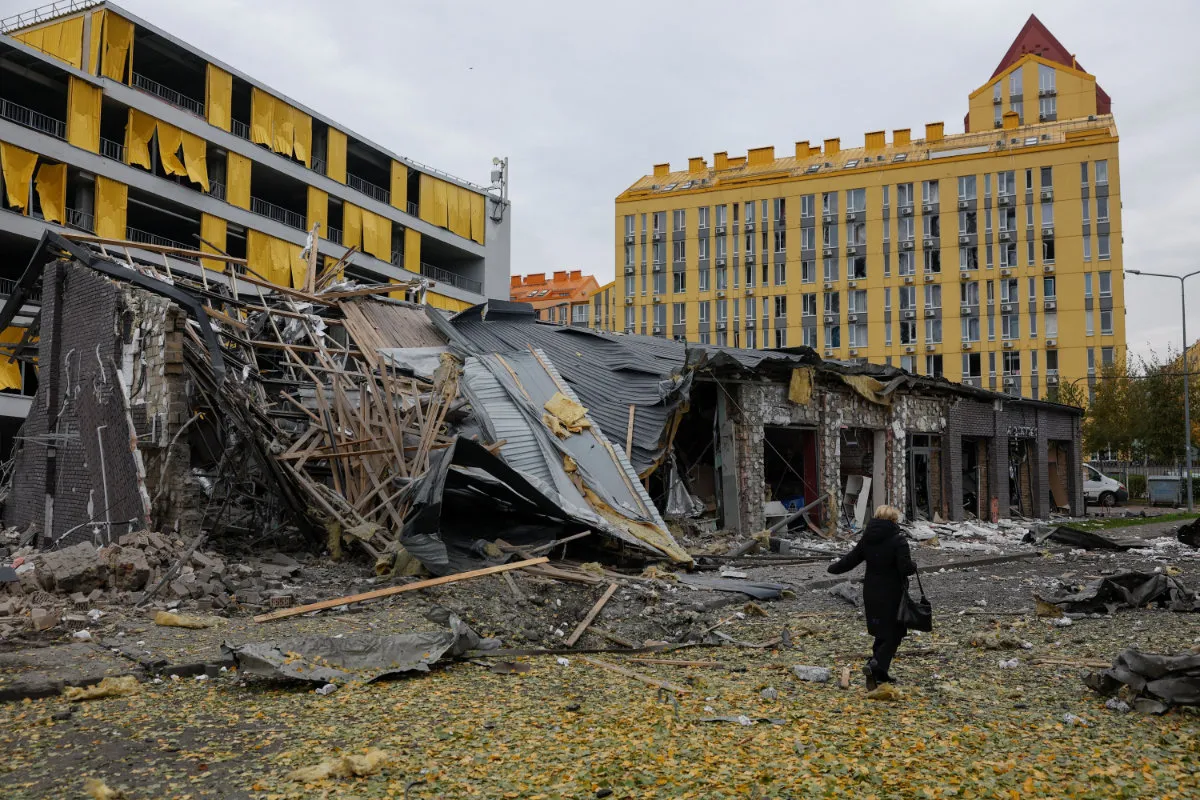
A Russian strike on the center of Kryvyi Rih, Ukrainian President Volodymyr Zelensky's hometown, killed two people and wounded 60, local officials said Saturday, while a Russian cargo ship bound for Kaliningrad caught fire in the Gulf of Finland after being hit by drones, per Finnish and Russian officials. The twin events put Baltic shipping lanes, NATO's northern flank, and war-risk exposure back at the top of the board agenda.
A Russian strike hit the center of Kryvyi Rih, the hometown of Ukrainian President Volodymyr Zelensky, killing two people and wounding 60 others, local officials said Saturday. Officials' accounts of the attack also referenced a 7-year-old boy and a 20-year-old woman. The strike landed in the heart of a city in central Ukraine, far from any front line, which is exactly what makes it a signal rather than a footnote: this was an attack on a place, not a position.
Hours apart, a Russian cargo ship bound for Kaliningrad caught fire in the Gulf of Finland after it was hit by drones, according to Finnish and Russian officials. The crew was being evacuated, and Finland's prime minister warned that the war was spilling over into the region. Two events, one weekend, and one question now sitting in front of every NATO capital and every risk desk in the Baltic: how far does this go?
Start with Kryvyi Rih. It is a large industrial city in central Ukraine, historically anchored by iron ore mining and steelmaking, and it is where Zelensky grew up. That combination, a heavy industrial base and the president's personal biography, has made it a recurring target over the course of the war. Striking a president's hometown carries an obvious psychological charge, but the operational logic is blunter: industrial cities are where Ukraine's economy and its war effort physically meet. When officials report two dead and 60 wounded in a city center, the damage is measured in both lives and the confidence of the people who live and work there.
Now the Gulf of Finland. It is the eastern arm of the Baltic Sea, bordered by Finland, Estonia and Russia, and it funnels an enormous share of the region's commercial traffic toward St. Petersburg. Kaliningrad, the ship's destination, is a Russian exclave wedged between Poland and Lithuania, reachable by sea and by rail through NATO territory. A cargo vessel catching fire after a drone strike in those waters is not a distant battlefield image. It is an event inside the economic corridor that Finland, Estonia, Latvia, Lithuania and Poland all depend on.
That is why the Finnish prime minister's language matters more than the tonnage of one ship. Saying the war is spilling over into the region is a political act. Finland joined NATO in 2023, abandoning decades of military non-alignment, and its accession roughly doubled the alliance's land border with Russia. Since then, Baltic states have repeatedly raised alarms about undersea cables, pipelines and the so-called shadow fleet of aging tankers moving Russian oil. The source does not say the two Saturday events are connected, and no official has claimed they are. But the geography does the arguing for them.
For operators, the second-order effects arrive faster than the diplomatic ones. War-risk insurance for vessels transiting the Baltic is typically repriced on incidents, not on declarations, and a burning cargo ship is an incident. Shipping lines that already reroute around risk will re-examine schedules. Energy infrastructure in the Gulf, including subsea links, sits in the same waters. Defense ministries that spent the past two years rebuilding ammunition stockpiles will be asked again whether northern Europe needs more of everything: mine countermeasures, drone detection, port security, and the legal frameworks to respond to attacks that fall short of armed assault on NATO territory.
The uncomfortable part is the ambiguity. A drone hitting a cargo ship is not obviously an act of war against Finland or Estonia. A missile hitting a Ukrainian city center is, by now, tragically routine. The gap between those two facts is where escalation lives, because it forces NATO members to decide in real time what threshold has been crossed and by whom. Article 5 does not answer that question on its own. People do, under time pressure, with incomplete information.
What to watch next is narrow and concrete. Finnish and Russian officials have both confirmed the fire and the evacuation, so the immediate questions are the ship's cargo, the extent of the damage, and whether the crew got out safely. On the Ukrainian side, the casualty count from Kryvyi Rih will be revised, as it always is. Beyond that, watch whether Finland's spillover warning is echoed by other Baltic governments, and whether it translates into new maritime patrols, new insurance terms, or new NATO force posture in the north.
For executives, the takeaway is not that the Baltic is closed. It is that the Baltic is now a place where a single drone can move insurance markets, shipping schedules and alliance politics in the same news cycle. Supply chains that touch northern Europe, energy portfolios with Baltic exposure, and any board with assets in the region should be asking a simple question this week: if this happened again next month, what would we do differently? The answer is cheaper to write down now than to improvise later.
This story's Key Insights and Take-aways are locked.
Create a free account to unlock Executive Actions for one credit.
Register to UnlockAlways free for Executives Club members. Join the Club
More in Politics

Thirteen Freshman Senators Just Became Chuck Schumer's Toughest Test
Democrats' newest class votes on Senate leadership before being sworn in, and the choice between Chuck Schumer and challenger Chris Van Hollen will set how hard the party fights.

Democrats Nominate Jeffries for Speaker, Teeing Up a Historic First
House Democrats' leadership slate delivers two firsts in one week, and it lands as Trump's security agenda heads to the Sunday shows.

Musk Says He Is 'Not MAGA' as Trump's Coalition Heads for the Exit
The most notable defection yet lands after a midterm thumping, and the question for every operator is how fast the next names follow.