

Summer Walker Countersues Interscope for $20M Over Her Social Content
The R&B star says her 2017 deal covered her music, not her posts, and she wants the label's YouTube revenue back.
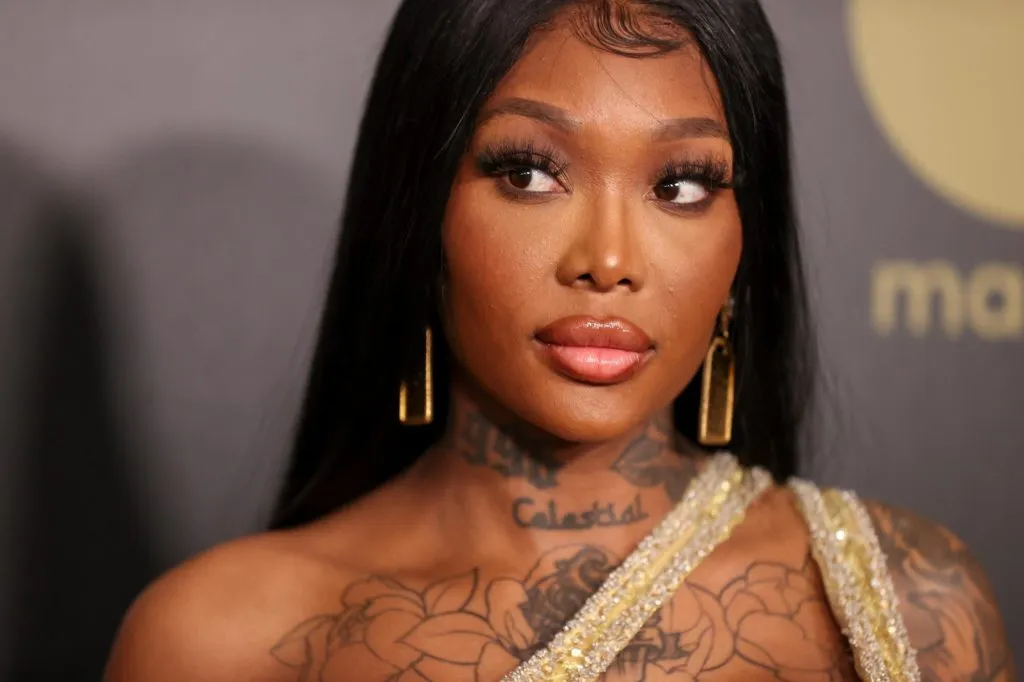
Summer Walker filed a Los Angeles countersuit against Interscope Records and parent Universal Music Group, alleging the label wrongly monetized her intellectual property and citing $20 million in damages, a month after Interscope sued her for $50 million. The case tests whether a legacy record contract can claim an artist's social and digital content, a question every label, creator, and talent lawyer now has to price in.
Summer Walker is not just fighting to leave Interscope Records. She is fighting to keep the content she posts while she is there.
The R&B singer filed a countersuit in Los Angeles court on Wednesday (Nov. 18), reviewed by Billboard, accusing the Universal Music Group label of wrongly monetizing her intellectual property. The filing adds breach of contract and unjust enrichment claims and cites a damages figure of $20 million, though Walker says the true total would have to be established through evidence discovery. It lands roughly a month after Interscope sued her for $50 million over the terms of their 2017 record deal.
The argument at the center of the countersuit is narrow and, for the music business, enormous. Walker's deal, she says, granted Interscope the right to exploit and promote her music. Nothing more. She alleges she personally retains ownership of all her other IP, including the content she posts to social media. According to the countersuit, Interscope has been reposting that digital content on YouTube and other platforms, and making money from it.
"UMG's limited contractual rights to exploit basic works and use Cross-Complainant's name, likeness and identity for authorized promotional purposes did not confer unrestricted ownership or monetization rights in the excluded digital assets," the filing reads. It continues: "As a direct and proximate result of the foregoing conduct, UMG wrongfully obtained and retained revenues and other economic benefits attributable to property in which Cross-Complainant possessed superior ownership or possessory rights."
Walker wants those profits handed over. Keith Moten, a lawyer for Walker, told Billboard that his client has "always approached her relationship with Interscope in good faith" and "remains appreciative of the role the label has played in her career." But, he added, "that relationship does not give Interscope unlimited rights over her creative work or the revenues generated from it." Moten framed the cross-complaint as a demand for "accountability for the alleged unauthorized exploitation of her creative assets and the revenues generated from it." A representative for Interscope did not immediately return a request for comment.
The countersuit also formalizes Walker's position that the 2017 deal is void under California's seven-year limit on personal services contracts. That statute, Section 2855, lets individuals cut off any personal contract that runs longer than seven years. The music industry carved out an exception in 1987: labels can sue for damages if an artist exits after seven years but before finishing all their album commitments. Interscope did exactly that in October, arguing Walker owes $50 million because she has delivered only three projects against a five-album commitment: her 2019 debut Over It, which hit No. 2 on the Billboard 200; the 2021 chart-topper Still Over It; and Finally Over It, another No. 2 set, in 2025.
That is the money fight. The IP fight is the one with longer legs. For two decades, labels have treated an artist's promotional footprint, the posts, the clips, the behind-the-scenes footage, as part of the marketing machine that a record deal buys. Walker's claim draws a line: the music is licensed, the persona and the posts are not. If a court agrees, every label that has quietly folded creator content into its promotional rights without paying separately for it faces a repricing problem. And every artist who has watched their own clips generate ad revenue on a label-run channel gets a template for a claim.
Walker is running this play on two fronts. She also has a separate ongoing legal action against LVRN, the label and management firm she jointly signed to with Interscope in 2017. In that case, she claims the firm skimmed money from her music, touring and merch. LVRN is countersuing over alleged unpaid commissions and royalties, and has publicly characterized her as "stubbornly litigious." Interscope, for its part, has not commented on the new countersuit.
For executives watching, the mechanics matter more than the melodrama. Discovery in a case like this means pulling years of platform revenue data, internal marketing decisions, and the paper trail showing who authorized what. That is expensive, slow, and revealing, which is precisely why these disputes so often end in a settlement that restructures the deal rather than a verdict that rewrites the law. The $20 million figure is a negotiating anchor as much as a damages estimate.
The bigger signal is contractual. Record deals written in 2017, when artists were already building audiences on their own channels, may not have anticipated how much money flows through those channels today. Walker's countersuit argues that ambiguity cuts in her favor. Labels will read it as a warning to tighten the language. Artists and their lawyers will read it as a reason to leave it loose. Either way, the next generation of music contracts will say something explicit about who owns the posts, and that is a change Walker forced.
This story's Key Insights and Take-aways are locked.
Create a free account to unlock Executive Actions for one credit.
Register to UnlockAlways free for Executives Club members. Join the Club
More in Business

S&P 500 Enters Correction, Down 10% From Its High on AI Worries
The index's slide past the 10 percent line is a symbolic verdict on investor mood, and the AI trade that powered the rally is now the thing testing it.

Dow and S&P 500 enter correction as Nasdaq logs worst week since 2020
All 11 S&P 500 sectors fell more than 1% in the same week for the first time since April 2025, a breadth signal that matters more than any single index level.

Chip stocks lose $2.3 trillion in a week, worst run in 25 years
A $2.3 trillion weekly wipeout in semiconductors is forcing every board with an AI story to ask whether it owns a thesis or just a crowded trade.