
Taiwan's Drone Boom: 34x Export Surge Masks Critical Supply Chain Failures
While exports soar to $277 million, systemic coordination gaps and false component certifications threaten the island's global ambitions.
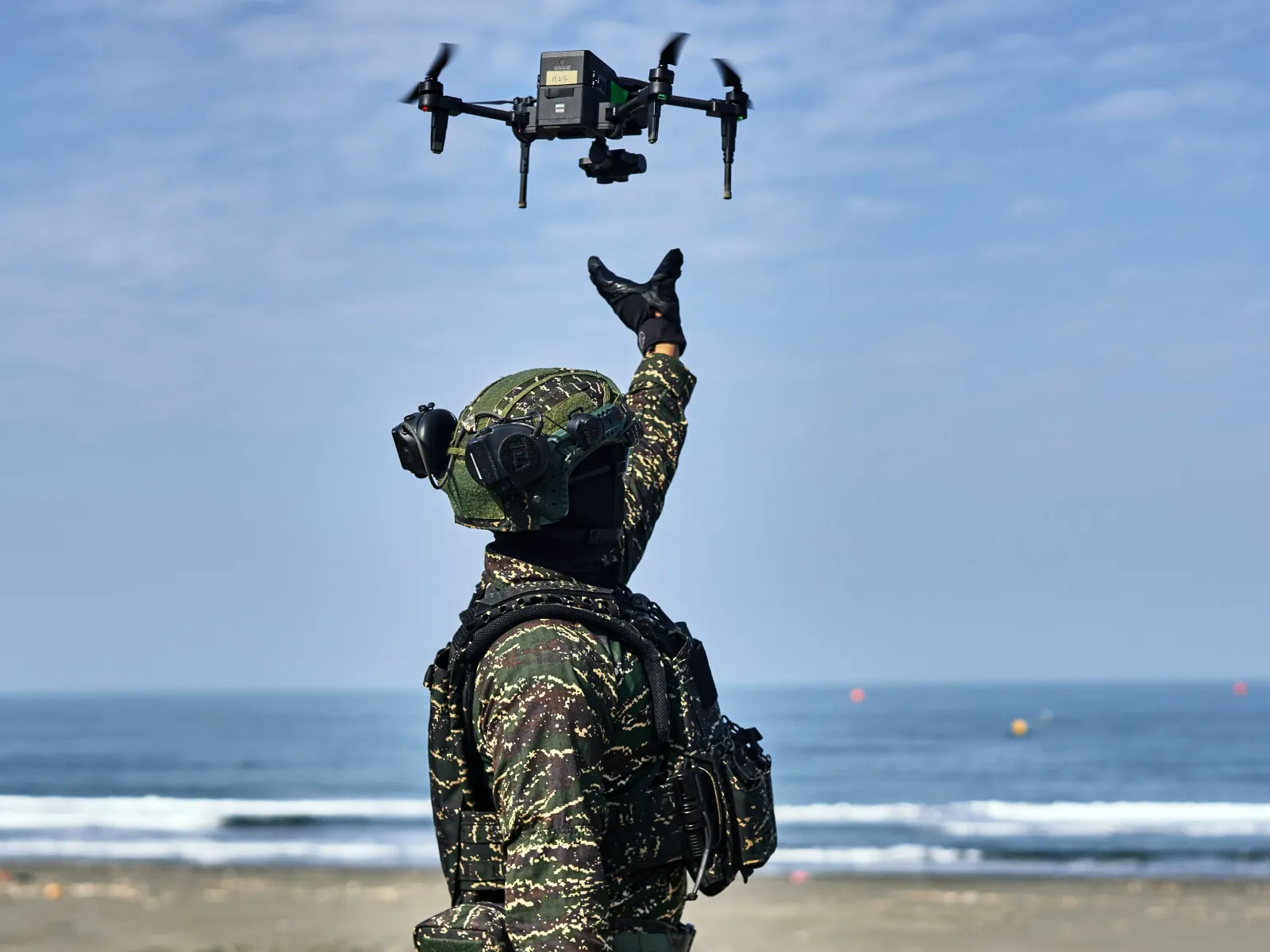
Taiwan's drone industry is experiencing a massive export surge, with sales jumping 34 times from 2024 to 2025, yet internal experts warn that weak supply chain management and regulatory failures could jeopardize its global standing. This volatility demands immediate attention from operators and investors assessing the long-term viability of 'China-free' tech.
The narrative around Taiwan's drone sector is currently one of explosive growth. On paper, the island is rapidly positioning itself as a global powerhouse in uncrewed systems, driven by a national commitment to producing China-free technology. Export sales have surged dramatically, jumping 34 times from 3,500 units in 2024 to 122,726 units in 2025. By June 2026, those exports reached 191,373 units, and customs data shows the sector has generated $277 million in sales in the first eight months of 2026 alone. This momentum is fueled by a global search for reliable alternatives to Chinese electronics, and Taiwan is betting it can deliver that supply chain.
However, beneath the impressive export figures lies a dizzyingly messy operational reality. While the numbers look stellar, industry observers and think tank researchers caution that this surge may not reflect a stable, long-term market demand. Many of the systems being shipped, particularly to Poland and the Czech Republic, appear to be smaller, lower-cost FPV drones. Cathy Fang, deputy director of the national security program at the Research Institute for Democracy, Society and Emerging Technology (DSET), suggests that Taiwan may be primarily feeding the enormous, temporary demand driven by the wars in Ukraine and the Middle East, rather than securing a sustainable, long-term market share. Furthermore, the sales trajectory is not linear; after peaking at roughly 136,000 units in the first quarter of 2026, exports dropped to 55,300 units in the second quarter, signaling volatility at a critical time for growth.
Despite the external market uncertainties, the internal industry has seen a massive influx of players. The government-backed TEDIBOA reports that roughly 290 firms on the island are now involved in building drones or supplying manufacturers. Companies like Carbon-Based Technology (CBT), which has supplied the Taiwanese military for nearly two decades, initially struggled to find affordable parts like electric motors and batteries when the global demand spiked in 2022 and 2023. This scarcity has since eased, allowing CBT to report revenue of $3.2 million in the first nine months of 2026, even while remaining unprofitable. This rapid expansion demonstrates that Taiwan possesses a large pool of small and medium-sized businesses capable of pivoting quickly to new opportunities, such as Hocheng Corp, a ceramics company that is now developing external armor for vehicles and moving into drone composites.
But this influx of new manufacturers has exposed deep structural flaws in how the industry operates. Phoebe Pham, a researcher at INDSR and former RAND analyst, points out that Taiwan lacks a centralized mechanism for manufacturers to understand military requirements or connect directly with government buyers.
This story's Key Insights and Take-aways are locked.
Create a free account to unlock Executive Actions for one credit.
Register to UnlockAlways free for Executives Club members. Join the Club
More in Business

S&P 500 Enters Correction, Down 10% From Its High on AI Worries
The index's slide past the 10 percent line is a symbolic verdict on investor mood, and the AI trade that powered the rally is now the thing testing it.

Dow and S&P 500 enter correction as Nasdaq logs worst week since 2020
All 11 S&P 500 sectors fell more than 1% in the same week for the first time since April 2025, a breadth signal that matters more than any single index level.

Chip stocks lose $2.3 trillion in a week, worst run in 25 years
A $2.3 trillion weekly wipeout in semiconductors is forcing every board with an AI story to ask whether it owns a thesis or just a crowded trade.