
Target's 76% profit jump: $301M came from Trump tariff refunds
Nearly a fifth of Target's operating profit arrived from a Supreme Court tariff ruling rather than the sales floor, yet the core business still beat last year.
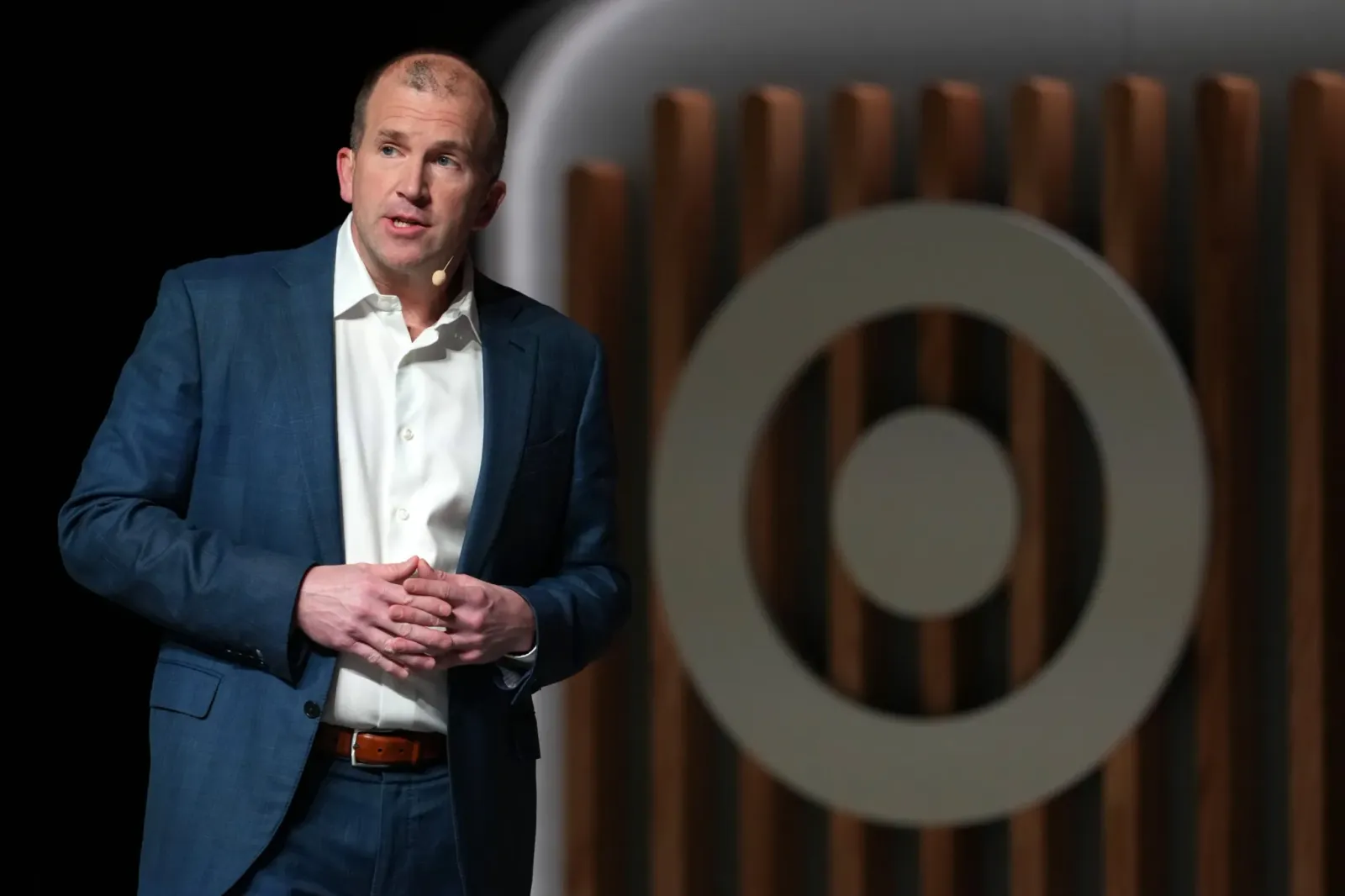
Target, under CEO Michael Fiddelke, reported $1.67 billion in Q3 operating profit, up 76%, with $301 million of it coming from refunds of President Donald Trump's tariffs after a February Supreme Court ruling. For retail CFOs and boards, the quarter is a case study in separating one-time legal windfalls from the traffic and category gains that actually signal a durable recovery.
Target just posted its best-looking profit number in years, and nearly a fifth of it did not come from a single shopper. The retailer reported $1.67 billion in operating profit for the three months ending Oct. 31, up 76% from a year earlier and well ahead of the $1.3 billion analysts expected. Merchandise sales hit $26.45 billion, up 6.9% and above the $25.96 billion consensus. The wrinkle sits in the Q3 filing released Nov. 18: $301 million of that operating profit came from refunds of President Donald Trump's tariffs, roughly 18% of the total.
The refunds trace back to a February Supreme Court ruling that the International Emergency Economic Powers Act did not give the president authority to impose tariffs. Across the first nine months of the year, Target recognized $1.3 billion in tariff refunds. That is a real cash event, but it is also the kind of line item that flatters a turnaround without proving one. So here is the test that matters: strip the $301 million out and Target still would have reported about $1.37 billion in operating profit, comfortably above the $948 million it booked a year earlier. The beat survives the audit.
Neil Saunders, managing director of GlobalData Retail, told Fortune the number is a genuine signal rather than accounting theater. "Tariff refunds are certainly very helpful to Target, and they have provided a very nice boost to the bottom line," Saunders said. "That said, even if you take the tariff gain out, Target is still up on the prior year, and I think that really reflects the fact that the business does have some momentum on the consumer side."
That momentum is being bought and built. Target earmarked $5 billion this year to upgrade its physical stores, a bet that the box still matters even as Amazon and Walmart squeeze from both ends of the price spectrum. It introduced nearly 3,000 new beauty products from 60 brands and added 3,000 food items earlier this year. On Sept. 10 it launched Target Beauty Studio, bringing 90 prestige and international brands to shelves, including French nailcare and Korean cosmetics, with two-thirds of those brands new to Target.
The categories are responding. Beauty grew more than 9% year over year and food and beverage nearly 7%, making them Target's strongest Q3 performers. Overall comparable sales rose 5.6%, supported by a 5% increase in customer traffic. That is a sharp reversal from a tough 2025, when comparable sales fell 2.6% as shoppers pulled back on discretionary purchases, Amazon and Walmart kept pressing, and boycotts over the company's DEI rollbacks added reputational drag on top of the pricing pressure.
Saunders frames the strategy as an attempt to recapture Target as an "interesting place to go and discover things," so that consumers already squeezed by the cost of living are more willing to open their wallets for "Tarzhay," its chic-at-affordable-prices identity. "If consumers are spending a little bit more on something, they want that extra expenditure to be justified, and the only way you can really justify it is by having really nice products or really interesting products that people want to buy," he said. He added that the recovery has multiple dimensions to it, with revamped stores and new products helping Target compete with other retailers beyond price point alone.
For CFOs and boards across retail, the Target filing is a reminder that tariff refunds are now a live accounting category, not a rounding error. A single Supreme Court decision can hand back nine figures to one retailer in one quarter, which means year-over-year comparability gets messy fast. Investors and audit committees should be asking how much of any profit beat is refund, how much is category mix, and how much is actual traffic. Target's own numbers suggest the answer here is mostly traffic and mix, with the refund acting as a bonus rather than the engine.
The strategic stakes are straightforward. Target is spending $5 billion on stores and stacking thousands of new SKUs to argue that a slightly higher price is worth it, at a moment when its customers are watching every dollar. The tariff refund gave it room to invest and a prettier headline, but refunds will not repeat forever. What has to repeat is the 5% traffic gain and the beauty and food growth. If those hold, the turnaround is real. If they fade once the refunds run out, the quarter will look like what it partly was: a windfall wearing a recovery's clothes.
This story's Key Insights and Take-aways are locked.
Create a free account to unlock Executive Actions for one credit.
Register to UnlockAlways free for Executives Club members. Join the Club
More in Business

S&P 500 Enters Correction, Down 10% From Its High on AI Worries
The index's slide past the 10 percent line is a symbolic verdict on investor mood, and the AI trade that powered the rally is now the thing testing it.

Dow and S&P 500 enter correction as Nasdaq logs worst week since 2020
All 11 S&P 500 sectors fell more than 1% in the same week for the first time since April 2025, a breadth signal that matters more than any single index level.

Chip stocks lose $2.3 trillion in a week, worst run in 25 years
A $2.3 trillion weekly wipeout in semiconductors is forcing every board with an AI story to ask whether it owns a thesis or just a crowded trade.