
Tencent and Alibaba Say Chinese Chips Cover Inference. Training Is the Problem.
Both giants told investors domestic silicon can keep their clouds running, but Tencent's Martin Lau admits the next Hunyuan model will take longer and Alibaba's Eddie Wu warns next year's products will feel the squeeze.
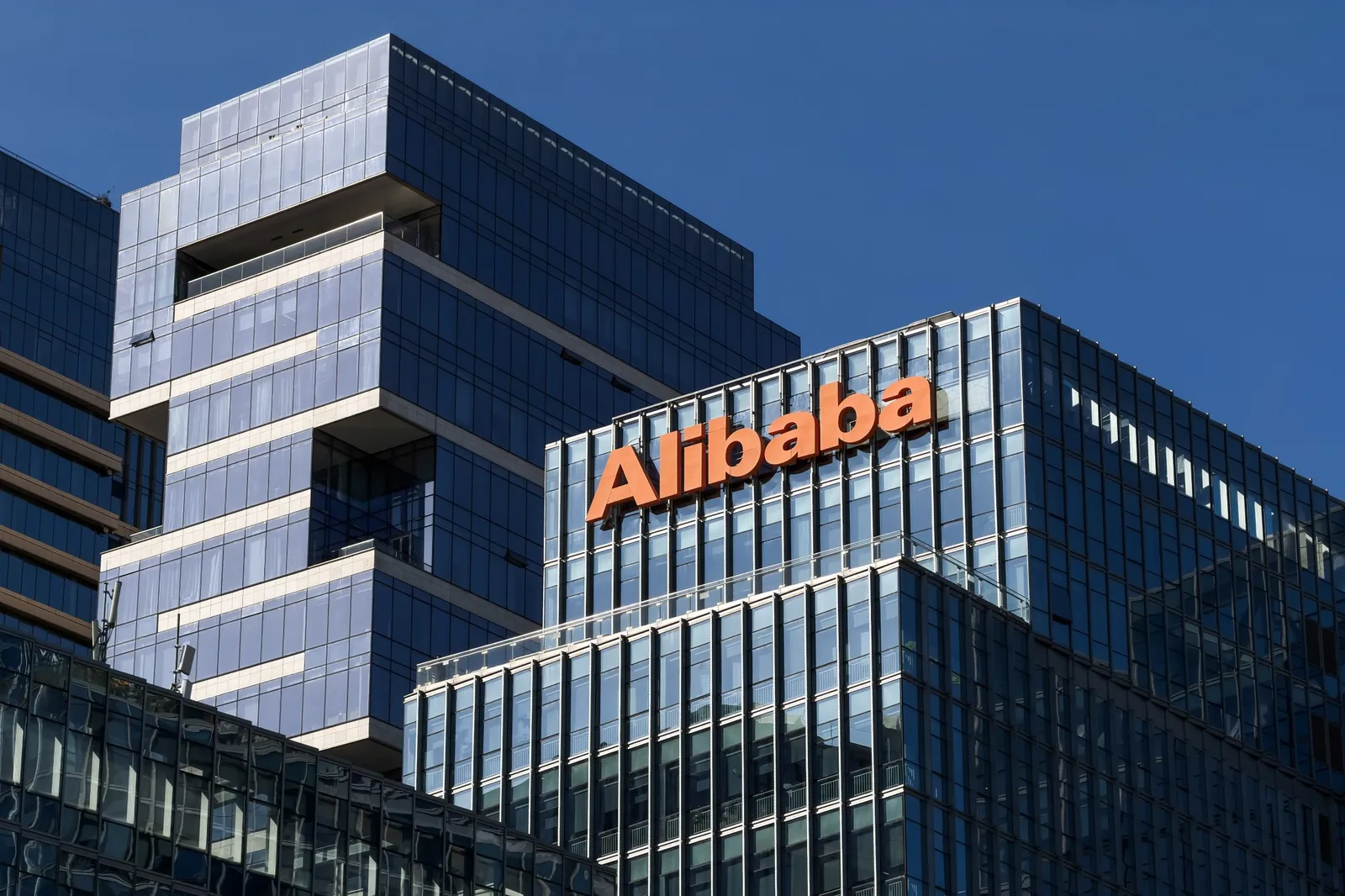
Tencent president Martin Lau called the new U.S. chip export controls "unfortunate" and said they will slow training of the next Hunyuan model, while Alibaba CEO Eddie Wu said in-house T-Head chips keep the company's 2030 cloud targets on track. For operators and investors, the split between inference and training compute is now the key variable in any China AI plan, with Alibaba warning cloud growth could slow to 30% to 45% next year.
Tencent president Martin Lau did not sugarcoat it. The new U.S. export controls are "unfortunate," he told analysts on Wednesday's earnings call, and they will make it take longer for Tencent to train the next version of its Hunyuan model. "It sets everyone back in China," he said. That is the admission buried under a week of confident earnings language from China's two biggest tech companies. Tencent's chief strategy officer, James Mitchell, drew the line the whole industry is now organizing around: training versus inference. "We actually don't see an impact because our cloud business today is primarily running inference," Mitchell said. Inference is running an AI model for users; training is building it in the first place. Tencent, he added, has reached a stage where inference can run on what he called a "surprisingly limited number" of domestically produced chips.
The timing was not a coincidence. Both companies reported earnings after the U.S. Department of Commerce released an interim rule on Monday that expands export controls on advanced AI processors. Chipmakers and exporters now need a license to sell advanced chips to data centers in Malaysia, Singapore, Thailand, Indonesia, and Brazil. The rule also requires a license for large data centers to offer substantial computing power to Chinese customers. Stacked together, the measures are likely to restrict how much computing power Chinese companies like Alibaba and Tencent can get their hands on as they build AI models and serve them to users. Tencent and Alibaba were among the first Chinese corporate responses to the new regime, and their message was split down the middle: the cloud survives, the frontier slips.
Tencent's numbers show a company spending like the race is not slowing. Revenue for the third quarter of 2026 came in at 207.3 billion yuan ($31 billion), up 8% year-on-year. Fintech and business services revenue, which includes cloud computing, rose 9.4% to 63.6 billion yuan ($9.5 billion). Net profit edged up just 0.3% to 65.1 billion yuan ($9.8 billion). Then the number that matters most: capital expenditure rose 527% to 81.4 billion yuan ($12.2 billion). That is the shape of an arms race. Compute is the input, and Tencent is buying it while it still can.
Alibaba came out swinging on Thursday. CEO Eddie Wu said the company's 2030 targets, including $100 billion in external cloud revenue and a 20% EBITDA margin, remain on track despite the restrictions. "Our own progress in developing domestic computing power is in fact already ahead of our original expectations," Wu told analysts. The vehicle is T-Head, Alibaba's in-house chip division, which the company plans to list in Hong Kong. The quarter backed the bravado: revenue of 271.5 billion yuan ($40.5 billion), up 10% year-on-year; AI and cloud revenue up 53% to 61.0 billion yuan ($9.1 billion); net profit up 213% to 64.4 billion yuan ($9.6 billion); capital expenditure up 60% to 50.5 billion yuan ($7.5 billion).
Then Wu added the caveat investors should tape to their monitors. "The new compute export control rules will affect next year's products and services, and there is still uncertainty as regards the supply chain," he said. Cloud revenue growth could slow to between 30% and 45%, he suggested, before rebounding to 50% or higher by 2028. On the Qwen family of models, Wu said it was "too early at this stage" to know how the restrictions might bite. But he made a claim worth testing: Alibaba's current T-Head chips "are already capable of fully supporting the training of large-scale, including ultra-large-scale, models." Wu predicted T-Head production would ramp up in 2027 or 2028. "Once we get there, we will actually be in a better position to control and pace the speed at which we iterate our foundation models," he said.
Alibaba's confidence is arriving under a cloud. The company is in the spotlight after the Nvidia scandal that toppled CEO Jensen Huang last week. Nvidia's sales team introduced Alibaba to Alice Huang, a former Megaspeed executive, before U.S. chip export controls took effect in 2022, the Information reported. Megaspeed, a Singapore-based cloud computing company, is suspected of funneling advanced AI chips to China in violation of U.S. export controls; Megaspeed denies the allegations. On Thursday, a group of Alibaba shareholders sued the company, accusing it of concealing its ties to Alice Huang and Megaspeed. The shareholders said media reports of the ties contributed to a 14% drop in Alibaba's share price over four days, and accused the company of understating the risk that export-control violations could harm its business. Alibaba did not immediately respond to a request for comment.
Washington is under its own pressure. On Thursday, the House Foreign Affairs Committee released data showing the Commerce Department had approved nearly 880,000 AI chips for Chinese companies, including 75,000 for Alibaba and 150,000 for Tencent, out of more than 3.4 million chips that Nvidia and AMD sought to export to Chinese companies. That scrutiny helps explain the tightening. The new rules also narrow the exemptions chip manufacturers can use to ship advanced chips without a license, and constrain Chinese companies' ability to make their own semiconductors using overseas foundries. The Financial Times reports that Taiwan Semiconductor Manufacturing Company and Samsung Electronics have suspended some chip shipments to Chinese customers. Chinese AI developers beyond the two giants are already adjusting: the Information reported Thursday that Moonshot AI, the Beijing-based developer of the Kimi models, scrapped a $150 million deal to access Nvidia's Blackwell chips through an Indonesian data center.
Lau's long-run prediction is the one to file away. He said U.S. controls would "speed up" the development of China's domestic chip industry. "We believe all Chinese players would actually have to rely on domestic supply chains and domestic chips," he said. That is a forced migration, and it resets the planning assumptions for every operator with compute exposure. The inference-versus-training split is no longer a technical footnote; it is a revenue line. Companies that can serve users on domestic silicon keep the business running. Companies that need frontier training compute take the schedule hit, and schedule is the only currency in a model race. Watch two dates: T-Head's Hong Kong listing, and the 2027 to 2028 production ramp Wu is betting on. If domestic supply arrives on time, the curbs become a speed bump. If it slips, the gap between running AI and building it becomes the whole story.
This story's Key Insights and Take-aways are locked.
Create a free account to unlock Executive Actions for one credit.
Register to UnlockAlways free for Executives Club members. Join the Club
More in Business

S&P 500 Enters Correction, Down 10% From Its High on AI Worries
The index's slide past the 10 percent line is a symbolic verdict on investor mood, and the AI trade that powered the rally is now the thing testing it.

Dow and S&P 500 enter correction as Nasdaq logs worst week since 2020
All 11 S&P 500 sectors fell more than 1% in the same week for the first time since April 2025, a breadth signal that matters more than any single index level.

Chip stocks lose $2.3 trillion in a week, worst run in 25 years
A $2.3 trillion weekly wipeout in semiconductors is forcing every board with an AI story to ask whether it owns a thesis or just a crowded trade.