
Texas restarts data center permits after Abbott's power-and-water audit freeze
The September permit pause is over, but the audit of every data center's electricity and water use that triggered it still shapes what gets built next.
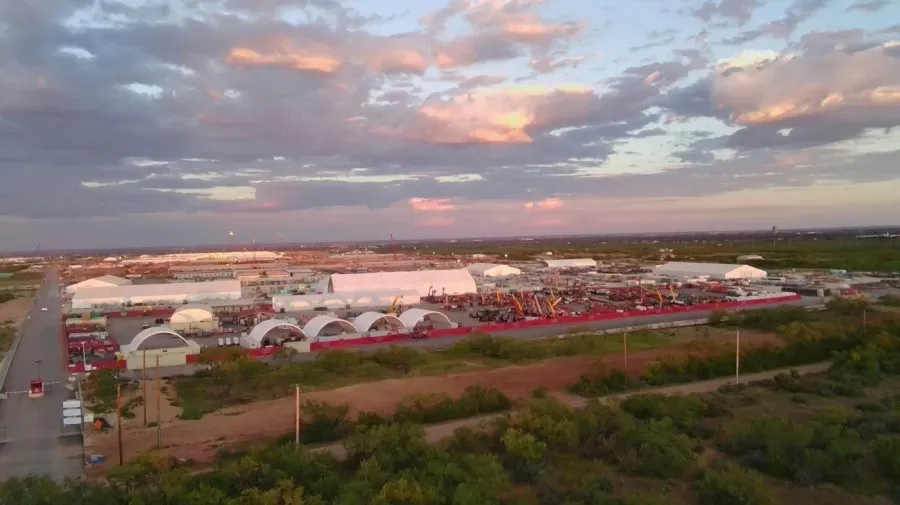
Outgoing Texas Gov. Greg Abbott paused new data center permits in September after directing the Public Utility Commission of Texas and grid operator ERCOT to audit all data centers' electricity and water use, and state environmental regulators have now resumed reviewing permits. For developers, utilities, and investors, Texas' cheap-power advantage now comes with a verification requirement attached to both load and water.
Texas environmental regulators have resumed reviewing data center permits, ending the pause that outgoing Gov. Greg Abbott ordered in September. The freeze is over. The scrutiny is not. Abbott halted new permit issuance while the state tried to get its arms around how much electricity and water its data center buildout actually consumes, and the review process is moving again with that question still very much alive.
The pause did not come out of nowhere. In August, Abbott directed the Public Utility Commission of Texas and ERCOT, the state's grid operator, to audit the electricity and water use of all data centers, saying authorities "must conduct a comprehensive verification" of those loads. That single sentence is the whole story: Texas is not asking whether data centers belong in the state. It is asking what it already promised them, and whether the numbers on the applications match the numbers on the meters.
For context, Texas has spent the past several years as one of the most attractive data center markets in the country. Land is cheap and plentiful, the state has no personal income tax, and ERCOT's competitive, largely deregulated power market has historically offered some of the lowest industrial electricity prices in the nation. Add the AI buildout, and the result has been a wave of hyperscale and colocation projects landing in the Dallas-Fort Worth metroplex, Austin, San Antonio, and West Texas. The same qualities that made Texas a magnet, cheap power and light regulation, are exactly what made the audit inevitable once those loads started showing up in grid planning.
The mechanics matter for anyone with capital in the ground. A data center's electricity demand is not a static number. It shows up as a requested interconnection capacity, a forecast load, and eventually a real draw that ERCOT has to serve in real time. Water is the same story in a different medium: many facilities rely on evaporative cooling, which means a campus can consume millions of gallons a year in a state that knows drought intimately. An audit that verifies both is, in practice, a reconciliation between what developers projected and what the grid and water systems are actually absorbing. When those two numbers diverge, someone pays for the difference, and it is usually ratepayers or the developer.
That is where the second-order effects start. If verified loads come in higher than forecast, ERCOT has to plan for more generation and transmission, and the cost of that infrastructure gets allocated through a process that has already drawn political attention in Texas. If verified water use comes in higher than expected, local permitting becomes a harder conversation, and siting decisions that looked settled can reopen. And if the audit finds that some projects overstated their needs to lock in capacity, the credibility of every pipeline projection in the state takes a hit.
The timing is worth noting. Abbott's pause landed in September, after the August audit directive, and the resumption of permit reviews signals that the state wants projects moving again. But resuming the review is not the same as clearing the backlog, and it does not answer the questions Abbott raised. What it does is establish a new baseline: in Texas, a data center permit now comes with a verification requirement attached to power and water, and the state has demonstrated it will stop the line when it does not like what it sees.
For executives and boards, the strategic read is straightforward. Texas remains one of the best places in the country to build compute, and nothing in this sequence changes that. What changes is the diligence burden. Power and water are no longer line items to be estimated optimistically and revisited later; they are the gating factors in a permitting process that has already been paused once. Developers who can produce verified load and water numbers, and who can show a site has secure long-term supply, will move faster than those who cannot. Peers in other fast-growing markets, from Virginia to Arizona to Georgia, should assume their own regulators are watching how Texas handles this, because the same collision between AI demand and local resources is arriving everywhere.
This story's Key Insights and Take-aways are locked.
Create a free account to unlock Executive Actions for one credit.
Register to UnlockAlways free for Executives Club members. Join the Club
More in Politics

Fifth Circuit Kills Pregnant Workers' Law Over Pandemic Proxy Votes
A procedural ruling, not a policy one, has blocked a federal pregnancy-accommodation law and put every pandemic-era statute in the crosshairs ahead of an expected Supreme Court appeal.

Measles kills a Virginia child under 5, the state's first death of 2026
Virginia's health department confirmed the death but withheld the child's vaccination status, leaving schools, clinics and employers to plan around the one detail that would explain the most.

Former Brazilian President Bolsonaro Hospitalized with Intestinal Obstruction
The health status of the former far-right leader raises immediate questions about political stability and the trajectory of Brazil's conservative movement.