
The EU's hybrid crackdown is pushing Chinese carmakers into a niche powertrain
Brussels' curb on Chinese hybrids is redirecting product planning toward a powertrain category that sits outside the tariff fight, and that is exactly why it matters.
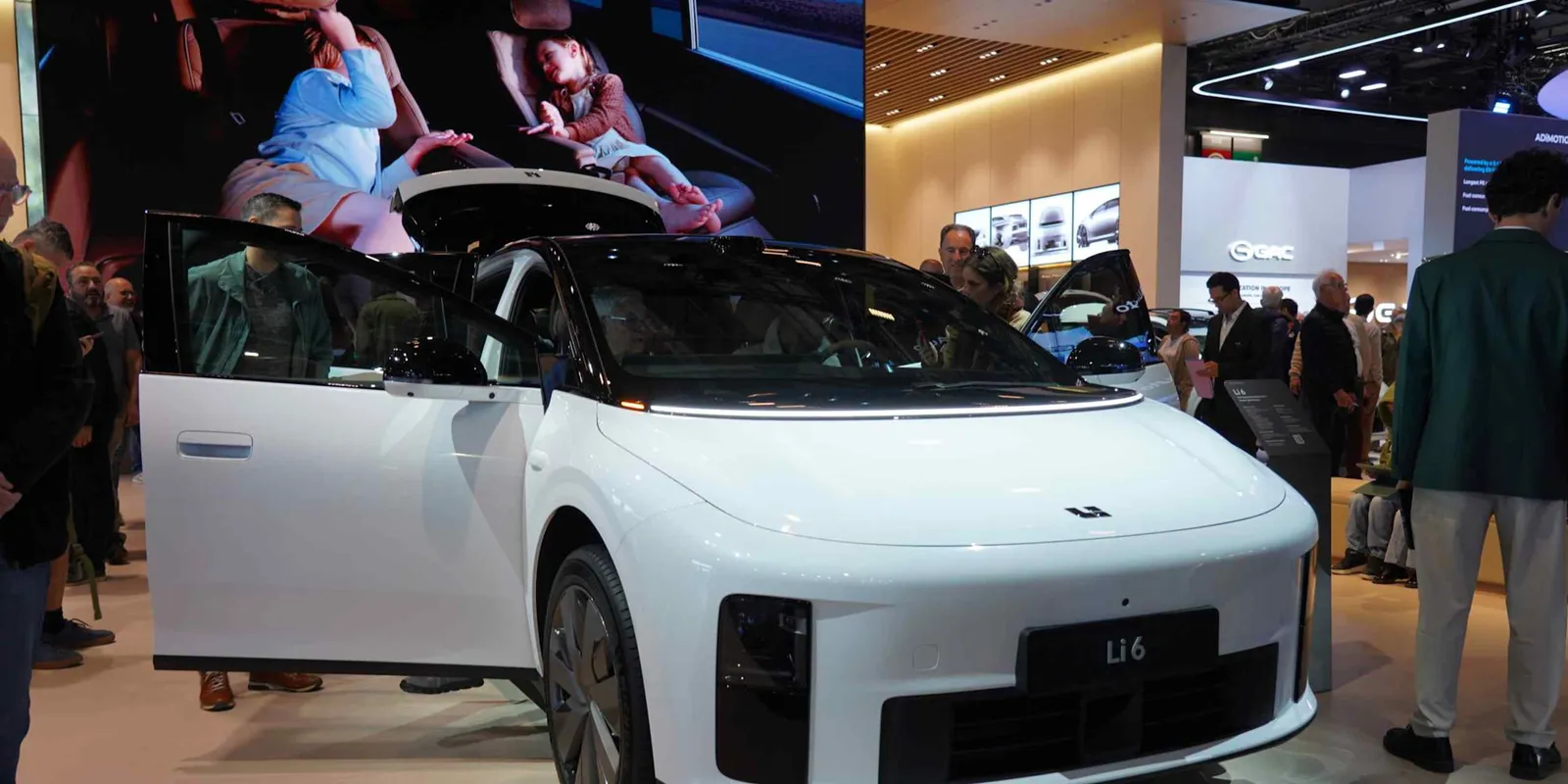
The European Union's curb on Chinese hybrid vehicles is pushing automakers to redirect product plans toward a niche powertrain category that the duties do not appear to cover. For decision-makers, the consequence is that tariff walls rarely stop trade; they redirect it into whatever classification regulators left unguarded.
The European Union's curb on Chinese hybrid cars is doing something tariff walls rarely do: it is not stopping the trade, it is redirecting it. Nikkei Asia reports that the EU's move against Chinese hybrids is driving automakers toward a niche powertrain, a shift that says more about how modern trade policy actually works than any headline number about duty rates. Brussels spent the past two years building a wall around battery-electric imports from China. The moment that wall went up, the traffic moved to hybrids. Now that hybrids are being curbed too, the traffic is moving again, into a category the tariff schedule was never written to catch.
That is the whole game. Tariffs are not levied on companies or countries in the abstract; they are levied on product classifications. A vehicle's duty rate depends on how customs officials define what it is: battery-electric, plug-in hybrid, conventional hybrid, or something else entirely. Change the architecture by a few components and you can change which line of the tariff schedule the car lands on. For any automaker selling into Europe, that makes powertrain engineering a trade-policy function as much as an engineering one.
For context, the EU's countervailing duties on Chinese battery-electric vehicles, finalized in 2024, were built on exactly that logic. They stacked additional duties on top of the bloc's standard 10% car import tariff, with rates that ran as high as roughly 35% for the most heavily penalized exporters. Plug-in hybrids and conventional hybrids were largely left outside that net, which is precisely why they became the growth channel for Chinese brands in Europe. Hybrids let those brands keep selling into one of the world's largest car markets without paying the battery-electric penalty.
Now that Brussels has extended its curb to Chinese hybrids, that channel is narrowing. The reported response is not retreat but re-routing: a pivot toward a niche powertrain that sits, at least for now, outside the definitions the duties were drafted around. This is the recurring pattern in trade enforcement. Every wall has a gate, and every gate has a category nobody thought to name. Range-extender architectures, which use a small combustion engine purely as an on-board generator rather than to drive the wheels, are one example of a design that has historically sat in a grey zone between electric and hybrid. The specific architecture matters less than the mechanism: classification is destiny.
The second-order effects are where this gets expensive for European incumbents. A tariff that reshapes what gets imported also reshapes what gets built, priced, and resold. Dealers and leasing fleets have to underwrite residual values on powertrains whose regulatory status can change with a single Commission decision. Suppliers tool up for architectures that may be reclassified inside a single model cycle. And European automakers, who lobbied for protection against cheap Chinese battery-electric imports, now face Chinese competitors arriving through a different door, often with a cost structure the incumbents cannot match on a like-for-like basis.
There is a second lever, and it is the one that ultimately matters more. Tariffs apply to imports, not to factories. Chinese automakers have been building assembly capacity inside Europe precisely so the tariff question stops applying to them at all. The powertrain pivot is the faster, cheaper, more reversible move; local manufacturing is the durable one. Expect both to run in parallel, with the powertrain mix tuned market by market depending on which classification is cheapest to clear customs under that quarter.
Brussels now faces the enforcement version of whack-a-mole. Each time it closes a classification gap, it creates an incentive to engineer around the next one, and the bloc's own climate goals complicate the response, because the vehicles being pushed into niche categories are often lower-emitting than the pure combustion cars they displace. A policy designed to shield European industry from subsidized competition can end up steering that competition into segments European manufacturers have already deprioritized.
For executives, the takeaway is not that tariffs fail. It is that tariffs are a moving target, and the companies that win treat regulatory classification as a design variable rather than a fixed constraint. If your product plan for Europe assumes today's duty schedule holds for the next three years, you are underwriting a risk you do not control. The automakers shifting into a niche powertrain today are not dodging the rules; they are reading them faster than everyone else. That is the skill that compounds.
This story's Key Insights and Take-aways are locked.
Create a free account to unlock Executive Actions for one credit.
Register to UnlockAlways free for Executives Club members. Join the Club
More in Business

S&P 500 Enters Correction, Down 10% From Its High on AI Worries
The index's slide past the 10 percent line is a symbolic verdict on investor mood, and the AI trade that powered the rally is now the thing testing it.

Dow and S&P 500 enter correction as Nasdaq logs worst week since 2020
All 11 S&P 500 sectors fell more than 1% in the same week for the first time since April 2025, a breadth signal that matters more than any single index level.

Chip stocks lose $2.3 trillion in a week, worst run in 25 years
A $2.3 trillion weekly wipeout in semiconductors is forcing every board with an AI story to ask whether it owns a thesis or just a crowded trade.