
Thomas Nagel won $1M for studying minds. He has thoughts on AI.
The Berggruen Prize puts a million dollars behind the philosopher who spent a career arguing that inner experience resists outside measurement, just as AI labs start claiming their models are closing in on thinking.
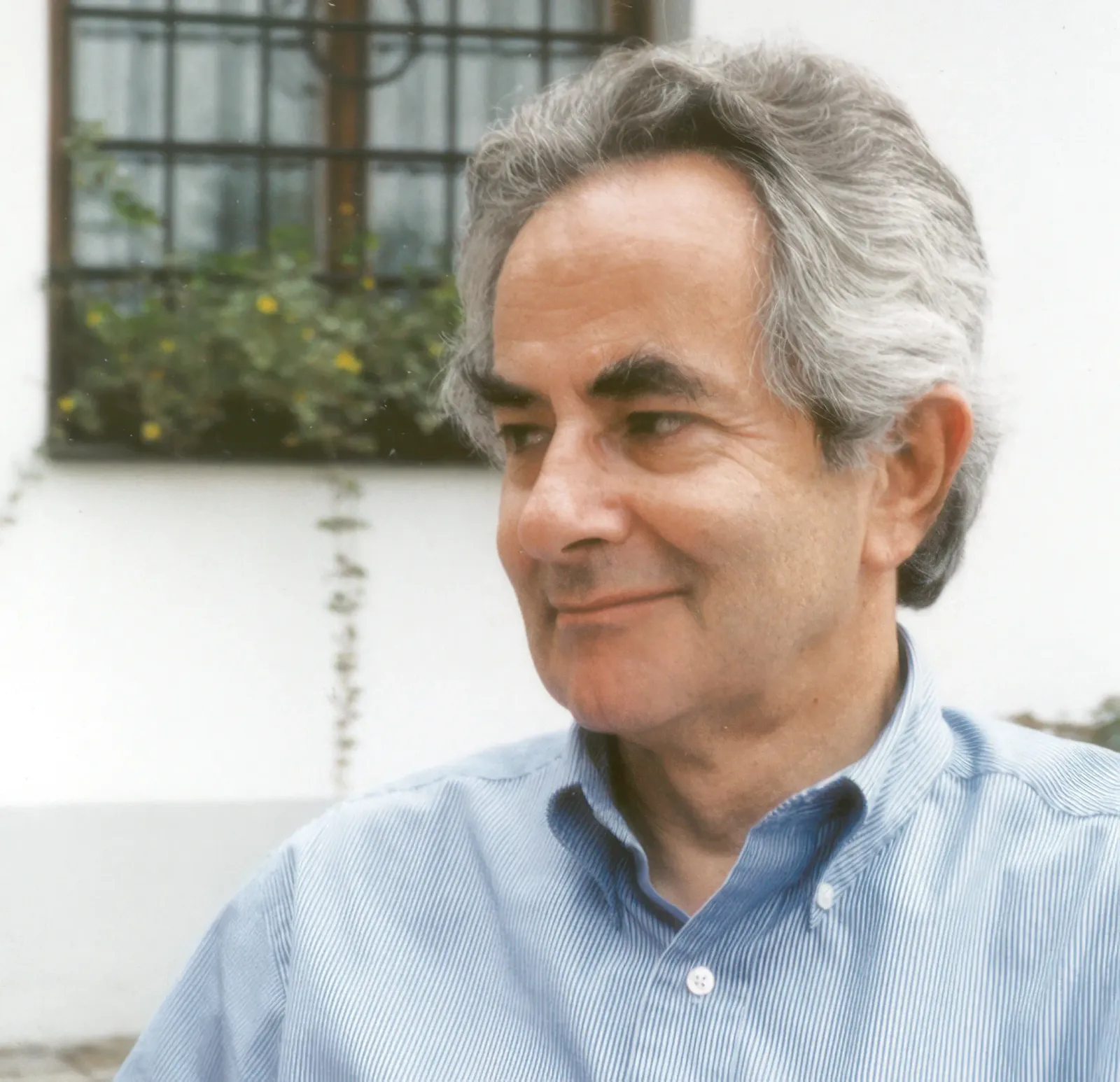
Philosopher Thomas Nagel won the million-dollar Berggruen Prize this week for landmark work on consciousness in nonhumans, and he has a lot of thoughts on AI. For decision-makers, the award lands as AI companies make mind-adjacent claims about their products, turning a philosophical question into a live question of marketing, liability, and disclosure.
Thomas Nagel, the philosopher whose landmark work on consciousness in nonhuman animals helped define the field, won the million-dollar Berggruen Prize this week. The award recognizes his contributions to the study of mind. It also comes with a second headline attached: Nagel has a lot of thoughts on AI.
That pairing is the story. Nagel is not an AI researcher, and the Berggruen Prize is not an AI prize. But the question he has spent a career on, what it means for something to have a mind at all, has quietly become one of the most commercially loaded questions in technology. Every time a lab says a model understands, reasons, or wants, it is making a claim about inner life. Nagel's body of work is the standard against which those claims get tested, and the prize money is a signal that the test still matters. That is a strange place for a philosopher to end up: at the center of a product roadmap.
Nagel is best known for a 1974 essay that asked what it is like to be a bat. The point was never bats. The point was that subjective experience has a character no amount of external measurement fully captures. You can map every neuron, log every behavior, and still miss what the experience is like from the inside. For context, that argument has been a live grenade in philosophy of mind for five decades. It is also why his name keeps surfacing in debates about machine consciousness, where the observable output is abundant and the inner life is entirely inferred.
His work on nonhuman minds matters here too. Historically, the hardest part of studying animal consciousness has been the absence of a shared language. Researchers infer inner states from behavior, anatomy, and evolutionary logic, then argue about how much weight each deserves. That is, almost exactly, the methodological problem AI labs face today. A model's outputs are behavior. Whether anything is happening behind them is a separate question, and no benchmark settles it. The field Nagel helped build is the field that now has to answer for the machines.
The Berggruen Prize is a million dollars, which is real money and small change next to the compute budgets of the labs now making mind-adjacent claims. Its value is signaling. Prizes tell universities, funders, and the press which questions are serious. Putting a million dollars behind the study of consciousness, in a year when capability announcements dominate the cycle, is a deliberate statement about what deserves attention. It also nudges the next cohort of graduate students toward a question that does not ship a product.
The stakes are not only philosophical. If a system could plausibly be a subject of experience, a long list of assumptions gets shaky. Liability rules built on human intent stop mapping cleanly onto software. Disclosure regimes built on what a company knows about its own product get harder to satisfy. Marketing language that treats thinks as a metaphor starts to look like a claim. Regulators have largely sidestepped the question, focusing instead on safety, transparency, and risk. That avoidance gets harder to sustain as models get better at behaving as if something is home.
For operators, the practical version is simpler. Companies are already selling products that describe themselves in mental terms, and buyers are already forming beliefs about what those products are. That gap between metaphor and claim is a reputational and legal exposure. It is also a strategic one. The firm that can talk precisely about what its system does, and does not, experience will be harder to embarrass and easier to trust. The firm that cannot will spend its next crisis explaining what it meant.
Nagel's prize is a reminder that the hardest questions in technology are often old ones wearing new hardware. For executives, the takeaway is not to settle the metaphysics of machine minds. It is to know where your own language crosses from description into assertion, and to have an answer ready when a customer, a regulator, or a journalist asks which one you meant.
This story's Key Insights and Take-aways are locked.
Create a free account to unlock Executive Actions for one credit.
Register to UnlockAlways free for Executives Club members. Join the Club
More in Technology

Anthropic mathematician claims Claude helped crack the Riemann hypothesis
If the proof holds, AI has toppled math's most famous open problem; if it does not, it is a case study in announcing breakthroughs before anyone verifies them.

AI's $4 Trillion Wipeout Erases Nasdaq's Gains for the Year
A brutal week took roughly $4 trillion off the AI sector and left the Nasdaq flat for the year, and the damage ran the full length of the supply chain.

Anthropic mathematician says AI proved the Riemann hypothesis. Verification will take time.
A single unverified claim from inside Anthropic now sits against more than 160 years of open mathematics, and the gap between asserting a proof and surviving peer review is the entire story.