
Thune's Rare Friday Session: GOP Races Trump Judges In Before January
Senate Republicans are burning the lame-duck calendar to confirm lifetime judicial appointments, and every seat filled now shapes rulings for decades after Democrats take power.
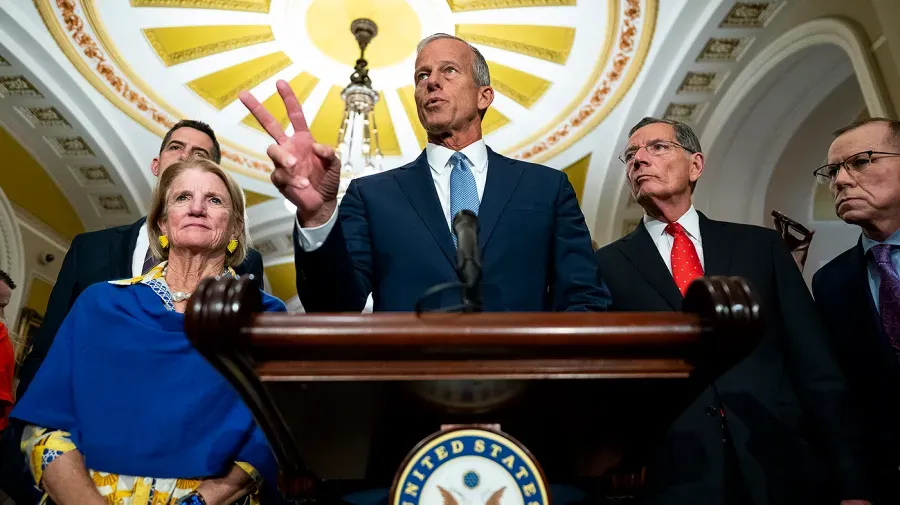
Senate Majority Leader John Thune (R-S.D.) convened a rare Friday session to vote on a slate of President Trump's judicial nominees, aiming to confirm as many lifetime judges as possible before Democrats take power in January. For executives and boards, those confirmations quietly redraw the appellate courts that decide regulatory, antitrust, and labor cases for a generation.
Senate Majority Leader John Thune did something the chamber rarely does on a Friday: he kept it in session. The South Dakota Republican convened a rare Friday session to vote on a slate of President Trump's judicial nominees, part of a deliberate sprint to confirm as many judges as possible before Democrats take power in January. Thune has been explicit about the goal. He wants the seats filled now, because the people who fill them keep the job for life.
That last detail is the whole story. Federal judges do not serve four-year terms or six-year terms. They serve until they retire, die, or are impeached and removed, which historically almost never happens. A judge confirmed in a December lame duck is still writing opinions in the 2050s. So the Friday session is not a procedural footnote. It is a transfer of power that outlasts the administration that made it.
Why the calendar is the weapon. The Senate runs on floor time, and floor time is controlled by the majority leader. In a normal week, that time competes with spending bills, nominations, and whatever crisis is on fire. In a lame duck, the legislative queue thins out and the confirmation queue becomes the main event. Friday sessions are rare because senators guard their travel days, but a rare Friday is exactly what a leadership team schedules when the clock is the enemy. Every gavel-to-gavel hour is a nominee who gets a vote before the gavel changes hands.
The mechanics, in plain English. Lower-court judges need a simple majority, not 60 votes, a precedent set over the past decade-plus of partisan escalation. That means a unified majority can confirm nominees without a single opposition vote. The pipeline runs through the Judiciary Committee, which vets and advances nominees, then to the floor, where leadership decides the order and pace. Historically, the minority party has used procedural tools and home-state "blue slip" customs to slow or block nominees, but those levers are customs, not constitutional guarantees, and their strength depends on who holds the gavel.
What changes in January. When Democrats take power, the pipeline reverses. A new majority controls the committee calendar, the floor schedule, and which nominees get hearings. Judges already confirmed are untouchable by that shift. There is no recall, no re-vote, no do-over. That asymmetry is why both parties treat lame-duck judicial confirmations as a one-way ratchet: the outgoing majority gets a final, irreversible window, and the incoming majority inherits the bench it inherits.
Why this matters beyond the courthouse. Appellate judges are the last word on a huge share of the disputes that shape how companies operate: agency rules, merger challenges, labor and employment fights, environmental permitting, financial regulation, and the scope of executive power itself. When a circuit's composition shifts, the practical effect is not abstract. It changes which arguments win, which cases get heard, and how aggressively regulators write rules in the first place, because agencies and general counsels both price in the court that will review them.
The strategic read for operators and boards. Litigation risk is not a fixed cost. It is a function of who is sitting. A bench that leans skeptical of agency deference produces a different risk map than one that leans deferential, and that map is being redrawn right now, in public, on a Friday, with votes that take minutes and consequences that take decades. Companies with heavy regulatory exposure, pending mergers, or long-tail litigation should be tracking circuit composition the same way they track interest rates: as a structural input, not a headline.
What to watch next. The sprint ends when the gavel does. Between now and January, expect leadership to keep the floor moving on nominees, expect procedural objections from Democrats, and expect the final tally to be the number that matters. Thune's stated goal is simple: confirm as many as possible while he still can. The judges who get through will not be a story next year. They will be the story for the next thirty.
This story's Key Insights and Take-aways are locked.
Create a free account to unlock Executive Actions for one credit.
Register to UnlockAlways free for Executives Club members. Join the Club
More in Politics

Fifth Circuit Kills Pregnant Workers' Law Over Pandemic Proxy Votes
A procedural ruling, not a policy one, has blocked a federal pregnancy-accommodation law and put every pandemic-era statute in the crosshairs ahead of an expected Supreme Court appeal.

Measles kills a Virginia child under 5, the state's first death of 2026
Virginia's health department confirmed the death but withheld the child's vaccination status, leaving schools, clinics and employers to plan around the one detail that would explain the most.

Former Brazilian President Bolsonaro Hospitalized with Intestinal Obstruction
The health status of the former far-right leader raises immediate questions about political stability and the trajectory of Brazil's conservative movement.