
Tinubu asks Nigeria's parliament to stop jailing attempted suicide
The president wants attempted suicide treated as a health crisis, not a crime, which would retire an inherited penalty and hand Nigeria's legislature a reform it can pass cheaply or park indefinitely.
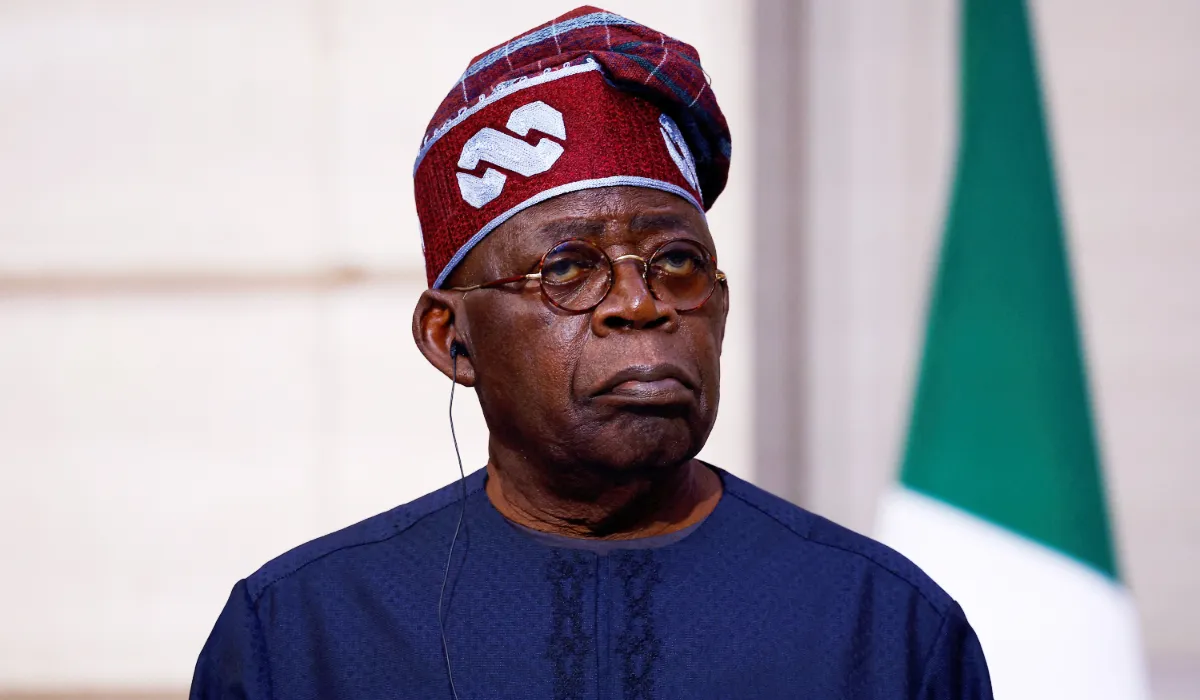
Nigerian President Bola Tinubu has urged the country's parliament to decriminalize attempted suicide, proposing it be treated as a mental health issue and that punitive measures be replaced with supportive care. For executives and boards, the proposal signals a shift in how Nigerian institutions frame crisis care, with direct consequences for employer protocols, health cover, and the country's regulatory credibility with outside investors.
President Bola Tinubu has asked Nigeria's parliament to decriminalize attempted suicide, proposing that it be handled as a mental health issue instead of a crime. The move, as reported by Arab News, would replace punitive measures with supportive care. That is the whole of the ask, and it is larger than it sounds. It flips the state's posture from punishment to treatment on one of the most stigmatised acts in public life, and it puts Africa's most populous country on the record about which institution, a court or a clinic, should answer when someone survives a suicide attempt.
The context matters. Nigeria's criminal law descends from a colonial template that treated self-harm as a public order problem, and that inheritance still shapes how cases are handled. Under that framework, a person who survives an attempt can typically expect to be treated as an offender: arrest, a charge, and the possibility of a custodial or financial penalty stacked on top of whatever crisis drove the attempt. Tinubu's proposal reframes the identical act as a clinical event. But a presidential request is not a law. In Nigeria, the executive proposes and the National Assembly disposes. A bill has to be introduced, debated, passed by both chambers and signed before a single courtroom changes its behaviour. The clock on this reform starts in the legislature, not at the presidency.
The second gap is enforcement. Decriminalization on paper does not automatically change what happens on a street corner at 2am. Police officers, prosecutors and magistrates work from habit as much as from statute, and a repeal has to reach them as an instruction. In practice, a repeal typically does more than end prosecutions: it tells the frontline that an attempted suicide is a case for an ambulance and a counsellor, not a case file. That is why the framing Tinubu chose, a mental health issue rather than a moral or public order one, is doing real work. It names the replacement system, not just the thing being deleted.
Which raises the harder question: replacement with what? A state that decriminalizes and offers nothing has simply moved the problem from the courthouse to the living room. Decriminalization is half a policy; the other half is capacity, meaning beds, community mental health teams, crisis lines, and primary care staff trained to ask the next question. Nigeria, like most countries in the region, has historically run a mental health workforce that is thin relative to its population, with resources concentrated in a few urban centres. Reformers will be judged on whether referrals replace charges, and that is a budget question as much as a moral one.
That is where the economics enter. Mental illness is a productivity story before it is anything else: it shows up as absenteeism, attrition, and quiet underperformance on payrolls that never name it. For employers operating in Nigeria, a legal shift of this kind changes the compliance and care conversation, because a manager who once had no protocol beyond calling security now has a public policy signal that the correct response is a health one. For insurers and employers designing health cover, the reform opens the door to treating crisis care as a covered event rather than an exclusions footnote. Watch whether private cover follows the statute.
Expect friction. Attempted suicide sits at the intersection of law, religion and family honour, and Nigerian public opinion is not monolithic. Any national change will interact with state-level and religious legal traditions that carry their own positions on the act, and with a stigma that no parliamentary vote can repeal. The practical question for lawmakers is whether they write a clean repeal, which is simple and hard to water down, or a compromise that keeps a residual offence on the books and leaves the enforcement gap wide open. The first version is the one that changes outcomes.
Nigeria would not be first. A number of countries have moved in this direction over the past two decades, on the argument that criminal penalties deter people from seeking help rather than from attempting. What makes this case notable is size and signal: Nigeria is Africa's most populous country, and its decisions travel. If the National Assembly acts, other governments in the region get a template for retiring an inherited penalty without a political firestorm. If it stalls, the proposal becomes one more reform parked in committee.
For decision-makers, the read is straightforward. If you employ people in Nigeria, audit your mental health cover and your manager training now, because the legal direction of travel is clear even if the timeline is not. If you invest there, add the legislative calendar to your watch list; a clean repeal is a cheap, high-visibility institutional signal. And if you are nowhere near Nigeria, the pattern still applies: governments are slowly reclassifying old moral offences as health events, and the businesses that get ahead of that shift are the ones that stopped treating it as someone else's problem.
This story's Key Insights and Take-aways are locked.
Create a free account to unlock Executive Actions for one credit.
Register to UnlockAlways free for Executives Club members. Join the Club
More in Politics

Fifth Circuit Kills Pregnant Workers' Law Over Pandemic Proxy Votes
A procedural ruling, not a policy one, has blocked a federal pregnancy-accommodation law and put every pandemic-era statute in the crosshairs ahead of an expected Supreme Court appeal.

Measles kills a Virginia child under 5, the state's first death of 2026
Virginia's health department confirmed the death but withheld the child's vaccination status, leaving schools, clinics and employers to plan around the one detail that would explain the most.

Former Brazilian President Bolsonaro Hospitalized with Intestinal Obstruction
The health status of the former far-right leader raises immediate questions about political stability and the trajectory of Brazil's conservative movement.