

Toys for Bob’s 11m Spyro sales proved a revived trilogy audience showed up
In a candid reflection on going independent, Toys for Bob points to 11 million sales as the proof.
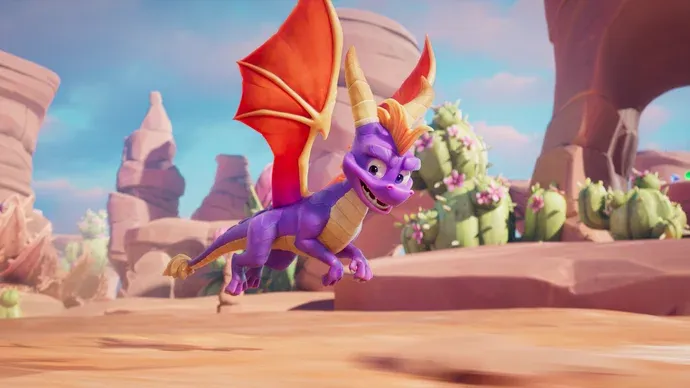
Toys for Bob, the developer behind Spyro: Reignited Trilogy and Spyro: A Realm Beyond, says the trilogy hit 11 million sales. The company also calls the move to go independent a “massive, massive risk,” and argues those sales proved there is demand for the series.
Toys for Bob just gave an unusually blunt scoreboard on demand: Spyro: Reignited Trilogy sold 11 million units, and the studio says that number proved “there’s an audience that woke up to show up for that series.” This is a rare moment where the industry’s loud debate about remasters, legacy franchises, and “is nostalgia still a business?” gets an actual figure, not hand-waving.
The context matters just as much as the sales. In the same reflection, Toys for Bob frames going independent as a “massive, massive risk.” Translation: the studio did not treat Spyro: Reignited as a safe retirement project or a vanity play. It was a bet on whether a revived, modernized version of an older IP could generate enough audience pull to justify the cost and the uncertainty that come with charting your own course.
For decision-makers, this is really about the incentive structure behind game publishing. Studios that are supported by large publishers can often de-risk themselves with distribution muscle, marketing budgets, and production pipelines. When you go independent, those safety rails usually come off. You still need scale, but you pay for it with tighter budgets, more hands-on execution, and higher tolerance for volatility. Toys for Bob’s point is that the trilogy’s 11 million sales were not just a win for a single release. They were proof that the market would show up in a way that could support the next steps.
This also speaks to how legacy IP gets evaluated in the real world. Remasters and re-releases often face two competing narratives: one says the market is flooded with recycled content, and consumers only move when there is something truly new. The other says classic franchises retain brand gravity, and if you modernize the experience correctly, the audience will return. Toys for Bob is effectively throwing its weight behind the second narrative, using the 11 million sales number as the evidence.
There is a broader market implication hidden inside the studio’s wording. The quote about “an audience that woke up to show up” suggests that dormant demand was still there, but it needed the right trigger. A renewed franchise entry, better presentation, or a faithful remaster approach can act like a demand unlock. When that unlock happens at scale, it changes how studios and boards think about pipeline bets. Instead of asking only whether an IP is famous, you ask whether the audience is still reachable and willing to spend again, in the current era’s competitive landscape.
Now zoom out to what a board, investor, or finance-minded operator should notice: going independent is the kind of decision that can magnify the consequences of being wrong. A “massive, massive risk” is not metaphorical in the operational sense. If the market does not respond, there is less insulation. If the market does respond, the studio gains something publishers cannot easily replicate: control over future direction, stronger leverage in partnerships, and the ability to align product strategy with real customer signal.
For peers managing similar strategic crossroads, the second-order message is clear. If a revived series can generate 11 million sales, then the question is not “should we attempt something with established brand recognition?” but “which audiences will actually react, and what proof do we require before we commit?” Toys for Bob is pointing to a measurable proof point, which is exactly what most studios wish they had when they are deciding how much to bet on remastering or reintroducing older franchises.
And while the quote is about Spyro, the underlying lesson transfers: when uncertainty is high and capital exposure is real, studios should treat audience validation as a requirement, not a hope. Toys for Bob’s takeaway from Spyro: Reignited Trilogy is that 11 million sales can serve as that validation. For decision-makers watching the industry pivot between nostalgia-driven revival and the pressure for entirely new hits, this is a reminder that the past can still cash in, but only if the market votes with actual purchases.
This story's Key Insights and Take-aways are locked.
Create a free account to unlock Executive Actions for one credit.
Register to UnlockAlways free for Executives Club members. Join the Club
More in Entertainment

Russell Brand's accuser 'bewildered and confused' as he denies 7 sex charges
The criminal case against the comedian is a live test of how media companies manage talent risk when serious allegations go public.

'It's a Magic Trick': Ballet Experts Say Rosalía's SNL Pose Is Impossible
Three ballet experts tell Rolling Stone Rosalía's gravity-defying SNL stillness shouldn't be possible - and why the debate is now part of the show.

Activision CMO: GTA 6 Will Boost Call of Duty, Not Bury It
Activision's top marketer says Rockstar's blockbuster will drive players back to consoles and into Modern Warfare 4, even as the company admits its recent strategy failed.