

Trump fires Election Assistance Commission’s remaining two Democrats before midterms
Christy McCormick resigns instead. Voter system standards face limbo as the EAC’s bipartisan structure gets dismantled.
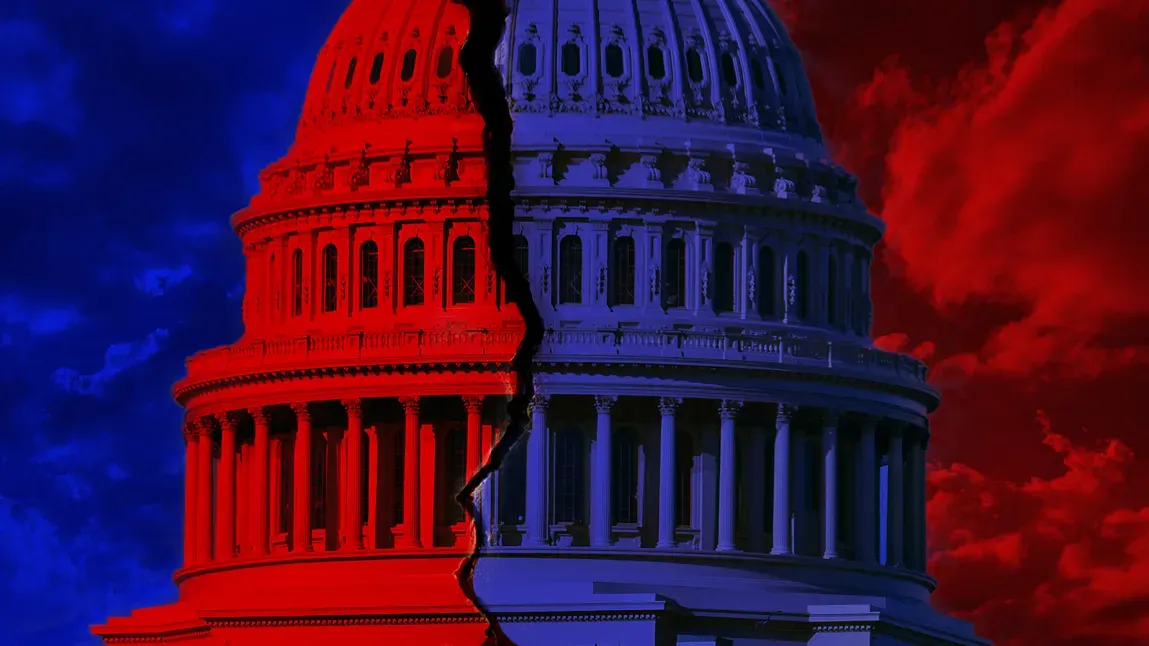
President Donald Trump pushed out the three remaining members of the Election Assistance Commission, firing Benjamin Hovland and Thomas Hicks, while Christy McCormick, the Republican, was allowed to resign. For decision-makers, the shake-up threatens continuity just as the commission was involved in a high-stakes voter registration form fight.
President Donald Trump pushed out the remaining three members of the Election Assistance Commission, leaving the bipartisan agency in limbo ahead of the midterms. ProPublica reports that Trump fired Benjamin Hovland and Thomas Hicks, the Democrats on the commission, while Christy McCormick, the Republican, was allowed to resign. A White House official did not confirm the specific personnel actions, but said the president “reserves the right to remove individuals that may not be totally aligned with the important task of securing America’s elections and ensuring every legal vote is counted.”
That personnel reset matters because the EAC is not just a talking shop. The commission’s four-member board is designed to be evenly split between Republicans and Democrats, with members nominated by the president at the recommendation of congressional leadership and confirmed by the Senate. Before this latest move, Don Palmer, a Republican, resigned in April. Now the commission has lost the last of its seated members, raising immediate questions about who can continue its work, what gets delayed, and who gets to shape the next phase of election administration.
The stakes are bigger than one agency getting understaffed. The Election Assistance Commission was established in 2003 to set standards for state voting systems and to provide funding for upgrades. In other words, it sits at the junction between federal oversight and state implementation. When the board is functioning, the EAC can issue standards and guidance that states often rely on when buying equipment or designing processes. When it is suddenly dismantled, election administration does not pause. It just gets more dependent on whoever is left to fill the gap, which tends to amplify politics.
That concern is exactly why voter advocacy groups and Democratic state election officials reacted sharply. Cisco Aguilar, Nevada’s secretary of state and chair of the Democratic Association of Secretaries of State, warned in a statement that “The EAC plays a critical role in supporting state and local election officials,” and that “it will again fall on Secretaries of State and other election administrators to fill the gap.” The EAC’s move toward vacancy and dysfunction has been chronic, but this is a different magnitude. ProPublica describes the commission’s “unprecedented dismantling” as alarming.
If you are trying to understand why the timing matters, look at what the commission was already in the middle of. In March 2025, Trump issued a sweeping executive order directing the EAC to change the national voter registration form, which serves as the template for forms in each state, to require proof of U.S. citizenship to register to vote. Under current practice in almost all states, voters attest to citizenship under penalty of perjury, but they are not required to provide proof. The Trump-aligned law firm America First Legal had petitioned the EAC to change the form. The EAC posted a notice seeking comments, received hundreds of thousands of them, but had not yet held a vote.
That detail is the real bottleneck: before a commission can change a national template form, it needs the organizational capacity and decision-making authority to carry the process through. Personnel churn does not just impact optics. It can stall votes, slow down rulemaking-like steps, and create uncertainty for states that want to stay aligned. In the background is a broader dynamic that is all too familiar in election administration: when the federal process feels unstable, states can move at different speeds, and legal fights proliferate.
There is also a governance design angle that gets lost in the noise. The EAC’s bipartisan structure is designed to produce deliberation even when parties disagree. ProPublica notes that despite partisan split and frequent infighting, the commission’s decisions were often unanimous. That can be a feature for stakeholders who want predictable outcomes. When members are removed and replacements are uncertain, unanimity becomes harder to achieve, and it becomes easier for political alignment to dominate what should be technical, standards-driven work.
The White House framing focuses on alignment and election security. The White House official told ProPublica that the president “reserves the right to remove individuals that may not be totally aligned” with securing elections and ensuring every legal vote is counted. For decision-makers watching this, the second-order effect is not simply staffing. It is how federal election administration may shift from bipartisan standard-setting toward a more unilateral posture, especially on form templates and other national-level levers.
For executives, board members, and investors in adjacent regulated sectors, the lesson is straightforward: when governance structures are destabilized, implementation risk rises. In elections, that risk spreads outward, affecting procurement timelines, compliance expectations, and the ability of local administrators to plan. ProPublica also reports that the EAC has faced “partisan infighting and ineffectiveness,” along with chronic vacancies and lack of funding, though it has made progress in recent years by passing new standards for voting machines and creating resources and recommendations for election officials. Now, with the remaining members pushed out, the industry is left to wonder how much of that institutional momentum can survive until new appointments are made.
This story's Key Insights and Take-aways are locked.
Create a free account to unlock Executive Actions for one credit.
Register to UnlockAlways free for Executives Club members. Join the Club
More in Politics

Cuba’s grid collapses again: second nationwide blackout in five days
A second blackout underscores how a six-month US fuel blockade and worn infrastructure are grinding Cuba’s power system down.

ICE officers killed Lorenzo Salgado Araujo after mistaken identity, Texas shooting sparks calls
A federal officer error in Texas has reignited scrutiny of the Trump immigration crackdown and raised demands for independent review.

U.S. officials move to open the Strait of Hormuz to all traffic, despite attacks
The U.S. says a near-term shift in maritime access is coming, while Iranian negotiators point to rogue units for the attacks.