
Trump Meets Xi and Putin in Shenzhen. New Delhi Is Watching Every Move
A three-way meeting in China's tech capital compresses India's three hardest relationships into one room, and New Delhi has no seat in it.
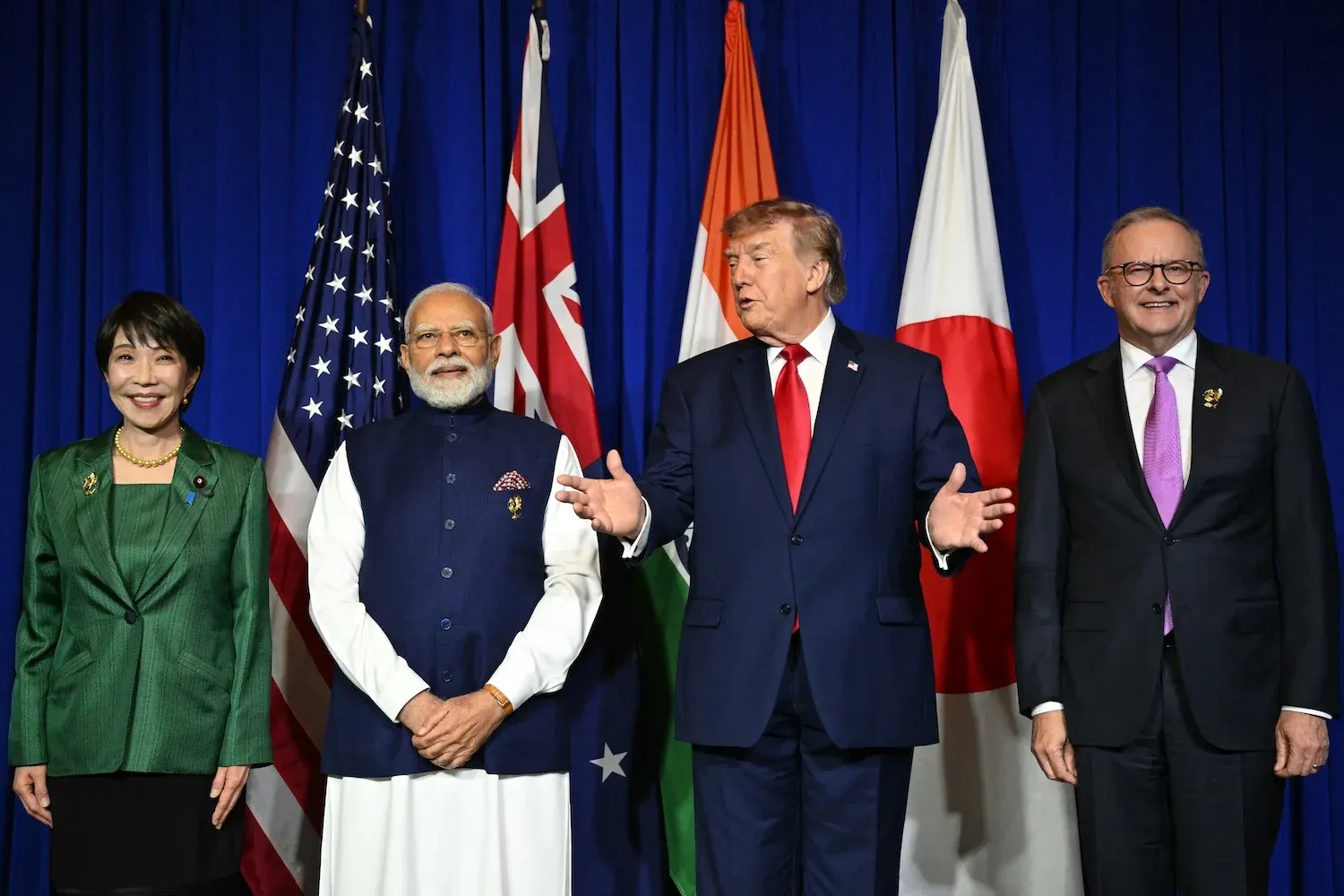
President Trump is meeting Xi Jinping and Vladimir Putin in Shenzhen, a summit New Delhi will watch closely for what it signals about India's position between Washington, Beijing, and Moscow. For decision-makers, the meeting is a live test of whether multi-alignment still buys India leverage, or whether the terms of trade, technology, and energy are being set without it.
President Trump is meeting Xi Jinping and Vladimir Putin in Shenzhen, and the most attentive audience for that room may be in New Delhi. India's government does not have a seat at the table, so it will do what it has done for decades: read the body language, count the handshakes, and recalibrate. Shenzhen is not a neutral backdrop. It is China's showcase city, the place Beijing puts on display when it wants to prove its manufacturing and technology base can absorb pressure and keep exporting.
For New Delhi, the significance is structural. India runs three of its most consequential relationships on separate tracks: a security and technology partnership with Washington, a contested and heavily managed rivalry with Beijing, and a decades-old defense and energy relationship with Moscow. A single meeting that puts all three of India's key counterparts in one Chinese city collapses those tracks into one frame. Whatever is actually said in Shenzhen, the read in New Delhi will be about relative position. Is India being courted, managed, or quietly worked around?
The China leg carries the most immediate weight. India and China share a long, contested Himalayan border and have traded lethal clashes along it in recent years, including a deadly 2020 confrontation that reset the relationship. Since then, both sides have worked to stabilize the line while competing hard for the same manufacturing investment, the same semiconductor supply chains, and the same role as the factory to the world. Shenzhen is a pointed venue for that competition. It is the city that helped turn China into an export machine, and it is close to the model India's own industrial policy is trying to replicate.
The Russia leg is the one that makes Western capitals uncomfortable. India has historically been Russia's largest arms customer, and since sanctions reshaped global energy flows, India has become a major buyer of Russian crude. That has put New Delhi on the receiving end of repeated pressure from Washington and Europe. Watching Trump and Putin share a stage in China raises an obvious question for Indian planners: if Washington and Moscow are talking directly, does the premium India pays for its Russian ties go up or down?
The Washington leg is where the money is. The United States and India have spent years negotiating a stack of unresolved commercial irritants, from tariffs and market access to visas and digital trade rules. India also sits near the center of the technology contest: American chip designers, cloud providers, and defense contractors all want deeper Indian footprints, while Washington wants assurances about who else gets access. Any hint in Shenzhen of a U.S.-China understanding on technology, export controls, or supply chains would land in New Delhi as a signal about how much room India has to play both sides.
Three things are worth watching. First, whether the meeting produces anything concrete on trade or technology, because a deal struck without India at the table can still set terms India has to live with. Second, whether Russia comes up in public, since silence and a joint statement mean very different things to Indian diplomats. Third, the tone toward China. Warmth between Washington and Beijing is not automatically bad for India, but it does change the price of India's leverage.
India is not the only middle power running this calculation. Brazil, Turkey, Saudi Arabia, Indonesia, and the Gulf states all run versions of the same multi-alignment strategy, and all of them will read Shenzhen as a test case. For executives, the read-through is practical rather than geopolitical. Companies making five-year decisions about where to build, source, or sell are effectively betting on which of these relationships stays stable. A summit that signals a thaw between Washington and Beijing, or a hardening between Washington and Moscow, changes the risk premium on supply chains, energy contracts, and market entry across Asia.
The deeper point for New Delhi is that multi-alignment is not free. It buys optionality, but it also means India is rarely the one setting the agenda in rooms like Shenzhen. That is the trade-off Indian planners have accepted for years: stay unaligned, keep every door open, and accept that the biggest conversations happen without you. What they will be measuring now is whether that trade-off still pays, or whether the three powers in that room are quietly redrawing the map India has to navigate.
This story's Key Insights and Take-aways are locked.
Create a free account to unlock Executive Actions for one credit.
Register to UnlockAlways free for Executives Club members. Join the Club
More in Politics

Fifth Circuit Kills Pregnant Workers' Law Over Pandemic Proxy Votes
A procedural ruling, not a policy one, has blocked a federal pregnancy-accommodation law and put every pandemic-era statute in the crosshairs ahead of an expected Supreme Court appeal.

Measles kills a Virginia child under 5, the state's first death of 2026
Virginia's health department confirmed the death but withheld the child's vaccination status, leaving schools, clinics and employers to plan around the one detail that would explain the most.

Former Brazilian President Bolsonaro Hospitalized with Intestinal Obstruction
The health status of the former far-right leader raises immediate questions about political stability and the trajectory of Brazil's conservative movement.