
Trump Praises Speaker-Designate Jeffries After Chief of Staff Called 'Stone-Cold Racist'
The president's Fox News defense of Stephen Miller, paired with rare kind words for the Democrat who just torched him, previews how the next Congress gets negotiated.
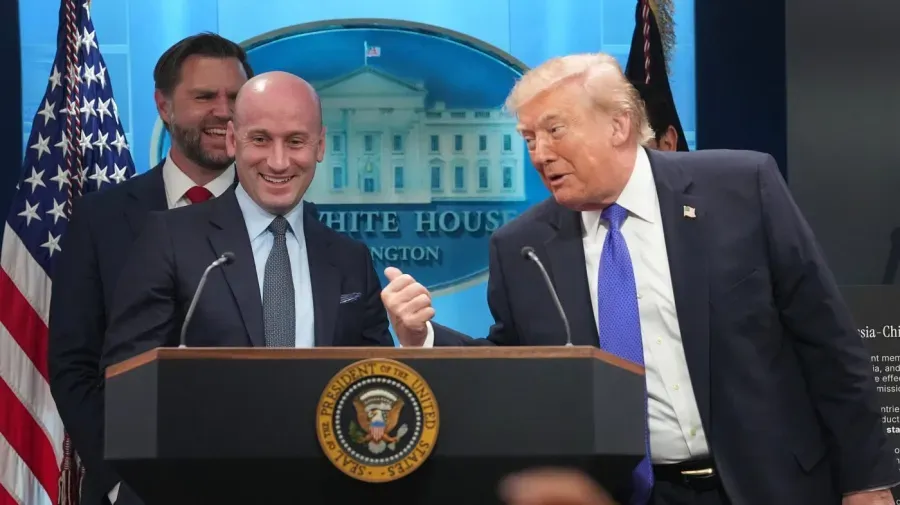
President Trump offered rare praise for House Speaker-designate Hakeem Jeffries on Fox News's 'Saturday in America' while defending chief of staff Stephen Miller, whom Jeffries had called a 'stone-cold racist,' as a 'good person.' The split-screen signals a White House that intends to fight publicly and negotiate privately with a Speaker who controls the floor schedule, committee gavels, and every must-pass funding vote.
President Trump offered rare praise for House Speaker-designate Hakeem Jeffries on Saturday morning, in the same Fox News interview in which he defended his chief of staff, Stephen Miller, against Jeffries's charge that Miller is a "stone-cold racist." Speaking with Kayleigh McEnany on "Saturday in America," the president described Miller as a "good person." The published excerpt of the exchange then cuts off as Trump turns to Jeffries, opening with the words "I think Hakeem." That is the whole story in two sentences: a president publicly validating a Democratic leader who had just torched his most senior aide, and doing it on friendly television, on a Saturday, without a counterpunch.
The rarity is the point. Trump does not typically spend airtime praising the opposing party's leadership, and Jeffries did not soften his language about Miller. Calling a sitting White House chief of staff a "stone-cold racist" is not a policy disagreement; it is a character judgment, delivered by the person now positioned to run the House floor. For the president to answer that with a kind word about Jeffries, rather than a return volley, is a signal about where he thinks the leverage sits in the next Congress. Praise, in this context, is a tool. It costs nothing on friendly weekend television and it buys something later.
Start with the title, because the title is the story. Jeffries is the Speaker-designate, meaning his caucus has nominated him for the gavel and the formal floor vote is the next step. The Speaker is not a ceremonial post. He or she sets the floor schedule, decides which bills get a vote, controls committee assignments through the steering process, and sits second in the line of presidential succession. Historically, the Speaker's margin determines whether a president's legislative agenda moves or dies, which is why the relationship between the White House and the Speaker's office is usually transactional and often cold. Jeffries arriving as the Democratic leader with a public attack on Miller already on the record tells you the tone he intends to set with his own members, who typically want their leader to fight rather than negotiate early.
Miller is not a peripheral figure. He is Trump's chief of staff, the top staff job in the West Wing, and he has been one of the longest-serving architects of the president's hardline immigration and enforcement agenda across administrations. A chief of staff manages the president's time, the flow of information into the Oval Office, and the enforcement of White House priorities across agencies. That makes him both a policy principal and a gatekeeper. When a Speaker-designate attacks the chief of staff by name, he is not just scoring a cable news hit; he is signaling which White House official he expects to be negotiating with, and which one he intends to make politically expensive.
Trump's defense of Miller and his praise of Jeffries are not contradictory. They are a two-track play. Defending the aide protects internal loyalty, which matters because a chief of staff who is seen as abandoned by the boss loses the ability to enforce anything. Praising the incoming Speaker keeps a channel open on the things that actually require legislation: appropriations, the debt limit, government funding deadlines, and any deal that needs 218 votes in the House. For context, divided government in Washington historically runs on exactly this kind of split-screen, public combat for the base and private accommodation for the calendar. The president appears to be running both at once.
Jeffries has his own math. A new Speaker inherits a caucus that has spent years in the minority and expects confrontation. His attack on Miller gives him credibility with that room and frames the White House's enforcement agenda as a moral question rather than a technical one. But a Speaker who only fights cannot govern, and the gavel comes with obligations: keeping the government open, funding the military, and holding a majority together on votes that will never be popular. The praise from Trump gives Jeffries something useful too, a public data point that he can deal with the White House when it serves his members, without having to say so himself.
Watch three things. First, the floor vote: a Speaker-designate still has to win an actual majority of the House, and narrow margins historically give individual members outsized leverage. Second, committee gavels and staff hires, which reveal whether Jeffries intends oversight or legislation as his primary weapon. Third, whether the Miller criticism becomes a recurring theme or a one-off, because a chief of staff under sustained public attack becomes a harder negotiating partner for everyone, including the president's own legislative team. The White House's next public response will tell you which track, combat or accommodation, is the real one.
For executives and boards, the practical read is that Washington risk is back on the calendar. A Speaker-designate who opens with a public fight against the White House chief of staff is a Speaker who will be under pressure from his own members to use the oversight and spending tools the House controls. Companies with exposure to federal appropriations, immigration enforcement, or regulated industries should assume the next funding cycle gets negotiated later and louder than usual. The relationship between the president and the Speaker is the single best leading indicator of whether that happens. Right now, the president is publicly keeping the door open, and the incoming Speaker is publicly keeping his distance.
This story's Key Insights and Take-aways are locked.
Create a free account to unlock Executive Actions for one credit.
Register to UnlockAlways free for Executives Club members. Join the Club
More in Politics
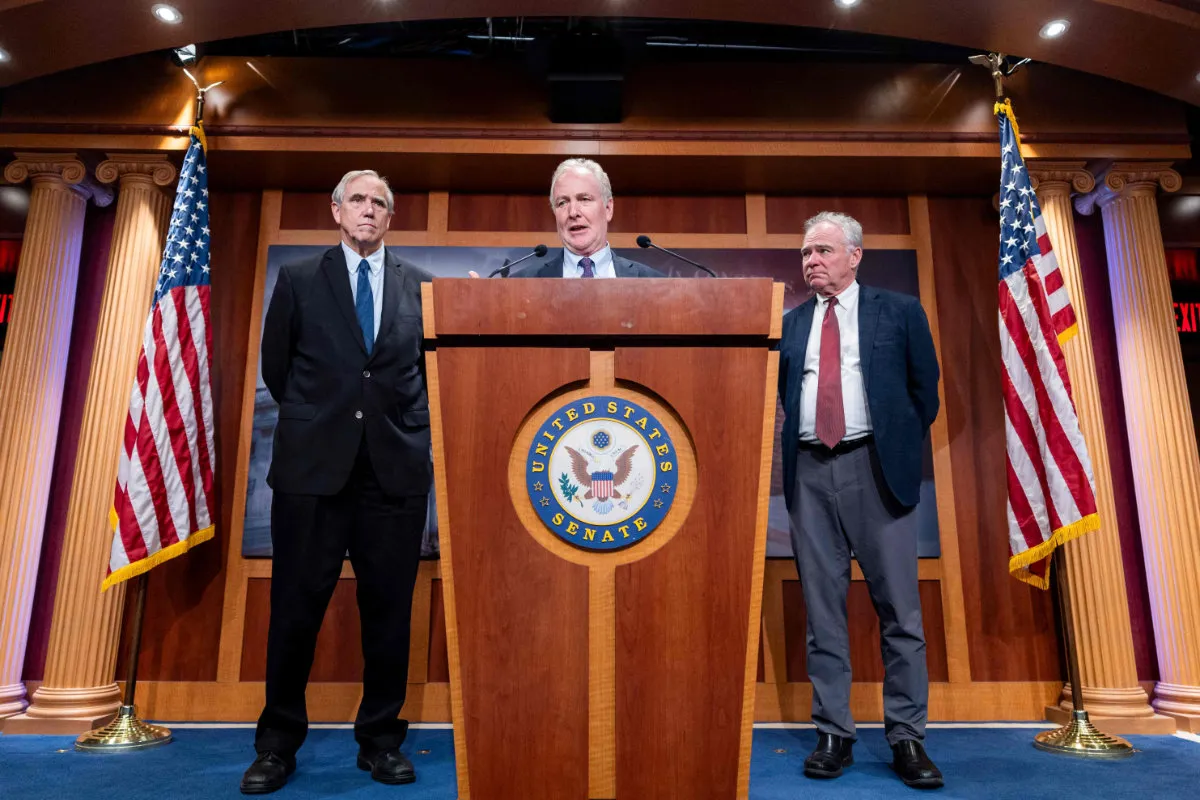
Thirteen Freshman Senators Just Became Chuck Schumer's Toughest Test
Democrats' newest class votes on Senate leadership before being sworn in, and the choice between Chuck Schumer and challenger Chris Van Hollen will set how hard the party fights.

Democrats Nominate Jeffries for Speaker, Teeing Up a Historic First
House Democrats' leadership slate delivers two firsts in one week, and it lands as Trump's security agenda heads to the Sunday shows.
Musk Says He Is 'Not MAGA' as Trump's Coalition Heads for the Exit
The most notable defection yet lands after a midterm thumping, and the question for every operator is how fast the next names follow.