
Trump, Putin and Xi met in China. Is Europe being sidelined?
One summit photo in China and one week of meetings in Berlin and Brussels have forced a question Europe cannot dodge: realignment, or a very expensive photo opportunity?
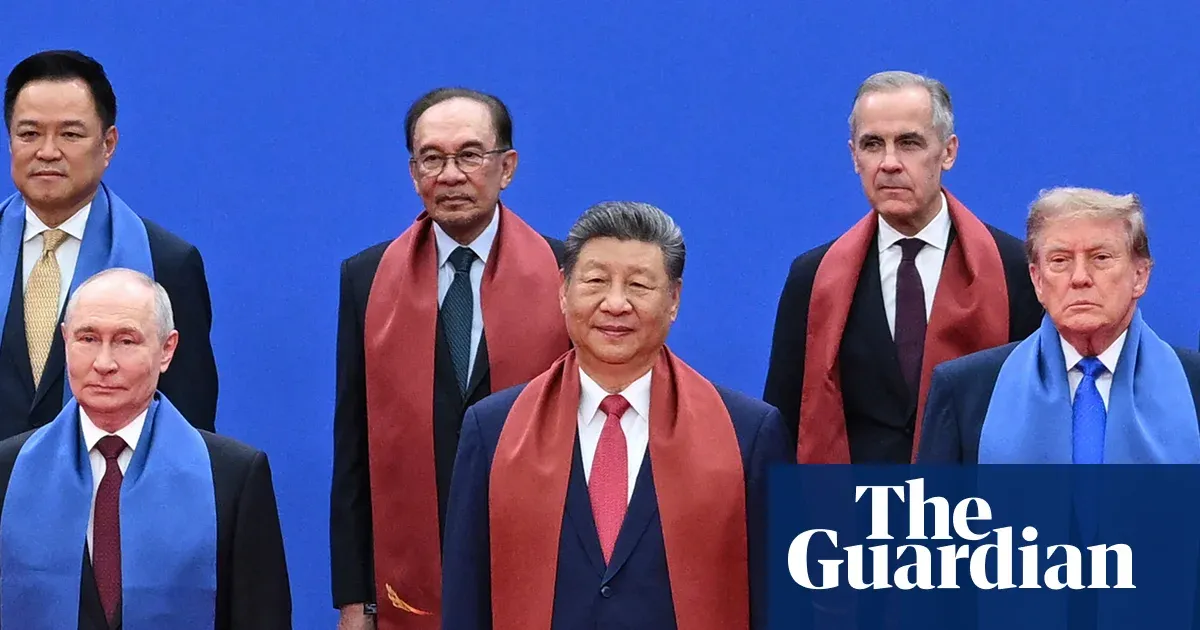
Donald Trump, Vladimir Putin and Xi Jinping met at the APEC summit in China in the same week Andy Burnham met western leaders in Berlin and Brussels to discuss Ukraine and closer ties to the EU. For executives, the question is whether that photograph signals a genuine shift of power away from Europe or a costly distraction from the trade, defence and regulatory decisions that will actually set the terms.
Donald Trump, Vladimir Putin and Xi Jinping met at the APEC summit in China. In the same week, Andy Burnham is meeting western leaders in Berlin and Brussels to discuss Ukraine and closer ties to the EU. That is the collision at the centre of The Guardian's Politics podcast: is this the start of a global shift of power away from Europe, or was it just a hyped-up photo opportunity? Two meetings, one week, and a question every European boardroom is now obliged to ask out loud.
The honest answer, on the evidence available, is that the photograph proves very little and the calendar proves a lot. A single frame from a leaders' summit is not an alliance. But the fact that Europe's most urgent diplomatic energy this week is going into Ukraine support and into keeping the UK close to the bloc tells you what European capitals think their exposure is. The podcast pairs the two tracks deliberately, and points listeners to Pippa Crerar's reporting on the EU's approach to a reset with the UK. Read those two things together and the question stops being abstract and starts being a planning assumption.
Context matters here. APEC, the Asia-Pacific Economic Cooperation forum, is a gathering of Pacific-rim economies where the set-piece communique is typically the least interesting thing in the room. The value has historically sat in the margins: bilateral meetings, handshakes in corridors, the quiet choreography of who gets photographed with whom. That is why a Trump-Putin-Xi frame travels further than any joint statement. It is not a treaty and it does not bind anyone to anything. It is a signal, and signals are cheap to send and expensive to ignore. For a European audience, the uncomfortable part is not what was signed. It is that three governments whose decisions weigh heavily on Europe's security and trade outlook were in one place, while Europe's week was spent managing its own neighbourhood.
On the other track, Burnham's week runs through Berlin and Brussels, with Ukraine and closer EU ties on the agenda. For context, the UK left the EU in 2020 and its trading relationship with the bloc has since been governed by the Trade and Cooperation Agreement, an arrangement both sides have spent years describing, carefully, as something that could be improved. The word doing the work in Brussels is "reset". What is notable about this week is that the trip bundles Ukraine and EU relations into the same diary: security and trade, treated as one file rather than two. That is a change in framing more than a change in policy, but framing is where these things start.
So which reading wins? Take the sceptical one first, because it deserves a fair hearing. APEC summits have produced memorable photographs and forgettable outcomes for decades. Leaders who disagree on almost everything can still stand in the same room for ninety seconds, and the resulting image can be spun into whatever a headline needs. Now the darker reading: three of the world's most consequential governments in one frame, in the same week that Europe is consumed by internal repair, is exactly what a shift of gravity looks like in its early, deniable stage. Nobody announces a new world order. It shows up first as a scheduling coincidence, and only later as a set of terms someone else wrote.
The tie-breaker is follow-through, and it is measurable. Watch for money, rules and commitments rather than gestures: defence spending plans, tariff decisions, technology export controls, energy contracts, and whether bilateral meetings at the margins harden into structured, recurring formats. If the shift reading is right, the practical effects for companies arrive in a recognisable order: higher security costs, harder trade terms, wider regulatory divergence between blocs, and a rising premium on supply chain optionality. If the photo-op reading is right, the cost of overreacting is just as real, because capital redeployed for a headline that never materialised is capital wasted, and boards rarely get credit for caution. The discipline is to price the risk without trading on the image.
What the podcast leaves you with is an open question, which on day one is the correct answer. Nothing in the reporting establishes that an alliance exists; the framing offered is explicitly a question, not a finding. What it does establish is the shape of Europe's week: Ukraine, and the effort to keep the UK close. That is a defensive agenda. It is also a reasonable one, given that Europe's leverage in any future settlement rests on being coherent enough to be needed. The test over the coming months is simple enough to run inside a single board cycle. If the photograph was theatre, it fades and the diary moves on. If it was a first draft, Europe will find out the way everyone else does: through the paperwork.
This story's Key Insights and Take-aways are locked.
Create a free account to unlock Executive Actions for one credit.
Register to UnlockAlways free for Executives Club members. Join the Club
More in Politics

Fifth Circuit Kills Pregnant Workers' Law Over Pandemic Proxy Votes
A procedural ruling, not a policy one, has blocked a federal pregnancy-accommodation law and put every pandemic-era statute in the crosshairs ahead of an expected Supreme Court appeal.

Measles kills a Virginia child under 5, the state's first death of 2026
Virginia's health department confirmed the death but withheld the child's vaccination status, leaving schools, clinics and employers to plan around the one detail that would explain the most.

Former Brazilian President Bolsonaro Hospitalized with Intestinal Obstruction
The health status of the former far-right leader raises immediate questions about political stability and the trajectory of Brazil's conservative movement.