

Trump’s AI “doctor” video hits Rosie O’Donnell, who says he’s “obsessed with me”
A Truth Social deepfake prompt turns into reputational leverage, legal risk, and a fresh test of election-era misinformation norms.
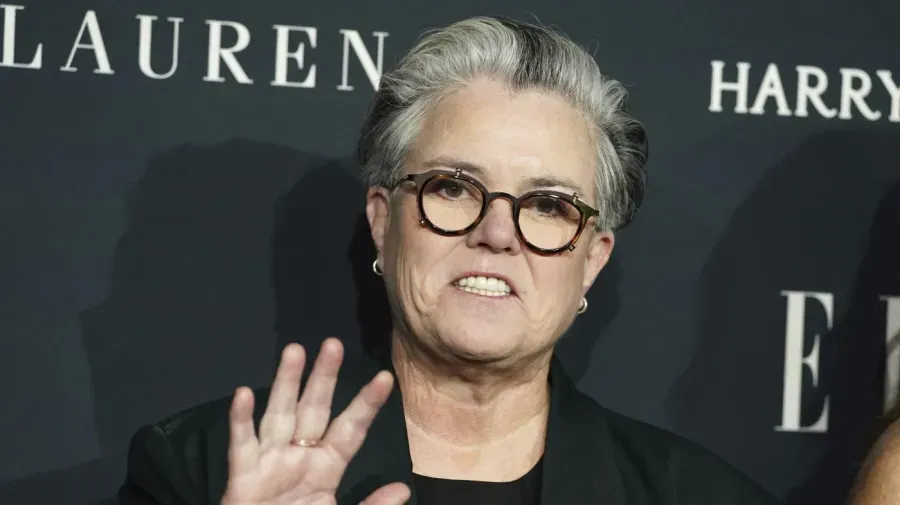
Rosie O’Donnell dismissed an AI-generated video shared by President Trump that depicts him in a white lab coat treating celebrities for “Trump Derangement Syndrome.” For decision-makers, the incident spotlights how political accounts can rapidly weaponize synthetic media and force a response under uncertainty.
Rosie O’Donnell on Friday brushed off an AI-generated video shared by President Trump, calling it evidence that he is “obsessed with me.” The video, posted earlier this month on Trump’s Truth Social account, shows Trump dressed in a white lab coat and stethoscope, presenting himself as a doctor treating celebrities for “Trump Derangement Syndrome.”
O’Donnell’s reaction matters because it shows how fast synthetic media can shift the narrative in public. Instead of treating the video as a niche novelty, her response frames it as a targeted signal, turning a fabricated clip into a reputational argument: the president is not just broadcasting content, he is apparently aiming it at her.
To understand why executives should care, zoom out to how AI-generated content fits into the incentives of high-attention platforms. Truth Social, like other social media networks, optimizes for reach, engagement, and momentum. AI content can be produced cheaply, iterated quickly, and distributed without the friction that traditional media often faces. When a political figure shares a synthetic clip, it benefits from the amplifier effect of verification cues in the audience’s minds: people may treat a prominent account as credible even when the media is not.
This is where the market context gets uncomfortable for decision-makers across platforms, advertising, and governance. Deepfakes and other synthetic media are not just a “trust” problem. They are an operations problem. If a platform carries political AI content, it must decide what enforcement standards apply, how to label it, whether to remove it, and how quickly. If those standards differ across content types, bad actors can exploit the gaps. Even when companies want to respond, they face a timing dilemma: move too slowly and the misinformation spreads; move too fast and critics may allege censorship.
The O’Donnell reaction also highlights the second-order effect of narrative control. When a fabricated video goes viral, the response loop often becomes more important than the original content. O’Donnell did not ignore the clip. By connecting it to a personal claim of obsession, she helped keep the synthetic framing alive in mainstream conversation, which may increase attention to both the video and her commentary. For communications teams and policy leaders, this is a reminder that “debunking” is not a guaranteed off switch. Sometimes the rebuttal extends the shelf life of the underlying claim.
Regulatory background is part of the reason this loop is hard to manage. Election-era misinformation has drawn sustained scrutiny from regulators and policymakers, and synthetic media is increasingly treated as a governance risk rather than a purely technological issue. While the specific legal posture in this story is not detailed in the source, the broader environment makes one thing clear: governments and watchdogs are building expectations around platform responsibility, transparency, and risk management. For companies and boards, that means synthetic media workflows, escalation processes, and auditability are becoming core capabilities.
Boards and executive teams also have to consider stakeholder trust. Political AI content can collide with advertiser concerns, partner constraints, and user confidence. Even if a company does not believe a particular clip is harmful, controversy can still produce downstream costs: reputational risk, regulatory attention, and user churn. In other words, the “content risk” becomes a “business risk,” even when the harm is indirect.
Finally, this incident is a live stress test for peers handling similar situations. If political actors can use AI to present a version of reality that targets real people, then every company with a content distribution layer needs a plan for how it will respond when the pressure is highest and facts are contested. The strategic stake is simple: organizations that can’t reliably manage synthetic-media incidents face compounding effects. More viral content increases more scrutiny, which increases compliance burdens, which can slow down decisions when speed is itself a competitive advantage.
This story's Key Insights and Take-aways are locked.
Create a free account to unlock Executive Actions for one credit.
Register to UnlockAlways free for Executives Club members. Join the Club
More in Politics

Glacial collapse, not rain, killed 180 in Nepal's Himalayan flood
The Himalaya's extreme geography hid the true cause of Nepal's catastrophic flood, a glacial collapse that turned a geological battleground into a mass-casualty zone.

Iran’s Esmail Baghaei says Oman talks start shipping via Hormuz, not US talks yet
Temporary route plans with Oman aim to restart commerce while Tehran says Washington dialogue is not on the table.

Standards watchdog opens probe into Reform UK deputy leader Richard Tice over interests
The parliamentary standards commissioner says it began an investigation on 28 July into a possible undeclared interest.