
Trump's ASEAN Stop: A Photo Op, Fried Food, and a Question
The president's Manila stop was a pit stop and a photo op, and for governments and companies betting on American attention in Southeast Asia, that framing is the whole story.
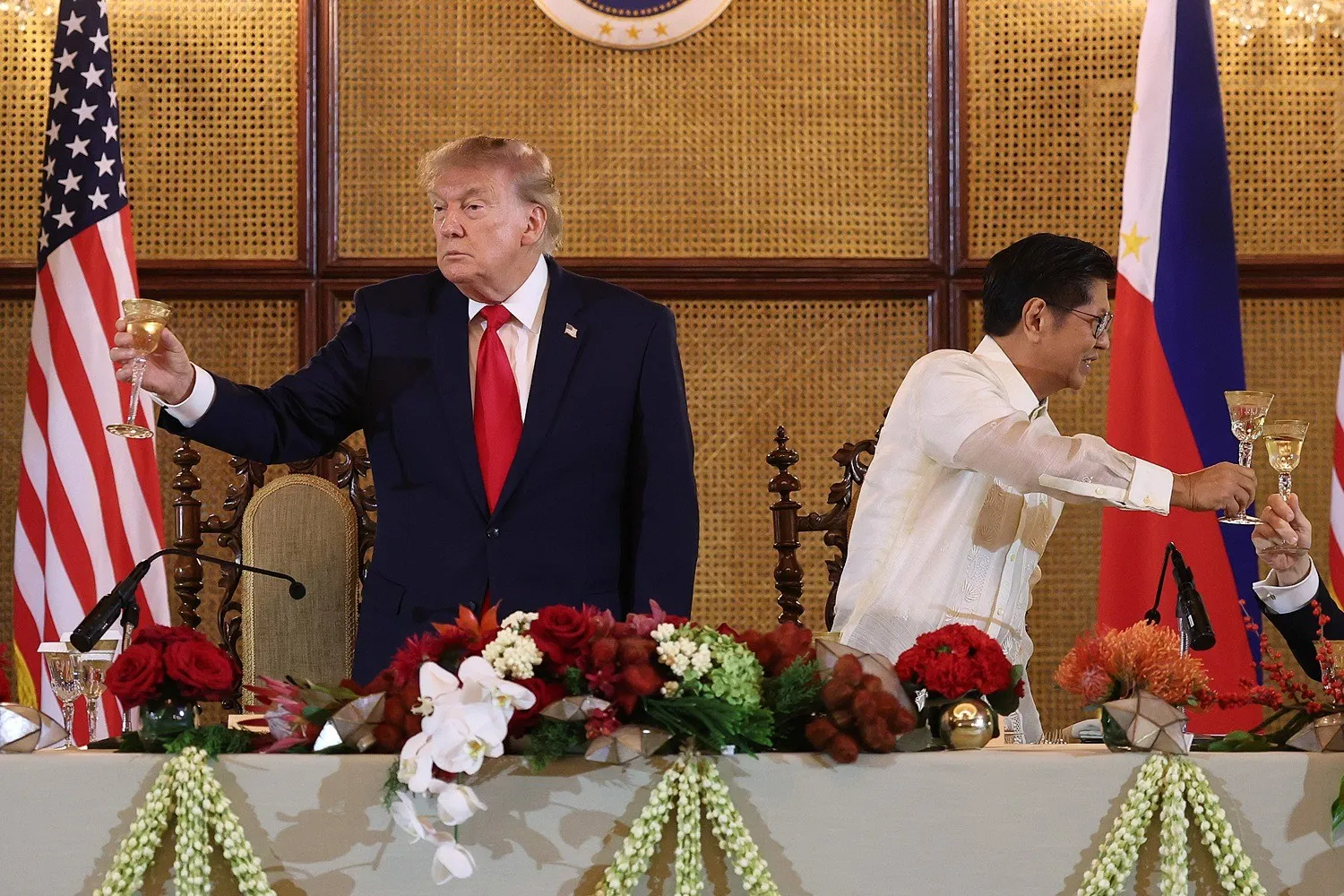
President Trump's stop in Manila for ASEAN was, in Foreign Policy's telling, a pit stop, a photo op, and some Filipino fried food. The consequence for decision-makers is a familiar one: when the world's largest economy shows up for the imagery of engagement rather than the deliverables, partners in the region price that in and hedge accordingly.
The question in the headline answers itself in about one sentence. President Trump's stop in Manila, as Foreign Policy frames it, was a pit stop, a photo op, and some Filipino fried food. That is the reported substance of the visit: a brief landing, a camera moment, a local snack. Which is exactly why the original question, why did he attend ASEAN at all, is the one worth sitting with. When the most powerful economy on earth sends its head of state to a regional summit, the itinerary is a message. This one read as a courtesy call.
For context on why that matters: ASEAN is a ten-member bloc of Southeast Asian states that runs on consensus, which means it rarely produces binding, enforceable commitments. Its annual summit, and the East Asia Summit that typically convenes alongside it, are the region's main stage for heads of state. Historically, a U.S. president showing up is read as a signal of sustained commitment to the region, precisely because the bloc cannot compel anything and attendance is therefore voluntary. Presence is the currency. Absence is a statement. A brief presence is a quieter statement still.
Summits are theater by design, and everyone in the room knows it. For the host government, the photograph with the American president is the deliverable. For everyone else, the deliverables are the joint statements, the trade frameworks, the security language, the bilateral meetings on the margins. Those are the artifacts that get cited for years afterward. When a visit is remembered instead for the snack, the regional read is that the substance was thin, or that the visitor's attention was elsewhere.
Why should that land on your radar? Southeast Asia sits at the center of the global manufacturing map. Supply chains have been shifting toward Vietnam, Malaysia, Indonesia, Thailand and the Philippines for years, and the capital that follows those chains is sensitive to one variable above most others: whether American attention to the region is durable or episodic. Governments there respond to perceived unreliability by hedging, which in practice means deepening ties with other large economies and with each other. Companies then plan around the hedges. A photo op does not stop that process. It can accelerate it.
There is a rational domestic logic to the stop. Presidential foreign travel is often aimed less at the foreign audience than the home one, and imagery travels further than communiques. A president who wants to look engaged abroad can achieve that with a tarmac, a handshake and a plate of food. The cost is paid on the other side of the Pacific, where the same imagery is read as a measure of how much the relationship is actually worth.
The second-order effects are where this gets expensive. Partners and rivals alike price in American attention. When it looks intermittent, regional institutions and other major powers move into the space, not necessarily dramatically, but steadily: more bilateral deals, more infrastructure financing, more defense cooperation that does not run through Washington. None of that shows up in a single news cycle. All of it compounds.
For executives and boards with exposure to the region, the practical question is not what was said at the summit. It is what durable output came out of it. The source's answer is blunt: a pit stop, a photo op, and some Filipino fried food. That is a useful data point for anyone modeling political risk in Southeast Asia, because it tells you how much weight to put on the next invitation.
The takeaway is not that summits are meaningless. It is that the itinerary is the tell. Read where the time went, who got the bilateral meetings, and what got signed. The communique is written for the record. The schedule is written for the truth.
This story's Key Insights and Take-aways are locked.
Create a free account to unlock Executive Actions for one credit.
Register to UnlockAlways free for Executives Club members. Join the Club
More in Politics

Fifth Circuit Kills Pregnant Workers' Law Over Pandemic Proxy Votes
A procedural ruling, not a policy one, has blocked a federal pregnancy-accommodation law and put every pandemic-era statute in the crosshairs ahead of an expected Supreme Court appeal.

Measles kills a Virginia child under 5, the state's first death of 2026
Virginia's health department confirmed the death but withheld the child's vaccination status, leaving schools, clinics and employers to plan around the one detail that would explain the most.

Former Brazilian President Bolsonaro Hospitalized with Intestinal Obstruction
The health status of the former far-right leader raises immediate questions about political stability and the trajectory of Brazil's conservative movement.