
Trump's Frustration With Vance Lands as a 2028 Decision Nears
Trump's irritation over Vance's Iran war critique collides with the vice president's open question about 2028, and donors will read the answer first.
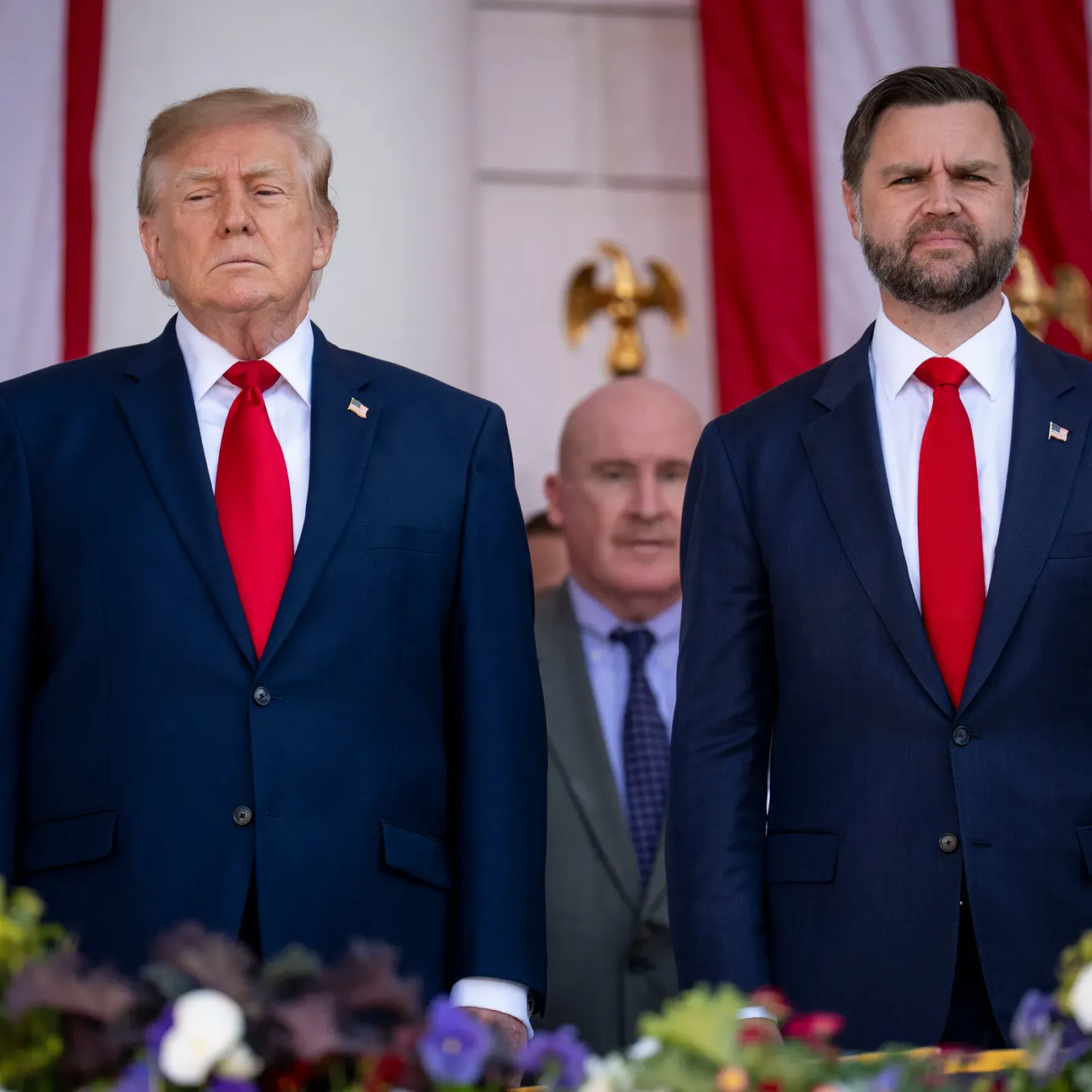
President Trump has grown frustrated with Vice President JD Vance over Vance's critique of the Iran war, according to New York Times reporting, at a moment when Vance is weighing whether to run for president in 2028. The friction matters because a sitting vice president's path to the nomination runs directly through the president's donors, staff, and message discipline.
President Trump has grown frustrated with Vice President JD Vance over Vance's critique of the Iran war, per New York Times reporting, and that friction is arriving at the worst possible moment for the man second in line: Vance is weighing whether to run for president in 2028. Read those two facts together and the story stops being a Washington personality clash. A sitting vice president who wants the top job needs three things a president controls: the donor network, the party machinery, and the reflected airtime of the office. Frustration at the top is not just a headline. It is a leading indicator about all three.
The published reporting does not lay out the full substance of what Vance said, or to whom. It does not have to. The signal is the reaction. Any vice president's core job, historically, is amplification: carry the president's case to Congress, to donors, to cable, to the base. On a war, that assignment gets heavier, not lighter. Wars concentrate authority in the Oval Office and make public dissent inside an administration expensive, because the cost is measured in the currency that matters most to any White House, message discipline.
History offers a rough map, though no exact precedent. Vice presidents have long struggled to separate themselves from a president's contested war without looking disloyal. Presidents, for their part, have typically held the levers a would-be successor needs, from donor lists to staff talent to the simple fact that the sitting president sets the schedule and controls the spotlight. For an ambitious number two, the calculation is always the same arithmetic: how much distance buys credibility with a primary electorate, and how much distance costs you the infrastructure you cannot rebuild on your own.
Then there is the clock. Presidential campaigns in the modern era effectively begin assembling during the midterm cycle, meaning the window to lock down donors, early-state staff, and endorsements is short and unforgiving. For a vice president, that runway typically runs straight through the president's political operation. It is one thing to hold a difference of view on a war. It is another to be frozen out of the room where the money and the electoral map get decided.
That is why the second-order effects matter more than the exchange itself. Watch three things: whether Vance's public schedule keeps him alongside the president or drifts; whether major donors start hedging by spreading money across multiple prospective candidates; and whether the administration's foreign-policy messaging stays as one voice or begins to split. None of those moves require a formal announcement. All of them are visible, and all of them are expensive to reverse once they start.
To be clear about the limits of what is known: the reporting establishes frustration over a critique of the Iran war and places it in the 2028 context. It does not establish that Vance has decided to run, that any break is permanent, or that a policy dispute has hardened into a political one. Presidential and vice presidential relationships have historically swung between friction and repair, sometimes within the same news cycle. The reason this one lands now is not the argument itself. It is the calendar sitting underneath it.
For executives, the parallel is uncomfortably direct. Every organization has a number two who must publicly back the boss's most contested call while privately building a case to lead next. The lesson is that the moment of divergence is rarely the moment of departure. It is the moment donors, staff, and board members quietly recalculate whose future they are investing in. If Trump's frustration with Vance is real and lasting, the 2028 field, the donor map, and the administration's own war messaging all shift. If it cools, this becomes a footnote. The calendar says we will not wait long to find out.
This story's Key Insights and Take-aways are locked.
Create a free account to unlock Executive Actions for one credit.
Register to UnlockAlways free for Executives Club members. Join the Club
More in Politics

Fifth Circuit Kills Pregnant Workers' Law Over Pandemic Proxy Votes
A procedural ruling, not a policy one, has blocked a federal pregnancy-accommodation law and put every pandemic-era statute in the crosshairs ahead of an expected Supreme Court appeal.

Measles kills a Virginia child under 5, the state's first death of 2026
Virginia's health department confirmed the death but withheld the child's vaccination status, leaving schools, clinics and employers to plan around the one detail that would explain the most.

Former Brazilian President Bolsonaro Hospitalized with Intestinal Obstruction
The health status of the former far-right leader raises immediate questions about political stability and the trajectory of Brazil's conservative movement.