
Trump says Iran is seeking biological weapons as Houthis target Riyadh
One morning, four flashpoints: an Iran bio-weapons claim from Washington, Saudi interceptors over Abha, a fresh Israeli ground push in Gaza, and a congressman telling JD Vance to end the war.
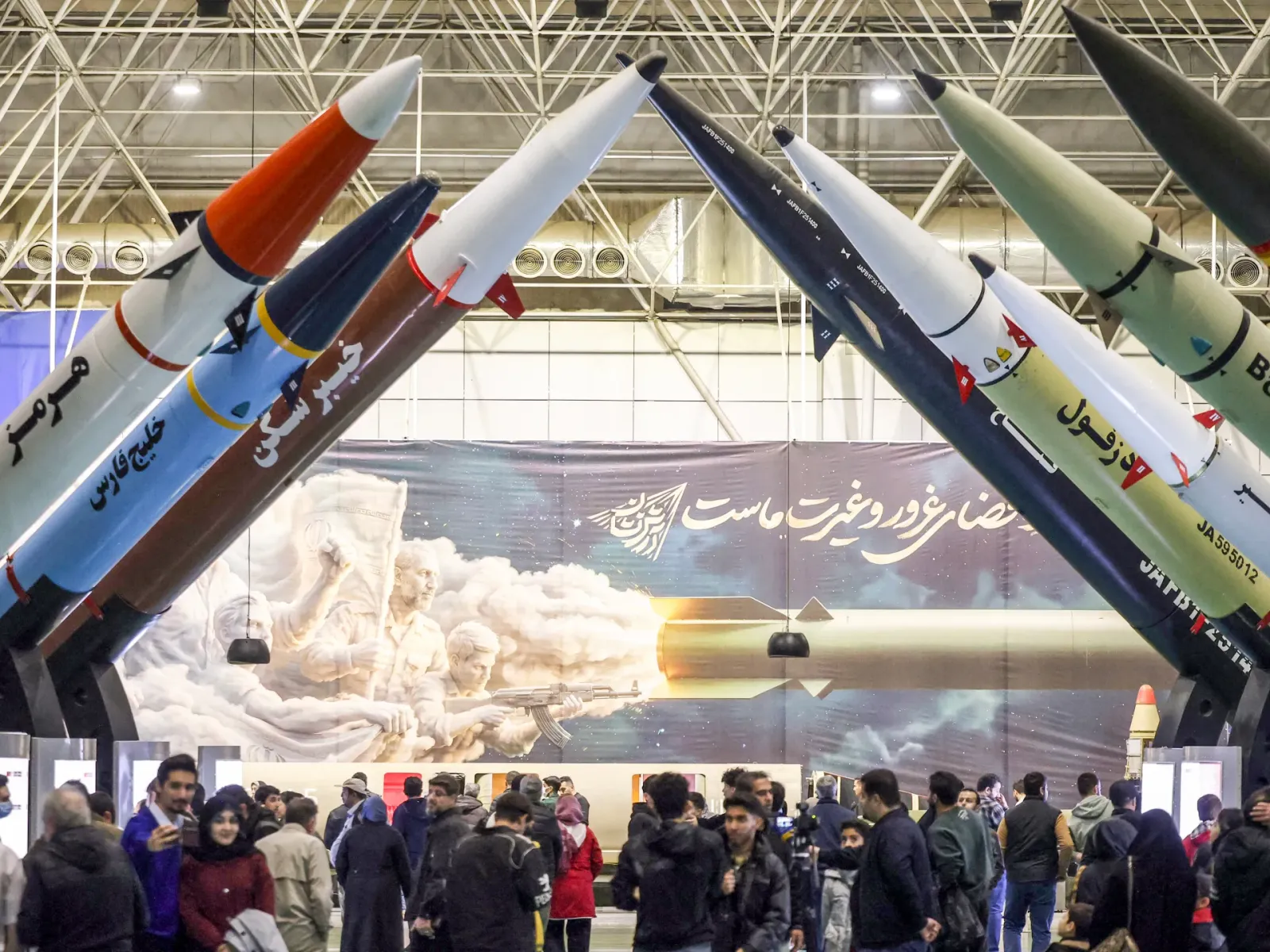
Trump says Iran is seeking to develop biological weapons, while the Saudi-led coalition says it downed four Houthi ballistic missiles aimed at southern Saudi Arabia and destroyed a launch platform in Dhamar used in an attempted strike on Riyadh. For anyone tracking Middle East risk, the same morning delivered a Gaza ceasefire the US-backed Board of Peace already warns is near collapse and a public Democratic demand that Vice President JD Vance end the US-Israel war on Iran.
Trump says Iran is seeking to develop biological weapons. That claim opened Al Jazeera's live coverage of a morning that turned kinetic fast: the Saudi-led coalition says its air defences downed and destroyed four ballistic missiles launched by the Houthis towards Saudi Arabia's southern region. It was the second time the coalition claimed to have repelled a Houthi missile attack in the area that morning.
The alerts came in waves. Saudi Civil Defence issued a brief warning for Abha city, then said the danger had passed. It declared the danger over in Khamis Mushait governorate after an alert there. Later, the coalition's spokesman, Turki al-Malki, said its forces destroyed a ballistic missile launch platform in Yemen's Dhamar governorate, which the Houthis had used during an attempted attack on the Saudi capital, Riyadh. Read together, the sequence is an accusation in Washington, interceptors over southern Saudi Arabia, and a strike on the launch site Riyadh says was aimed at its own capital.
Washington's own politics are not settled either. Democratic Congressman Ro Khanna told Vice President JD Vance to end the US-Israel war on Iran, writing on X: "This is the time to come to the Hill and work with us to end the war in Iran." He opened the post with "@JDVance, like Anakin, you can turn away from the dark side." The comment comes amid reports of tension between Trump and Vance over the latter's claim that the conflict cost Republicans the midterm elections. That is the part worth underlining for anyone mapping US policy risk: the argument over the Iran war has moved from the battlefield to a public fight about what it costs at home.
In Gaza, the ceasefire that took effect on October 10, 2025 is under visible strain. Israeli forces have launched a ground operation in central Gaza, advancing west of the line they withdrew to under last year's ceasefire and forcing Palestinian families, many of whom had already been displaced, to flee their homes once again. It is the first major ground offensive publicly announced by the Israeli military since the ceasefire took effect. It follows a warning by the US-backed Board of Peace that the 13-month-old agreement risks collapse. In a report to the UN Security Council, the board accused Israel of restricting aid and delaying the deployment of Palestinian police, and Hamas of continuing armed activity and taxing goods entering Gaza. Senior Hamas official Basem Naim dismissed the report as "pure disinformation".
Is the region sliding toward something bigger? A Jordanian politician and former interior minister, writing for Al Jazeera, argues no, at least not at the scale of the last century. Nuclear deterrence, in his view, makes a conflict on the scale of the two world wars all but impossible. The five permanent members of the UN Security Council - the United States, Russia, China, the United Kingdom and France - all possess nuclear weapons, as do India, Pakistan, North Korea and Israel. Iran may yet join them. An all-out war involving these powers, he writes, would produce neither victors nor vanquished, but destruction on a scale that could threaten civilisation itself. His sharper point: while a traditional world war may be impossible, a different kind of global conflict is already under way, with longstanding disputes and rivalries already erupting into war and competing national interests driving countries into opposing camps, much as in the years preceding World War II.
The Houthis' ability to keep firing is a money story as much as a military one. Mohammed, 19, joined the fighting on Yemen's Red Sea coast in March this year, battling alongside Houthi forces against pro-government forces and Saudi-led coalition air strikes. The group has also faced international sanctions and attempts by Saudi Arabia and the Yemeni government to restrict its access to funds. And yet, speaking during a recent visit to Sanaa, Mohammed told Al Jazeera the Houthis were still getting supplies to their fighters: "It is not always war and death on the battlefield. We have a good time. We eat the best food. We can chew khat. If injured or sick, we will be taken care of. Our commander on the ground makes sure we have the supplies we need." Throughout a decade of war, the group has developed a range of funding streams that finance its military operations and tighten its grip on the areas it controls.
Even the weather is contested. Israel's Foreign Ministry shared an Al Jazeera video of Palestinians swimming to suggest winter storms in Gaza cannot be that bad. The post acknowledges that it is "real footage from Gaza", which Al Jazeera frames as an opening to show other real footage it has posted over the past three years. For anyone briefing a board on Middle East exposure, the takeaway is that the information layer is now a frontline of its own, and both sides are using authentic material to argue over conditions on the ground.
Put the pieces side by side and the morning reads as a test of several assumptions at once. The biological weapons claim against Iran arrives without supporting evidence in the source. The intercepts show Saudi air defences still working and Houthi launch capacity still intact. The Gaza operation shows a ceasefire the Board of Peace already flagged as at risk of collapse. The Khanna-Vance exchange shows the political cost of the Iran war being argued out loud, with a Republican-vs-Republican fault line running through it. For operators with supply chains, energy exposure or capital in the region, the practical question is not whether a world war is coming. It is which of these four pressure points breaks first, and how quickly each one moves from a headline to a line item.
This story's Key Insights and Take-aways are locked.
Create a free account to unlock Executive Actions for one credit.
Register to UnlockAlways free for Executives Club members. Join the Club
More in Politics

Fifth Circuit Kills Pregnant Workers' Law Over Pandemic Proxy Votes
A procedural ruling, not a policy one, has blocked a federal pregnancy-accommodation law and put every pandemic-era statute in the crosshairs ahead of an expected Supreme Court appeal.

Measles kills a Virginia child under 5, the state's first death of 2026
Virginia's health department confirmed the death but withheld the child's vaccination status, leaving schools, clinics and employers to plan around the one detail that would explain the most.

Former Brazilian President Bolsonaro Hospitalized with Intestinal Obstruction
The health status of the former far-right leader raises immediate questions about political stability and the trajectory of Brazil's conservative movement.