
Trump Seeks Noon Reset, Weakened by Midterm Beating and Open Iran War
The president gets one podium and two problems he cannot talk around: a party that just lost and a war with no end date.
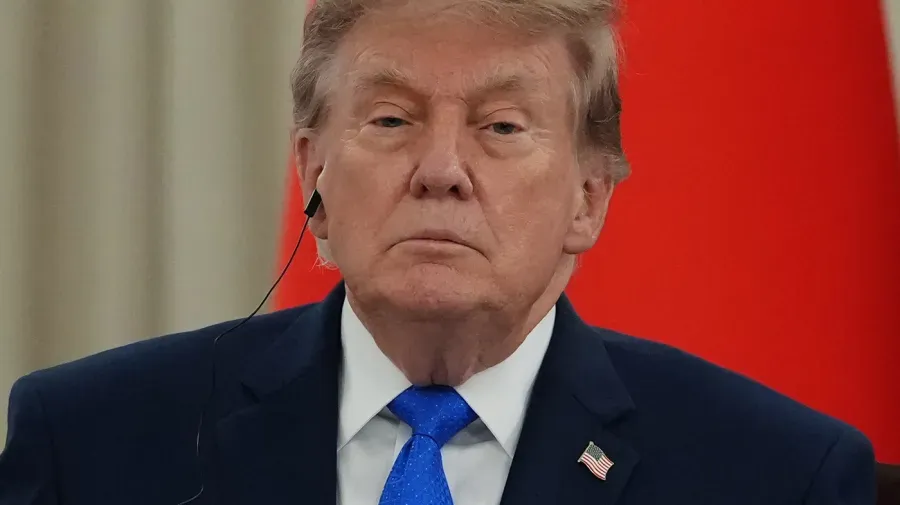
President Trump holds a White House news conference at noon EST Friday, seeking a reset after the GOP took a major beating in the midterm elections while the war on Iran remains unresolved. For decision-makers, the appearance is a real-time signal on how much political capital the White House still has to spend, and whether an open-ended conflict will finally get a shape that allies, boards, and markets can plan around.
President Trump will hold a news conference at the White House at noon EST Friday, and the framing around it is already set: this is a reset attempt. He comes to the podium weakened by the major beating the GOP took in the midterm elections, with the war on Iran still unresolved, and with the rest of his standing under pressure. That combination is the story. A president riding high does not need a reset. A president who calls one is telling you, without saying it, that the last stretch went badly and the next one needs a different script.
Start with the political arithmetic, because it explains everything that follows. Midterm losses are not just a scoreboard. Historically, they are a transfer of leverage. Lawmakers who survived a rough cycle return to Washington with their own survival instincts sharpened, and their willingness to take tough votes for the White House typically falls in direct proportion to how badly the party performed. That does not make a president powerless. It makes every ask more expensive. A press conference cannot restore lost seats, but it can reset the story, and in a town where narrative often moves before legislation, that is not nothing.
Then there is Iran, which is the harder problem because it does not respond to messaging. The war stands unresolved. Unresolved is a specific kind of bad, and it is worth being precise about why. A conflict with a clear end state, even an ugly one, can be planned around: budgets get set, allies get commitments, markets get a horizon. A conflict with no visible end state does the opposite. It keeps options open in the worst way, forcing decisions to be made and remade, and it hands every opponent, foreign and domestic, a standing argument that the strategy is not working. For a president already weakened at home, that is the issue most likely to define the press conference, whether he wants it to or not.
White House news conferences are, historically, one of the few formats where a president sets the terms without a filter. No prepared remarks to hide behind, no friendly interviewer, no edited clip. That is the upside and the trap. A confident performance can calm allies, quiet a restive caucus, and push a negative news cycle off the front page for a day or two. A shaky one does the reverse and becomes the story itself. The format rewards command of detail and punishes improvisation, which is why the run-up to a high-stakes appearance usually matters more than the appearance.
So watch for signals, not soundbites. Three questions will tell you more than any single answer. First, does he put a shape on the Iran commitment, meaning any framework that lets allies and markets price the next six months? Second, does he address the midterm result directly, or route around it? Presidents who name their losses typically regain some room to maneuver; presidents who deny them usually spend the next cycle relitigating. Third, does the reset come with personnel or policy changes, or is it purely rhetorical? A reset with no structural change is a communications event. A reset with changes is a governing one.
For anyone with money on the table, the read is straightforward. Political weakness in Washington and an open-ended conflict abroad are both uncertainty inputs, and uncertainty is what gets priced into energy, defense, and risk assets long before the policy itself is written. That does not mean a press conference moves markets. It means the questions the president answers on Friday are the same questions boards and CFOs have been asking for months, and the answers, or the absence of them, shape how confidently capital gets deployed into the next quarter.
The stakes, then, are bigger than one afternoon. Trump gets a microphone and roughly an hour to define what the next phase of his presidency looks like against two problems that will not be talked away: a party that just took a beating and a war that has not ended. The reset he is seeking is real and available. It is also conditional, and it will be judged by whether the words on Friday are followed by decisions that hold.
This story's Key Insights and Take-aways are locked.
Create a free account to unlock Executive Actions for one credit.
Register to UnlockAlways free for Executives Club members. Join the Club
More in Politics

Fifth Circuit Kills Pregnant Workers' Law Over Pandemic Proxy Votes
A procedural ruling, not a policy one, has blocked a federal pregnancy-accommodation law and put every pandemic-era statute in the crosshairs ahead of an expected Supreme Court appeal.

Measles kills a Virginia child under 5, the state's first death of 2026
Virginia's health department confirmed the death but withheld the child's vaccination status, leaving schools, clinics and employers to plan around the one detail that would explain the most.

Former Brazilian President Bolsonaro Hospitalized with Intestinal Obstruction
The health status of the former far-right leader raises immediate questions about political stability and the trajectory of Brazil's conservative movement.