
Trump Threatens 'Tremendous Penalties' on US Tech Firms Building Data Centers Abroad
The President signaled a major shift in US tech policy, putting global data center operations under immediate regulatory scrutiny.
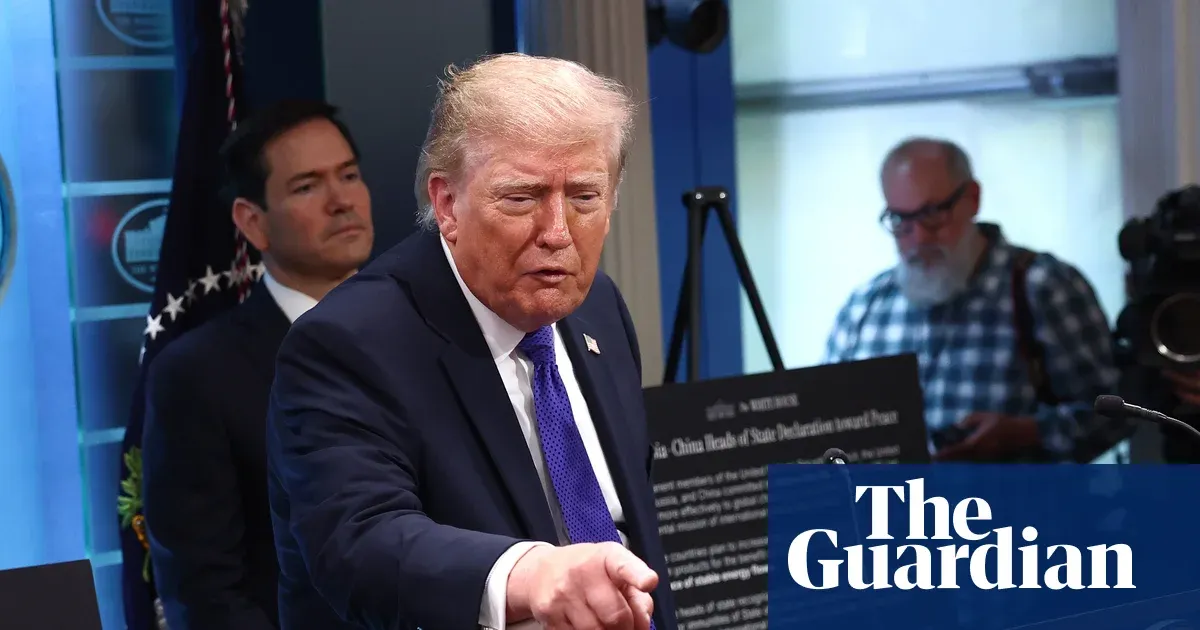
President Donald Trump announced a threat to impose 'tremendous penalties' on American technology companies that choose to build data centers outside of the United States. This move signals a potential dramatic shift toward aggressive domestic data localization policies, forcing global tech operators to reassess their international capital allocation and regulatory compliance strategies.
The threat is clear, even if the specifics are currently murky: President Donald Trump has signaled that US tech firms operating globally may soon face 'tremendous penalties' if they continue to build data centers outside of American borders. During a recent White House press conference, Trump made this declaration, though he was quick to clarify that he had not yet provided specific details to reporters, nor had he formally briefed his own administration on the scope of the plan. This statement, delivered amidst a broader, highly discursive press conference, immediately throws a spotlight onto the complex and often globally distributed infrastructure of major tech players, from cloud providers to AI developers.
For any executive responsible for global infrastructure, this is not a vague political bluster; it is a high-stakes regulatory warning. The immediate implication is a massive increase in operational uncertainty. While the President's comments were made in a highly political context, the language used-'tremendous penalties'-suggest a potential for severe financial, operational, or even market access repercussions. The core tension here is the clash between the current globalized, efficiency-driven model of tech expansion and a potential new era of aggressive domestic protectionism.
To understand why this threat is so significant, one must look at the current state of the data center industry. These facilities are the bedrock of the modern digital economy. They house everything from consumer social media feeds to complex, large-scale AI training models. For years, the industry has operated on a model of optimizing for cost and proximity to end-users, leading to massive investments in regions like Europe, Asia, and Latin America. These investments are driven by market demand and operational efficiency. A sudden, punitive shift toward domestic data localization could fundamentally alter the economic calculus of these global operations.
This is not an isolated policy discussion. The threat arrives against a backdrop of escalating geopolitical tensions. During the same press conference, Trump referenced his 'fantastic relationships' with leaders like Xi Jinping and Vladimir Putin, while also addressing the potential threat of an Iranian 'dirty bomb' in Washington D.C. This juxtaposition suggests that the proposed penalties on tech firms are likely to be framed not just as an economic policy, but as a matter of national security and strategic control over critical infrastructure. The narrative being built is one where data sovereignty is inextricably linked to national security interests.
From an operational standpoint, the threat forces a difficult strategic choice. Do you continue to pursue the most cost-effective global expansion, or do you begin the costly, time-consuming process of repatriating or building new, expensive domestic capacity? For a company with a global footprint, the cost of compliance could be astronomical. Building a data center in the US is significantly more expensive than building one in many international markets, and the regulatory hurdles, while complex, are often more predictable than the sudden, unpredictable swings of executive policy.
Furthermore, the lack of detail from the White House is, in itself, a strategic signal. By issuing a broad, high-level threat without providing a roadmap, the administration achieves maximum political impact while maintaining maximum regulatory flexibility. This allows the policy to be adjusted, intensified, or softened based on political cycles or specific industry lobbying efforts. For investors, this translates to increased risk premium requirements for any company with significant international data center exposure.
We must also consider the broader political context of the statement. Trump also backed Vice President JD Vance regarding comments made about Republican midterm losses and the Iran war. This reinforces a political environment where executive statements are highly charged and often serve to reinforce a specific political narrative. The data center threat is therefore likely to be part of a larger, more sweeping agenda aimed at reasserting American industrial and technological dominance, potentially at the expense of global market access for US corporations.
For tech executives, the message is clear: the era of assumed global operational freedom is under review. The focus must shift from pure efficiency to strategic resilience and political risk management. The question is not whether the penalties will materialize, but how quickly and how severely they will be applied, and what the precise triggers will be. This requires a deep dive into the regulatory landscape and a proactive stance on domestic investment, even if it runs counter to immediate financial optimization models.
This story's Key Insights and Take-aways are locked.
Create a free account to unlock Executive Actions for one credit.
Register to UnlockAlways free for Executives Club members. Join the Club
More in Politics

Fifth Circuit Kills Pregnant Workers' Law Over Pandemic Proxy Votes
A procedural ruling, not a policy one, has blocked a federal pregnancy-accommodation law and put every pandemic-era statute in the crosshairs ahead of an expected Supreme Court appeal.

Measles kills a Virginia child under 5, the state's first death of 2026
Virginia's health department confirmed the death but withheld the child's vaccination status, leaving schools, clinics and employers to plan around the one detail that would explain the most.

Former Brazilian President Bolsonaro Hospitalized with Intestinal Obstruction
The health status of the former far-right leader raises immediate questions about political stability and the trajectory of Brazil's conservative movement.