
Trump Weighs New Iran Strikes as Israel Pushes and His Team Splits
Warnings about a rebuilt Iranian missile stockpile and advancing chemical and biological programs have divided the administration, putting a strike decision on the table with no clean off-ramp.
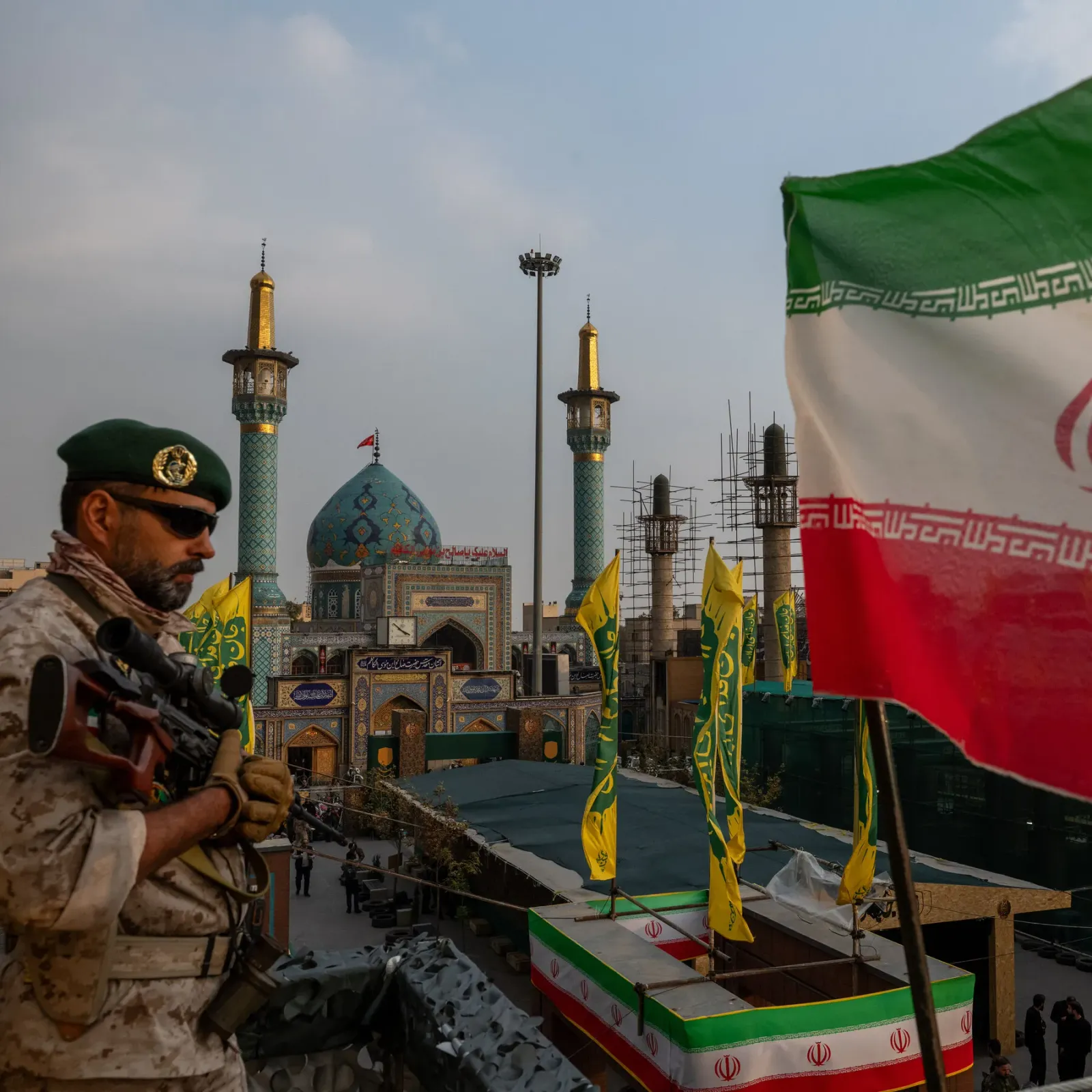
President Trump is weighing new strikes on Iran as Israel presses for action, with officials warning that Tehran is rebuilding its missile stockpile and advancing biological and chemical programs, a split that has divided his administration. For decision-makers, the live question is not whether Iran is a threat but whether a strike shrinks the problem or accelerates it, a distinction that moves oil risk, defense exposure and allied planning right now.
President Trump is weighing a new round of strikes on Iran, according to officials cited by The New York Times, and the reason it is on his desk is a two-part squeeze: Israel is pressing for action, and U.S. intelligence is warning that Iran is rebuilding its missile stockpile while advancing biological and chemical programs. Those warnings have divided the administration, the reporting says. That split is the story. The debate inside the government is not whether Iran is a problem, it is whether a strike makes the problem smaller or larger, and the people advising the president do not currently agree on the answer.
First, the boundaries of what is actually known. The Times reports that strikes are under consideration, not ordered. It attributes the Israeli push and the internal warnings to officials it does not name, and there is no announced timeline, no public target list and no on-the-record White House statement in the reporting as described. Anyone reading the headline as a countdown should slow down. A weighed option is a signal, and in this case the signal may be doing some of the work, but a signal is not a decision, and a decision is not a plan.
The missile file is the hardest one to close. Iran's ballistic missile force is the part of its military that is hardest to disarm and, structurally, quick to rebuild: production can be spread across small workshops, the launchers are mobile, and the system is built to absorb a first round of strikes and answer with a second. That is why warnings about a rebuilt stockpile carry weight even when the nuclear file is quiet. A stockpile is a number that can grow back in months. It is also the delivery system for everything else, which is why Israel treats it as the leading indicator rather than a side issue.
Chemical and biological programs are a different problem entirely, and a worse one for anyone who has to make a decision. Nuclear facilities are big, hot and photographable. Chemical and biological work is small, dual-use and often invisible from the outside: a legitimate pharmaceutical plant and a prohibited one can share equipment, and the evidence tends to arrive as a fragment of intelligence rather than a satellite image of a hangar. That makes the warnings hardest to corroborate in public and easiest to contest in private, which is precisely the condition that produces a divided administration. It also raises the price of being wrong in both directions. The 2003 Iraq intelligence failure remains the cautionary case for any administration weighing a weapons warning.
Israel's incentive structure is simpler. Israeli officials have argued for years that the window on Iran's programs closes rather than widens, and a government that believes that has reason to press Washington and, failing that, to act on its own timetable. That is the second-order risk buried in the reporting: a divided U.S. process is slow by design, and slowness gets read in Jerusalem as drift. The administration's internal argument and Israel's external pressure are not separate stories. They feed each other, and the louder one gets, the less room the other has.
Markets price this before governments announce it. Oil typically carries a geopolitical risk premium the moment a strike debate becomes public, because the Strait of Hormuz, through which a large share of the world's seaborne crude normally moves, sits inside Iran's threat envelope. Shipping insurers, tanker rates and defense order books tend to move on headlines rather than outcomes, which is why the trading reaction to a leak is often larger than the reaction to the actual decision. For operators with energy, freight or supply chain exposure, the practical takeaway is that the risk is already in the tape, and the question is whether it stays there as a premium or converts into a physical disruption.
A divided administration also leaks, and that is not incidental. When the argument is live, officials on each side have an incentive to move the outcome by moving the story: the faction that wants a strike describes an accelerating threat, the faction that does not describes an escalation trap, and both are talking to reporters. That dynamic does not tell you which way the president will go. It tells you the decision is genuinely open, which is the most useful thing a reader can extract from a story sourced to unnamed officials. Open decisions can be influenced. Closed ones cannot.
Watch three markers. Whether named officials start saying on the record what the anonymous ones are saying, which is usually the difference between a trial balloon and a policy. Whether Israel moves without waiting, which would end the debate for Washington by making it purely reactive. And whether the intelligence behind the missile and chemical warnings is shared with allies or partially declassified, which is how administrations assemble the coalition a strike would need. For anyone whose business, portfolio or career touches energy, defense, shipping or the Middle East, the lesson is uncomfortable but simple: the most expensive outcome is not the strike or the pause, it is being positioned for one and getting the other.
This story's Key Insights and Take-aways are locked.
Create a free account to unlock Executive Actions for one credit.
Register to UnlockAlways free for Executives Club members. Join the Club
More in Politics

Fifth Circuit Kills Pregnant Workers' Law Over Pandemic Proxy Votes
A procedural ruling, not a policy one, has blocked a federal pregnancy-accommodation law and put every pandemic-era statute in the crosshairs ahead of an expected Supreme Court appeal.

Measles kills a Virginia child under 5, the state's first death of 2026
Virginia's health department confirmed the death but withheld the child's vaccination status, leaving schools, clinics and employers to plan around the one detail that would explain the most.

Former Brazilian President Bolsonaro Hospitalized with Intestinal Obstruction
The health status of the former far-right leader raises immediate questions about political stability and the trajectory of Brazil's conservative movement.