
Trump, Xi and Putin Meet for the First Time. Yalta It Is Not.
Three leaders want the world to see them steering the global order, but their Shenzhen gathering is unlikely to settle anything major.
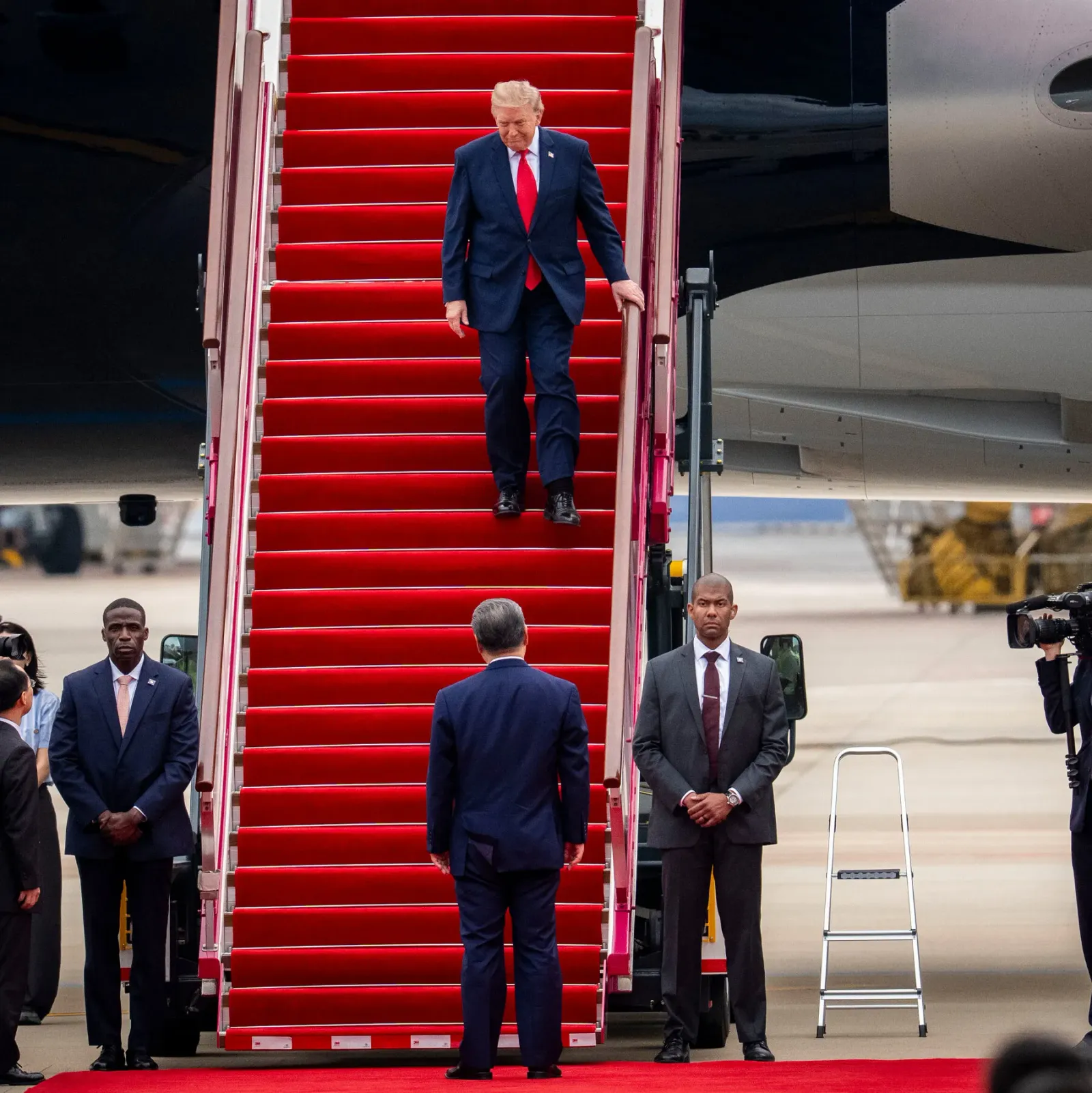
Trump, Xi Jinping and Vladimir Putin will sit down together for the first time, at a gathering in Shenzhen, China, aiming to project the image of leaders guiding the world order. The New York Times reports they are unlikely to settle major issues there, which means executives should read the meeting as a signal about tone and alignment rather than a source of binding policy.
Trump, Xi Jinping and Vladimir Putin will sit down together for the first time, and the venue is Shenzhen, China. Three nuclear-armed powers, three leaders with enormous economic weight behind them, one room, one table, and one image that governments, markets and militaries will spend weeks decoding. The New York Times is blunt about what that image is worth: while the three would like to project the sense that they are guiding the world order, they are unlikely to settle major issues at the gathering. That gap, between the picture and the outcome, is the whole story.
The Yalta comparison is doing a lot of work in that framing, so it is worth unpacking. In February 1945, Franklin Roosevelt, Winston Churchill and Joseph Stalin met at a Black Sea resort in Crimea and effectively sketched the shape of postwar Europe: zones of influence, the fate of Germany, the contours of what became the United Nations. It was a summit that produced a settlement, one that held in its broad outlines for decades. It is also remembered as a deal cut over the heads of smaller nations, which is precisely why the word carries a sting. A Shenzhen meeting that produces no settlement is not a lesser Yalta. It is a different kind of event entirely.
Shenzhen is not an accidental backdrop. The city was the laboratory for China's reform era, a fishing town turned manufacturing engine turned technology capital, home to some of the country's most consequential companies. Hosting here rather than in Beijing reads as a signal that China wants to be seen as modern, commercial and forward-facing. For Xi, the setting is part of the argument: that China's model, not only its military, belongs at the center of any conversation about the global order. Venues at this level are never neutral. They are the first paragraph of the communique.
Three-way summits are structurally harder than bilateral ones. Two leaders can trade one thing for another and call it a deal. Three leaders have to manage three separate relationships at once, each with its own history, its own grievances and its own domestic audience watching for any sign of weakness. Historically, the biggest multilateral gatherings have produced durable outcomes only when the participants arrived with a shared project, a common enemy or a common prize. Absent that, the format tends to produce choreography: handshakes, staged walks, carefully worded statements that commit no one to anything measurable.
Yalta had all of those ingredients. A world war was still being fought, the outcome was no longer in doubt, and the three men in the room were allies, however uneasy, dividing up the consequences of a victory they had won together. None of that maps onto the present. The relationships among Washington, Beijing and Moscow are not those of co-victors. They are competitive, transactional and, in places, openly adversarial. That is the reason the New York Times frames the meeting as an image project rather than a negotiating session. The leaders want the picture. The picture is the point.
So what should actually be watched? Three things. First, the language of any joint statement: what is named, what is deliberately left unnamed, and whether any commitment is specific enough to be verified. Second, the side meetings, because the real business at gatherings like this typically happens in bilateral rooms off the main stage. Third, the follow-through in the weeks after, since a summit that matters leaves fingerprints on policy and one that does not leaves only photographs. Until something binding emerges, the safe assumption is that nothing binding was agreed.
For executives, the practical read-through is about uncertainty, not resolution. Companies with exposure to tariffs, export controls, supply chains that cross the three economies, or capital that moves between them have been planning around a world where the rules are set unilaterally and revised often. A summit that settles nothing major does not change that. It confirms it. The planning assumption stays the same: build for a fragmented world, keep optionality in sourcing and market access, and treat headline diplomacy as a signal about tone rather than a source of durable policy. Tone matters, but it is not a contract.
The honest summary is that this is a summit about perception, staged in a city built to project one. Three leaders will stand together, and the world will read the photograph for clues about alignment, rivalry and who is talking to whom. That is genuinely useful information. It is just not a settlement. Yalta redrew a map. Shenzhen, on the evidence available, will produce a picture. Knowing the difference is the difference between reading the news and being managed by it.
This story's Key Insights and Take-aways are locked.
Create a free account to unlock Executive Actions for one credit.
Register to UnlockAlways free for Executives Club members. Join the Club
More in Politics

Fifth Circuit Kills Pregnant Workers' Law Over Pandemic Proxy Votes
A procedural ruling, not a policy one, has blocked a federal pregnancy-accommodation law and put every pandemic-era statute in the crosshairs ahead of an expected Supreme Court appeal.

Measles kills a Virginia child under 5, the state's first death of 2026
Virginia's health department confirmed the death but withheld the child's vaccination status, leaving schools, clinics and employers to plan around the one detail that would explain the most.

Former Brazilian President Bolsonaro Hospitalized with Intestinal Obstruction
The health status of the former far-right leader raises immediate questions about political stability and the trajectory of Brazil's conservative movement.