
Tulip Siddiq weighs suing Bangladesh's ex-interim leader over 'malicious prosecution'
The Hampstead and Highgate MP, jailed in absentia in Dhaka, is testing whether a British court can be used to fight a foreign prosecution that cost her a government job.
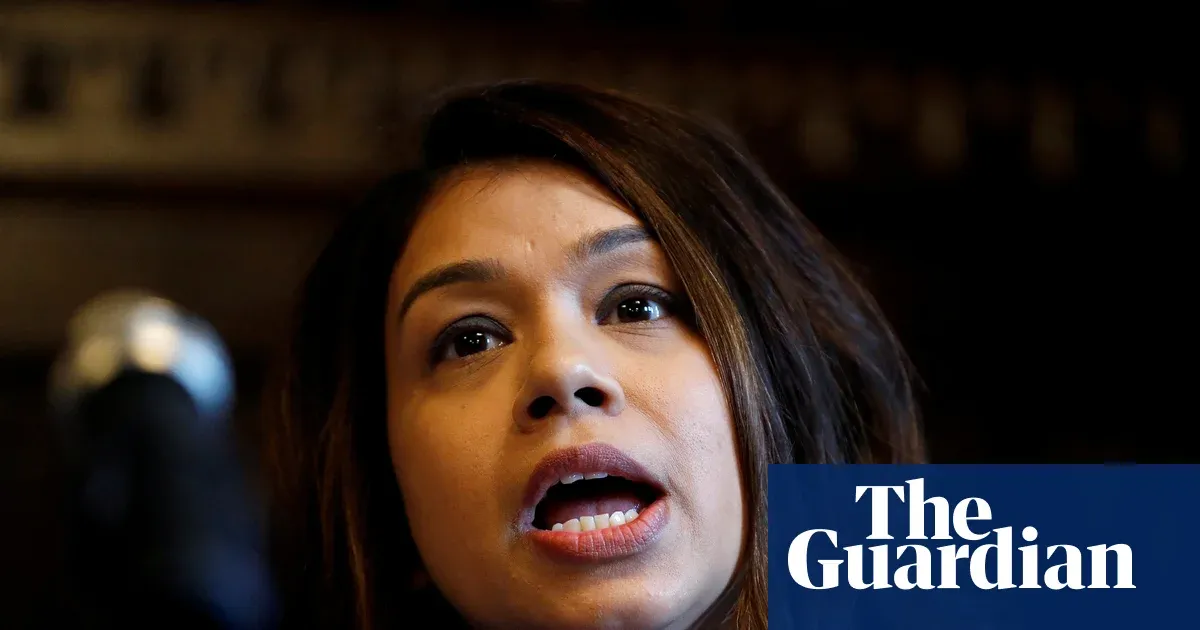
Tulip Siddiq, the MP for Hampstead and Highgate and a former UK government minister, says she is considering legal action against the former interim leader of Bangladesh, calling the corruption allegations brought by his administration a "malicious prosecution." The case is a live test of how far a foreign political prosecution can reach into a British political career, and of whether UK courts are a usable remedy when it does.
Tulip Siddiq, the MP for Hampstead and Highgate and until last year a minister in the UK government, says she is considering legal action against the former interim leader of Bangladesh, arguing she was the victim of a "malicious prosecution." The corruption allegations, brought by his administration in Dhaka, accused her of benefiting from the regime of her aunt, Sheikh Hasina, and Siddiq's account of events is that they drove her out of the UK government. She has also been sentenced to prison in Bangladesh in her absence. Hold on that last detail for a second: a British MP has, in the eyes of a court in Dhaka, been jailed without ever standing in a dock there.
The phrase doing the heavy lifting is "malicious prosecution." In plain English, it is the claim that a legal case was brought not to right a wrong but to damage someone, and that whoever brought it should pay for the damage it caused. It is a hard claim to win almost anywhere, because courts are reluctant to punish people for using them. But it is also a claim that, if Siddiq pursues it, would put the conduct of a foreign administration under scrutiny in a British courtroom, with all the diplomatic friction that implies. She has not said where she would file, or when, or against whom exactly beyond the former interim leader. What she has said is that she is considering it.
The family backdrop is not incidental. Siddiq's aunt, Sheikh Hasina, spent 15 years as prime minister of Bangladesh and is now being tried in absentia over crimes against humanity. That trial, and the corruption allegations aimed at Siddiq, emerge from the same political rupture: the interim administration that followed Hasina's time in power is the one whose authorities in Dhaka levelled the accusations. For Siddiq, the charge is specific and personal, namely that she benefited from the former regime. Her response is to characterise the case against her as politics wearing a legal costume.
Why should anyone outside Westminster and Dhaka care? Because this is what political risk looks like when it goes personal. A minister's family tree is now a vector for foreign prosecution, and the consequences land in the UK: a resignation, a parliamentary seat under a cloud, and a legal fight that could run for years. For anyone whose business, board seat, or public profile touches a country with a contested transition of power, the Siddiq case is a live example of how fast an allegation made in one capital can end a career in another.
The legal mechanics are where this gets genuinely difficult. Suing a former head of government of a foreign state in a UK court runs straight into questions of jurisdiction and sovereign immunity, the doctrine that generally shields states and their officials from being hauled before another country's judges for acts done in office. Exceptions exist, and they are narrow and heavily litigated. Historically, courts have been wary of adjudicating what are essentially political disputes in another country, on the theory that judges are not equipped to referee them and that doing so can wreck relations between governments. Siddiq would also be litigating from a position of asymmetry: she is in London, the sentence against her is in Dhaka, and any judgment she wins in the UK would still have to mean something in a country where she has already been convicted in her absence.
There is a domestic political dimension too. Siddiq represents Hampstead and Highgate, and the Bangladesh-UK relationship does not stop at any constituency boundary. Family ties, remittances and trade run deep between the two countries, and British politics has long had to manage allegations that arrive from abroad carrying a political charge. A British MP suing a former Bangladeshi leader is not just a private grievance; it becomes a test of how the UK handles foreign legal claims that land on its own elected officials.
For executives and boards, the takeaways are uncomfortable but useful. First, reputational exposure increasingly travels along family and personal lines, not just corporate ones, and due diligence that stops at the entity level will miss it. Second, the speed of consequence has collapsed: an allegation can trigger a resignation long before any court rules, which means the reputational verdict arrives years ahead of the legal one. Third, and most practically, the remedy for a reputational hit is often legal, and legal remedies are slow, expensive, and jurisdiction-dependent. Siddiq's case, whatever it becomes, is a reminder that the fight to clear a name is usually longer than the fight to damage one.
This story's Key Insights and Take-aways are locked.
Create a free account to unlock Executive Actions for one credit.
Register to UnlockAlways free for Executives Club members. Join the Club
More in Politics

Fifth Circuit Kills Pregnant Workers' Law Over Pandemic Proxy Votes
A procedural ruling, not a policy one, has blocked a federal pregnancy-accommodation law and put every pandemic-era statute in the crosshairs ahead of an expected Supreme Court appeal.

Measles kills a Virginia child under 5, the state's first death of 2026
Virginia's health department confirmed the death but withheld the child's vaccination status, leaving schools, clinics and employers to plan around the one detail that would explain the most.

Former Brazilian President Bolsonaro Hospitalized with Intestinal Obstruction
The health status of the former far-right leader raises immediate questions about political stability and the trajectory of Brazil's conservative movement.