
U.S. loses 25-year measles status; Pennsylvania reports eighth death
Pennsylvania health officials and the CDC reported the commonwealth's eighth measles-related death this year, an unvaccinated Clinton County resident, one day after the U.S. lost its 25-year elimination status, a pairing that puts vaccination policy and outbreak response on the executive agenda.
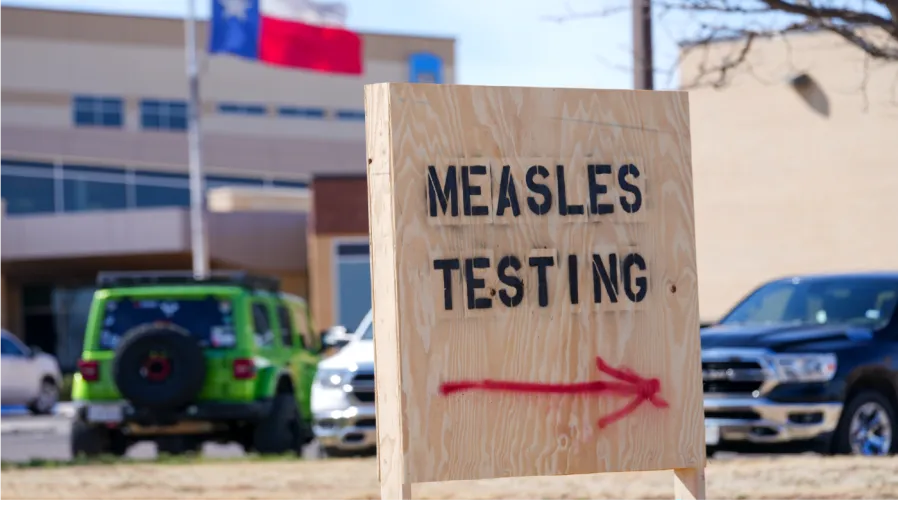
Pennsylvania health officials and the CDC reported the commonwealth's eighth measles-related death this year, an unvaccinated Clinton County resident, one day after the U.S. lost its measles elimination status after 25 years. For executives and boards, the pairing turns a public-health milestone into a governance test over vaccination policy, workplace safety, and crisis communication.
Pennsylvania health officials and the Centers for Disease Control and Prevention on Wednesday reported the commonwealth's eighth measles-related death this year. The state's Department of Health said an unvaccinated Clinton County resident initially tested positive for the virus before their death. The announcement landed one day after the U.S. lost its measles elimination status after 25 years, a national milestone that gives the Pennsylvania count a much larger frame. That sequence, not either data point alone, is the story executives need to absorb.
The first fact to hold onto is the number: eight measles-related deaths in a single state this year. The second is the timing: the national elimination status did not lapse weeks or months earlier; it changed one day before the latest death was reported. Together, they turn a local health notice into a warning about the country's public-health baseline. For decision-makers, the question is no longer whether measles is a theoretical risk in a distant market. It is whether their organizations have a credible answer when a case reaches a school, an office, a plant, or a customer-facing site.
Elimination is not eradication, and the difference is the part many people miss. In public-health terms, elimination typically means continuous transmission of a virus has stopped for a sustained period, commonly 12 months. It does not mean the virus has vanished or that a country cannot see imported cases or limited clusters. The U.S. held elimination status for 25 years, according to the source, and that run has now ended. The loss does not tell us that measles is everywhere. It tells us the country can no longer claim that the chain of continuous transmission has been broken.
The Pennsylvania Department of Health put vaccination status at the center of its account. The resident was unvaccinated and initially tested positive for the virus before death, the department said. The source does not name the person, give an age, or describe where the person worked, traveled, or sought care. Those gaps matter to contact tracers and to anyone trying to understand the path of transmission. They are also a reminder that an outbreak response is built on unglamorous work: case identification, exposure tracking, isolation guidance, and clear communication about who is protected and who is not.
For executives, the operational exposure is broader than the health headline. Measles is a highly contagious virus, and outbreak control typically depends on high vaccination coverage, fast detection, and quick separation of infected people from crowded settings. A single case can trigger absenteeism, site closures, supply-chain interruptions, and a wave of employee questions. A cluster can turn those questions into liability reviews. Boards will want to know whether management has current policies for vaccination documentation, leave, remote work, and customer contact. They will also want to know who speaks for the company when public-health officials call.
The national status change sharpens the governance question. A company can comply with every labor rule and still look flat-footed if it cannot explain why a 25-year milestone matters. The risk is not only legal. It is reputational and operational. Employees, customers, and investors can read the same headline and ask different questions, and leadership needs one coherent answer. The Pennsylvania report gives them a test case: can leadership describe what happened, what is unknown, and what the organization is doing without minimizing the death or overstating the danger?
The proximity of the two announcements invites scrutiny. Officials did not present the Pennsylvania death as the cause of the national status change, and the source does not draw that link. But the timing shapes how the public reads both events. A state death count and a national designation landing one day apart create a narrative that is hard to separate. The questions that follow concern surveillance, vaccination coverage, and communication. Employers face their own version of those questions from workers and boards.
The strategic takeaway for peers is preparation before the next local case forces the issue. That means one set of facts, a clear chain of command, and a plain-English explanation of what elimination status does and does not mean. It means checking whether health-plan, leave, and safety protocols are current, and whether managers know where to route questions. It also means resisting the urge to treat a preventable death as a communications problem. The companies that handle this well will treat it as an operating problem with a human cost, because that is what the source describes.
This story's Key Insights and Take-aways are locked.
Create a free account to unlock Executive Actions for one credit.
Register to UnlockAlways free for Executives Club members. Join the Club
More in Politics

Fifth Circuit Kills Pregnant Workers' Law Over Pandemic Proxy Votes
A procedural ruling, not a policy one, has blocked a federal pregnancy-accommodation law and put every pandemic-era statute in the crosshairs ahead of an expected Supreme Court appeal.

Measles kills a Virginia child under 5, the state's first death of 2026
Virginia's health department confirmed the death but withheld the child's vaccination status, leaving schools, clinics and employers to plan around the one detail that would explain the most.

Former Brazilian President Bolsonaro Hospitalized with Intestinal Obstruction
The health status of the former far-right leader raises immediate questions about political stability and the trajectory of Brazil's conservative movement.