
U.S. Opens 31.5 Million Acres of Pacific Seabed, Defying a Federal Judge
The first-ever US deep sea mining lease is a mapping rights deal, not a mine, and it lands with a courtroom challenge already attached.
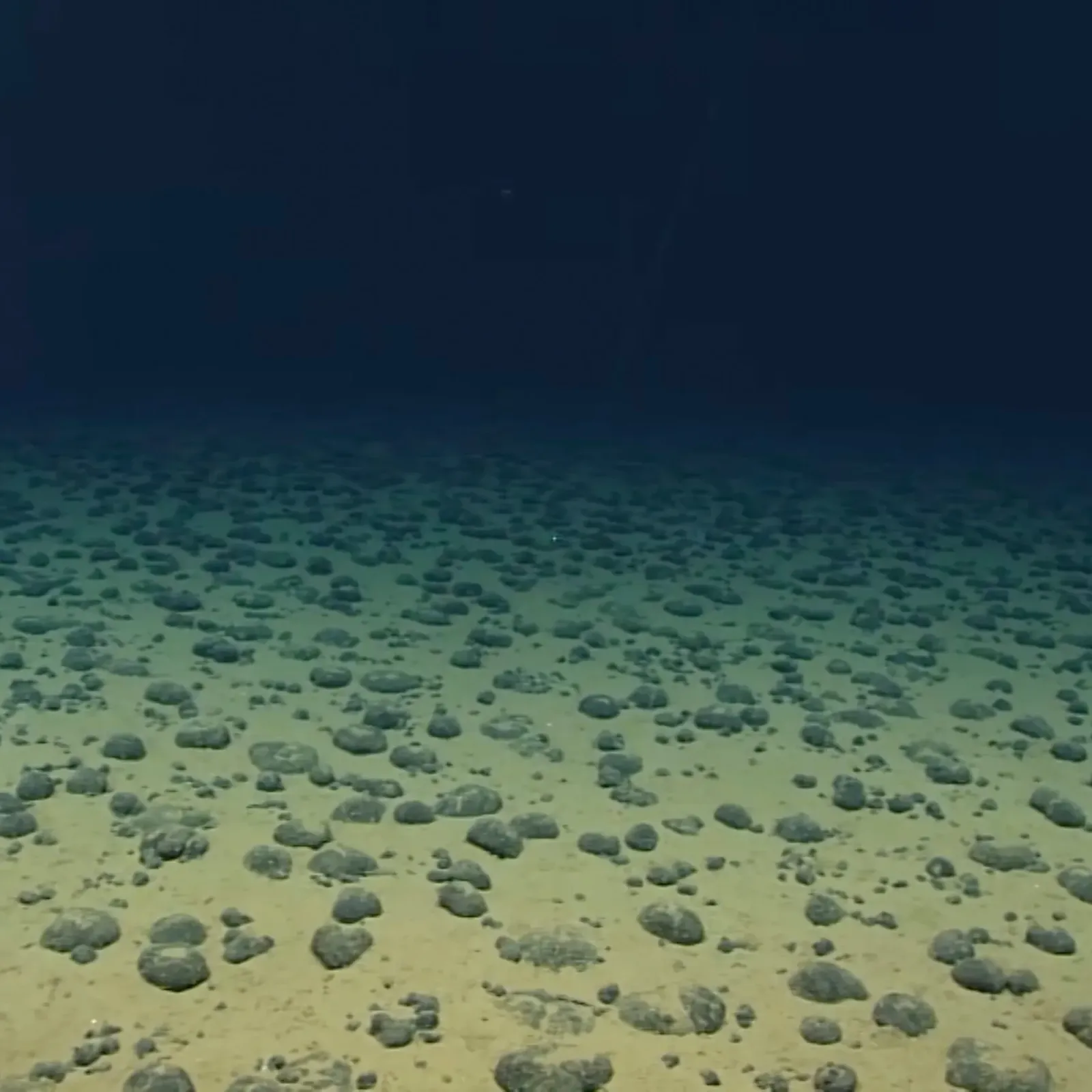
The United States held its first-ever deep sea mining lease sale, handing 31.5 million acres of Pacific Ocean seabed to a deep sea mining company over the objections of a federal judge, with the lease covering mapping and preparation rather than extraction. For executives in mining, energy and battery supply chains, the deal sets a precedent for how seabed mineral rights get claimed and litigated, even though no ore will move for years.
The United States has held the first lease sale in its history for the deep ocean floor, auctioning 31.5 million acres of Pacific Ocean seabed to a deep sea mining company. That is an area roughly the size of England. The sale went ahead over the objections of a federal judge. And here is the twist that reframes the whole thing: the company is leasing the seabed for mapping and preparation, not for actual mining. No nodules get scooped up tomorrow. What changes today is who holds a legal claim on a vast stretch of the planet's least-explored real estate.
Read that distinction slowly, because it is the entire story. A mapping lease is not a mine. It is an option: a defined, financeable, litigable right to a piece of ocean floor that has never been commercially worked. Deep sea mining has been described as the next frontier for decades, and the reason it keeps stalling is not technology alone. It is that nobody has ever proven the economics, the environmental baseline, or the legal right to do it at scale. This sale moves the first of those three questions from theory toward a spreadsheet, and it does so while the other two remain wide open.
For context on what is actually at stake: deep sea mining, as an industry, targets polymetallic nodules and crusts that sit on the abyssal plain and are typically rich in nickel, cobalt, copper and manganese. Those are the same metals that go into electric vehicle batteries, grid-scale storage and defence hardware. On land, nickel and cobalt supply is heavily concentrated in a handful of jurisdictions, which is why automakers and their battery suppliers have spent years hunting for diversification. A seabed lease is, in effect, a long-dated call option on supply chain independence. It is also, for environmental groups and a long list of marine scientists, a bet placed on an ecosystem that humans have barely surveyed.
The legal backdrop is the part most executives will skip, and it is the part that matters most. According to the reporting, a federal judge objected to the sale, and it proceeded regardless. That is a signal, not a footnote. It means the leases now carry litigation risk from day one, and that any capital deployed against them has to be underwritten with the possibility of a courtroom reversal baked in. Leases that survive a challenge today can be unwound tomorrow; permits granted in one administration can be frozen in the next. For a company whose entire asset base is a piece of paper describing ocean floor, that is not a peripheral risk. It is the business model.
So why would anyone pay to map rather than mine? Because you cannot finance a resource you cannot describe. Capital markets, lenders and offtake partners typically demand a defined resource estimate, a permitting pathway and some evidence that extraction costs pencil out before they write a cheque. Mapping and preparation is the cheap phase of a very expensive pipeline, and it is the phase that produces the documents everyone else needs. Expect the next few years to be about survey vessels, sonar, sampling and disclosure. The mining decision, if it ever comes, will be made by whoever is holding the balance sheet and the permits when the data lands.
There is a second legal universe layered on top of this one. For context, mining in international waters beyond national jurisdiction is governed by the International Seabed Authority, a body created under the Law of the Sea Convention, a treaty the United States has signed but never ratified. That gap has long shaped how American companies operate offshore, and it is one reason a domestic lease sale carries outsize symbolic weight: it is the United States asserting a pathway that does not run through the multilateral process. If this sale becomes the template, other coastal states will be watching closely, because the same logic could be applied to their own extended continental shelves.
The second-order effects reach well past one company. A credible US seabed leasing regime would put a long-dated supply threat under land-based nickel and cobalt producers, and a long-dated opportunity in front of shipbuilders, survey firms, subsea robotics suppliers and the insurers willing to cover them. It would also hand ammunition to both sides of the environmental argument: proponents will point to lower surface disturbance than open-pit mining, opponents to the fact that nobody can yet restore a deep sea habitat. Boards in mining, energy and autos should expect this file to move from someday to watch this quarter.
The practical stakes are simple. A company now holds rights to 31.5 million acres of Pacific seabed for mapping and preparation, the first such lease ever sold in the United States, granted over a federal judge's objections. The upside is enormous and unproven; the downside is legal, reputational and, in the worst case, permanent. The question for every operator, investor and board with exposure to critical minerals is not whether deep sea mining works today. It is who will own the data, the permits and the legal defences around those permits when someone finally decides to find out.
This story's Key Insights and Take-aways are locked.
Create a free account to unlock Executive Actions for one credit.
Register to UnlockAlways free for Executives Club members. Join the Club
More in Business

S&P 500 Enters Correction, Down 10% From Its High on AI Worries
The index's slide past the 10 percent line is a symbolic verdict on investor mood, and the AI trade that powered the rally is now the thing testing it.

Dow and S&P 500 enter correction as Nasdaq logs worst week since 2020
All 11 S&P 500 sectors fell more than 1% in the same week for the first time since April 2025, a breadth signal that matters more than any single index level.

Chip stocks lose $2.3 trillion in a week, worst run in 25 years
A $2.3 trillion weekly wipeout in semiconductors is forcing every board with an AI story to ask whether it owns a thesis or just a crowded trade.