
Uber is testing rides for 10-year-olds, and paying drivers more to take them
Uber's pilot for kids aged 10 to 12 turns a driver premium into a trust experiment, and the answer decides whether family logistics becomes a real ride-hailing category.
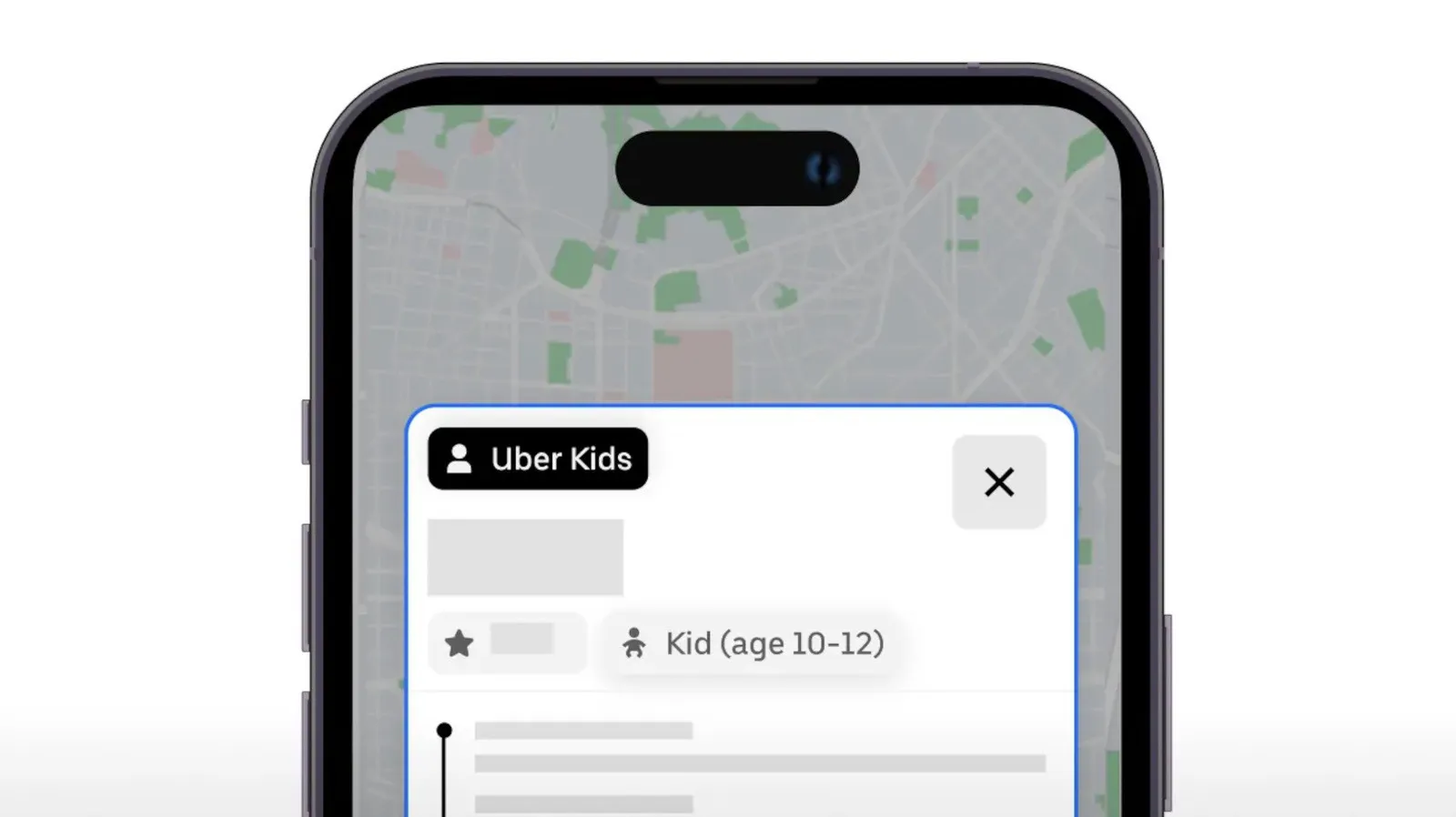
Uber is testing rides for children aged 10 to 12 and will pay drivers more to carry them, pushing ride-hailing into its youngest passenger cohort yet. The pilot's outcome hinges on whether a driver premium can overcome the liability, insurance, and parental-trust barriers that have historically kept unaccompanied minors out of consumer mobility apps.
Uber is testing rides for children aged 10 to 12, and it will pay drivers more to take them. That is the whole of the announcement, and it is enough to matter. The pilot pushes ride-hailing into its youngest cohort yet: kids old enough to travel alone to a friend's house or a piano lesson, and young enough that the parent, not the rider, is the customer. Parents book. Children ride. Drivers collect a premium for saying yes.
The premium is the load-bearing detail. No figure for it has been made public, but the direction of the incentive is the story. Ride-hailing is a marketplace with two scarce sides, and the scarcer one is almost always supply. Getting a driver to accept a 10-year-old as a passenger is not purely a pricing problem. It is a trust problem, a liability problem, and a time problem, because a child handoff at the curb takes longer than an adult hopping out at a red light. Paying more is how Uber buys past that hesitation. If the premium is too small, drivers decline and the product dies quietly in testing. If it is too large, the economics of short school-run trips stop working.
For context, transporting unaccompanied minors has historically been one of the most tightly fenced corners of mobility. School districts run buses. Parents build carpools and trade favors. A small set of specialist operators contracts with schools and municipalities under vetting standards stricter than a consumer app typically applies. Ride-hailing platforms have generally written their terms around adult riders, with family-oriented products aimed at older teenagers arriving only in recent years. Moving the floor down to 10 is a different category of promise. It asks parents to hand over the single thing they are least willing to delegate.
That is why the operational details will decide whether this scales. Child transport typically triggers a thicker stack of requirements than adult transport: car seat and booster rules that vary by state, insurance questions about who is liable when a minor is in the vehicle, driver screening standards, and pickup protocols that assume a responsible adult is waiting at both ends of the trip. Uber has not laid out publicly how the test handles each of these. Its answers matter more than the fare premium, because they determine whether this becomes a product or a press release.
The commercial logic is straightforward. Family logistics is a chronic, high-frequency pain point: the 3pm gap between the school bell and the end of the workday, the Saturday circuit of practices and lessons, the emergency run when a meeting overruns. Parents already pay for that coverage in cash, in favors, and in the cognitive load of coordinating it. A platform that reliably solves it earns a line in the household budget, not just the expense report. It also earns something more valuable: default status with the next generation of riders, who will form their own habits within a few years.
The risk is asymmetric. A single serious incident involving a child would be a reputational event that no premium pay can offset, and it would land on a company already under scrutiny from regulators and drivers alike. That asymmetry explains the test framing. A pilot lets Uber gather acceptance rates, trip completion data, and incident rates at small scale, with the option to walk away. It also lets the company negotiate with insurers and state regulators from a position of evidence rather than ambition.
For executives in adjacent businesses, the pattern is the interesting part. Uber is not launching a feature so much as extending an existing marketplace into a segment defined by trust rather than price. That playbook, using supply-side incentives to unlock a category that regulation and parental anxiety have kept closed, is the same one that will be attempted in childcare, elder care, home services, and anywhere else the buyer and the end user are different people. The companies that win those categories will treat safety infrastructure as the product, not the compliance cost.
What to watch: whether the pilot expands, whether the driver premium is ever disclosed, and whether insurers and regulators treat a 10-year-old passenger as an ordinary rider or a new class of liability. Uber has opened a door. The question is who walks through it, and what they are willing to pay.
This story's Key Insights and Take-aways are locked.
Create a free account to unlock Executive Actions for one credit.
Register to UnlockAlways free for Executives Club members. Join the Club
More in Technology

Anthropic mathematician claims Claude helped crack the Riemann hypothesis
If the proof holds, AI has toppled math's most famous open problem; if it does not, it is a case study in announcing breakthroughs before anyone verifies them.

AI's $4 Trillion Wipeout Erases Nasdaq's Gains for the Year
A brutal week took roughly $4 trillion off the AI sector and left the Nasdaq flat for the year, and the damage ran the full length of the supply chain.

Anthropic mathematician says AI proved the Riemann hypothesis. Verification will take time.
A single unverified claim from inside Anthropic now sits against more than 160 years of open mathematics, and the gap between asserting a proof and surviving peer review is the entire story.