
UK and EU agree provisional 100,000-a-year youth mobility deal as talks hit the wire
Negotiators have provisionally agreed to admit 100,000 young EU citizens annually, but the fight over Britain's say in future EU food and farming rules is still unresolved.
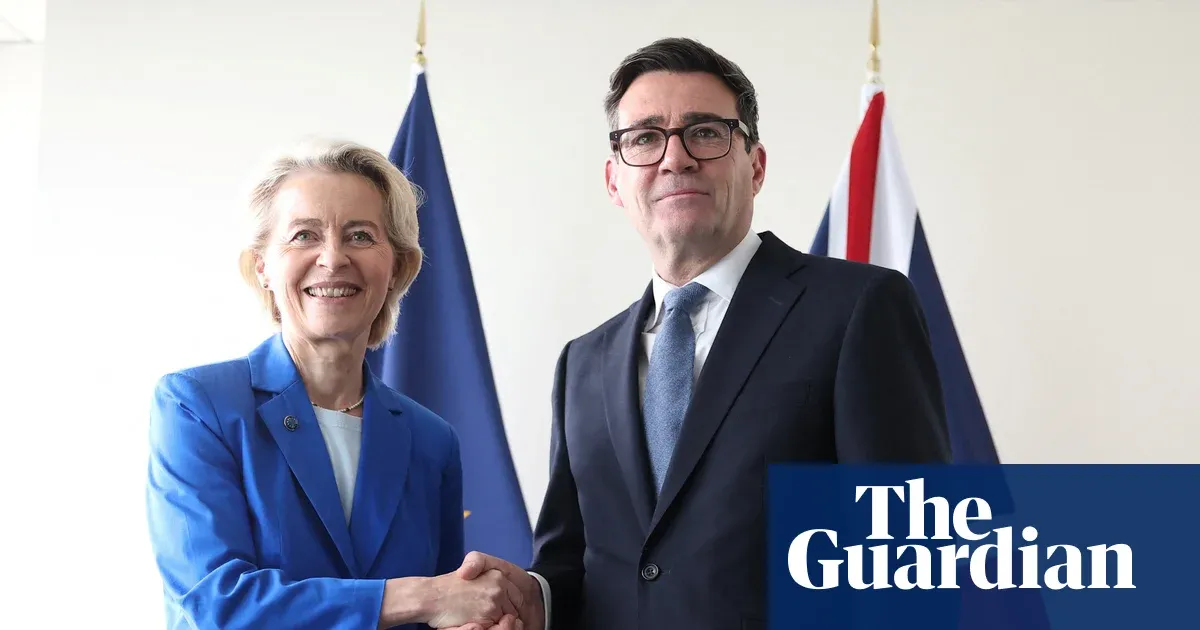
British and EU negotiators have provisionally agreed to allow 100,000 young EU citizens into the UK every year under a new mobility scheme, with Britain understood to have made concessions, while ambassadors in Brussels remain deadlocked over the UK's role in shaping future European food and farming rules. For decision-makers, that split outcome means mobility may land before the border relief that food and farming exporters actually need.
British and EU negotiators have provisionally agreed to let 100,000 young EU citizens come to the UK every year under a new mobility scheme, with Britain understood to have made concessions to get there. That number is the sharpest edge of a wider "reset" package still being hammered out in Brussels, and it arrives as the talks go "down to the wire."
The agreement is provisional, not signed. Tensions in Brussels stayed high on Thursday afternoon as ambassadors opened crunch talks on the latest draft of the wider deal. Sources confirmed both sides were still battling over the exact nature of the UK's role in shaping future European food and farming rules, a second part of the package. Read that split carefully: one half of the reset is close enough to put a hard number on. The other half is not close at all.
For anyone who has not tracked the mechanics, a youth mobility scheme is not free movement. It is a quota-based arrangement that typically lets people in a defined age band live and work in a country for a fixed period, usually a couple of years, often with conditions attached. The UK already runs such schemes with a set of non-EU countries. Those are individually capped and, historically, far smaller in aggregate than the 100,000-a-year figure now on the table. That is what makes the provisional number consequential. It is not a tweak to an existing programme; it is a new scale of movement, and it would be the largest single channel of young EU arrivals into the UK since the post-Brexit settlement took shape.
Politically, this is the most sensitive item in the entire reset. Britain's departure from the EU was sold on taking back control of borders, and any headline number attached to EU migration lands directly in that argument. The counter-case is economic and unglamorous: hospitality, agriculture, food processing and social care have all reported persistent shortages, and young mobile workers tend to be net contributors in tax terms while consuming relatively few public services. Both things are true at once, which is precisely why the movement is being reported as a concession rather than a win. Whoever owns the announcement will have to sell a quota to an electorate that was promised control.
The unresolved half is where the real money sits. The sticking point is the exact nature of the UK's role in shaping future European food and farming rules. Historically, the EU has treated reduced border checks on food and agricultural goods as something that comes bundled with alignment to its sanitary and phytosanitary standards. The UK has resisted automatic alignment, because accepting rules you do not vote on is a very different proposition from agreeing rules you helped write. That is the fight ambassadors walked into on Thursday, and it is the reason the package is being negotiated in two parts rather than one.
Why should anyone outside Whitehall care? Because food and farming rules are not a niche. They set what can be exported, how it is inspected, what can be labelled, and what UK regulators are free to permit at home, from gene-edited crops to pesticides to novel foods. A deal that ties the UK to EU rules in this area constrains domestic regulatory autonomy for years, and it sets a precedent for every other rulebook the two sides touch later. A deal that does not leaves border friction in place, and friction is a cost that shows up on the P&L of every food and drink exporter shipping into the bloc. There is no version of this where the food chapter is a footnote.
The sequencing matters too. If the mobility chapter lands and the food and farming chapter does not, the reset arrives in pieces, and pieces are harder for businesses to plan around than a single signed text. Companies exposed to EU trade should be watching three things: whether the 100,000 figure survives the final draft, whether the food and farming chapter creates binding alignment or merely a consultation role for the UK, and whether the whole package is politically ratifiable on both sides. Any one of those three can move the outcome, and they are not moving at the same speed.
The wider point is about baselines. Once a number like 100,000 a year is written into a provisional agreement, it stops being a bargaining chip and starts being the reference point for every future negotiation, on both sides of the Channel. That is how a reported concession hardens into a structural fact. The summit is close, the wire is real, and the two halves of this deal are travelling at very different velocities. For operators with EU exposure, the practical question is not whether the reset happens. It is which half of it arrives first, and what you do with the gap in between.
This story's Key Insights and Take-aways are locked.
Create a free account to unlock Executive Actions for one credit.
Register to UnlockAlways free for Executives Club members. Join the Club
More in Politics

Fifth Circuit Kills Pregnant Workers' Law Over Pandemic Proxy Votes
A procedural ruling, not a policy one, has blocked a federal pregnancy-accommodation law and put every pandemic-era statute in the crosshairs ahead of an expected Supreme Court appeal.

Measles kills a Virginia child under 5, the state's first death of 2026
Virginia's health department confirmed the death but withheld the child's vaccination status, leaving schools, clinics and employers to plan around the one detail that would explain the most.

Former Brazilian President Bolsonaro Hospitalized with Intestinal Obstruction
The health status of the former far-right leader raises immediate questions about political stability and the trajectory of Brazil's conservative movement.