
UK government asks YouTube to remove Russell Brand's channel
The request lands after Brand's wife shared a message in which he claimed his innocence, leaving Google to decide whether to comply, refuse, or wait for a legal order.
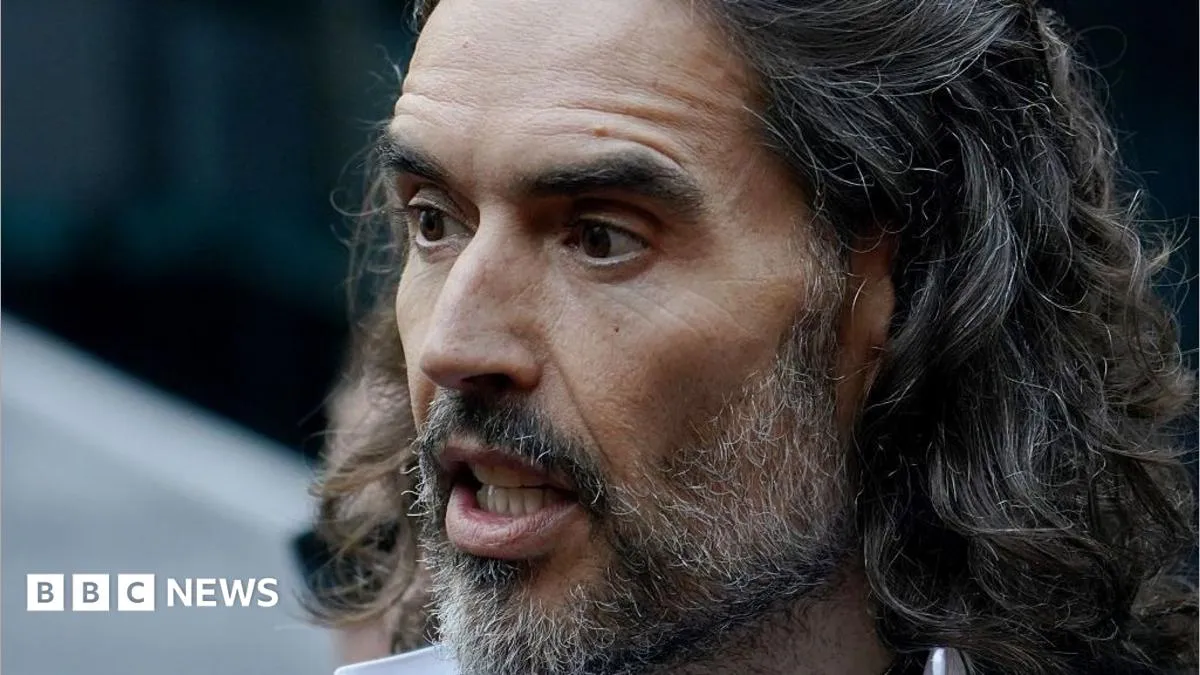
The UK government has asked for Russell Brand's YouTube account to be removed, a request that followed his wife sharing a message in which he claimed his innocence. The decision now sits with YouTube's parent Google, and how it answers will set a precedent for every platform that hosts a creator's business.
The UK government has asked for Russell Brand's YouTube account to be removed, putting a named creator's channel directly in the crosshairs of the state and handing the final decision to YouTube's parent, Google. The request follows Brand's wife sharing a message from him in which he claimed his innocence, which means the government moved while Brand was publicly contesting the case against him. Read the sequence carefully, because it is the story: a government asked a private platform to delete a specific person's account, and the person in question was, at that moment, insisting he had done nothing wrong.
The single most important word in that sentence is "asked." A government request is not a court order. It carries no automatic legal force, and it does not compel YouTube to do anything. What it does carry is weight: the implicit threat that a refusal invites harder instruments, whether legislation, regulation, or a formal legal demand. Google now faces a three-way choice that every platform general counsel recognises. Comply voluntarily and accept the precedent. Refuse and absorb the political cost. Or stall and hope the story moves on. None of those options is free.
For context, content takedowns normally run through two channels, and neither looks quite like this. The first is platform enforcement: YouTube applies its own terms of service, often after a media investigation, a legal complaint, or an internal review, and the company owns both the decision and the explanation. The second is state compulsion: a court order, a statutory notice, or a demand issued under a specific law, which gives the platform a legal obligation and a legal shield. A direct government ask aimed at one creator's account sits awkwardly between the two. It is pressure without process, and that is precisely what makes it notable.
Brand's side of the ledger is the message his wife shared, in which he claimed his innocence. That is the public position on record. For a creator, though, an account is not just a megaphone. It is the distribution rail for the entire business: advertising revenue, channel memberships, sponsorship deals, live touring promotion, merchandise, and the audience data that makes all of it priceable. Pulling an account does not merely silence a voice. It severs a revenue line, and it does so instantly, without a trial, and often without a detailed public explanation.
The UK backdrop matters here. Britain has spent years assembling a platform-regulation regime, with Ofcom as the online safety regulator and a set of statutory duties that push platforms toward proactive policing of content. Historically, governments have leaned on platforms through three levers: rules that create legal duties, fines that make non-compliance expensive, and informal pressure that never appears in a statute. The informal lever is the most powerful and the least accountable. It is invisible, it is hard to appeal, and it is nearly impossible to test in court, because nothing formal has happened.
That is why platform lawyers get nervous. If a government can ask for a creator's account to be removed, the obvious question is what constrains the next request, and the one after that. Platforms typically resist being conscripted as censors, partly on principle and partly because every takedown they perform on government instruction makes them a target for the other side of the argument. But they also face real leverage: regulatory approval, market access, political goodwill, and advertiser skittishness. The calculation is rarely clean.
Watch three things from here. First, whether YouTube acts at all, because a platform that declines a government request sets one precedent and a platform that complies sets a very different one. Second, whether the ask hardens into something with legal teeth, which would move this from politics into litigation. Third, how other creators and platforms read the signal. A creator economy built on the promise that the audience relationship belongs to the creator depends on that promise holding when it is inconvenient.
For executives, the lesson is structural. Compliance is no longer a back-office function; it is a political one. Any company that hosts user content, distributes creator revenue, or depends on a platform for distribution now has to model government pressure as an operating risk, not a hypothetical. The questions boards should be asking are blunt. What is our process when a government asks us to remove a specific account? Who signs off? What do we tell the creator, the advertisers, and the public? And what precedent does our answer create for the next request, which will almost certainly come?
This story's Key Insights and Take-aways are locked.
Create a free account to unlock Executive Actions for one credit.
Register to UnlockAlways free for Executives Club members. Join the Club
More in Politics

Fifth Circuit Kills Pregnant Workers' Law Over Pandemic Proxy Votes
A procedural ruling, not a policy one, has blocked a federal pregnancy-accommodation law and put every pandemic-era statute in the crosshairs ahead of an expected Supreme Court appeal.

Measles kills a Virginia child under 5, the state's first death of 2026
Virginia's health department confirmed the death but withheld the child's vaccination status, leaving schools, clinics and employers to plan around the one detail that would explain the most.

Former Brazilian President Bolsonaro Hospitalized with Intestinal Obstruction
The health status of the former far-right leader raises immediate questions about political stability and the trajectory of Brazil's conservative movement.