
UK inquiry: open borders and slow test-and-trace let Covid spread 'virtually unchecked'
Heather Hallett's latest report concludes the absence of early international border controls left the UK 'extremely vulnerable' and that tracing arrived too late to matter - a verdict that rewrites the accountability map for governments and boards alike.
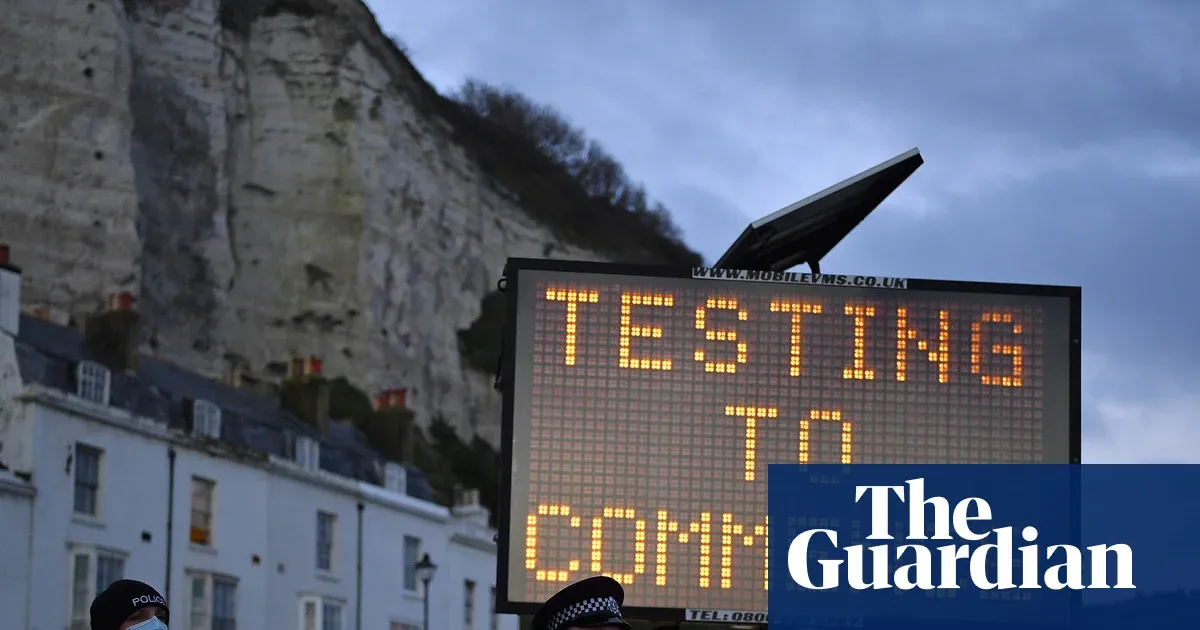
The UK's Covid-19 inquiry, chaired by Heather Hallett, has concluded that the lack of international border controls at the start of the pandemic left the country in an 'extremely vulnerable position', and that failures to introduce test-and-trace quickly let the virus spread 'with deadly speed across the country, virtually unchecked'. For decision-makers, it converts a once-unmodellable shock into a documented, repeatable failure of speed that governments and cross-border businesses now have to plan against.
Britain went into the pandemic without early international border controls, and it did not get a functioning test-and-trace system up quickly enough to compensate. That is the verdict of the latest report from the UK's Covid-19 inquiry, whose chair, Heather Hallett, concluded that the absence of border controls at the start of the pandemic left the UK in an "extremely vulnerable position".
Hallett did not stop at the airports. The same report finds that failures to introduce a test-and-trace system quickly allowed the virus to spread "with deadly speed across the country, virtually unchecked". Read the two findings together and they describe a single, ugly mechanism rather than two separate mistakes: a pathogen that was never slowed at the door, and then never slowed inside. The UK's defences did not fail all at once. They failed in sequence, which is worse, because each stage had time to learn from the one before it and did not.
Start with what test-and-trace actually is, because the phrase has been flattened into jargon. In plain English: you find people who are infected, you interview them, you identify everyone they have recently spent time with, and you get those contacts to isolate before they infect anyone else. When a new virus has no vaccine and no proven treatment, that loop is the only tool that works. And the product it sells is speed. A tracing system that reaches contacts within a day or two can smother small outbreaks before they become clusters; one that takes a week is essentially a historian, recording where the virus has already been. Public-health systems historically degrade in exactly this way as case numbers climb: contact tracing works when prevalence is low and collapses when it is high, which is precisely the moment it is most needed. Hallett's finding is that the UK landed on the wrong side of that curve.
The border finding carries its own uncomfortable trade-off. "Early international border controls" means the unglamorous toolkit: screening arrivals, restricting travel from hotspots, and requiring quarantine. Every one of those levers costs something visible, in trade, tourism, aviation and diplomacy, to buy a benefit that is invisible if it works. That asymmetry is why democracies tend to reach for border measures late. Border health policy also sits across several departments at once, which historically makes it slow to move and easy to leave in the gaps between them. The inquiry's conclusion, in effect, is that the UK chose to pay the invisible bill later rather than the visible one earlier, and the later bill was larger.
Why this report matters beyond the history book: public inquiries are not just retrospectives. They fix an official record, and that record becomes the reference point for compensation claims, ministerial accountability and the next government's playbook. The word "latest" is doing real work here, too. This is one instalment in a running series of findings, which means the political and institutional pressure will keep rebuilding rather than dissipating in a single news cycle. For the officials and politicians who held office during the period, the sentence that will follow them is not a statistic. It is the phrase "virtually unchecked".
The read-through for operators is more practical than it looks. Pandemic and biosecurity risk has quietly migrated out of the "black swan" column and into the "priced risk" column for anything that moves people or goods across borders: travel and aviation, hospitality, insurance and reinsurance, and any supply chain with a single-region dependency. Boards that treated a 2020-style shock as unmodellable now have an official, quotable narrative to scenario-plan against, which makes "we could not have seen it coming" a much harder sentence to defend in a risk committee. The same logic applies in reverse to companies that sell into the resilience stack, from testing capacity to health screening to supply-chain visibility. The demand signal for those products is created by exactly this kind of finding.
The open question is whether conclusions become capability. A report can recommend; only budgets and standing institutions can persist. The pattern across most crises is that capability built in the heat of an emergency decays within a few years as attention moves on, and the next shock arrives to find the warehouse empty. The test of this inquiry will be whether a permanent tracing capacity and a pre-agreed border health framework survive contact with peacetime priorities, or whether they get filed alongside the previous lessons learned.
For peers in equivalent roles, the strategic stakes are narrow and sharp. The failure Hallett identifies is not a failure of science or of money. It is a failure of speed at the two chokepoints where speed is everything: the entry point and the detection loop. Every organisation with cross-border exposure has its own version of those two chokepoints, and most of them are currently untested.
This story's Key Insights and Take-aways are locked.
Create a free account to unlock Executive Actions for one credit.
Register to UnlockAlways free for Executives Club members. Join the Club
More in Politics

Fifth Circuit Kills Pregnant Workers' Law Over Pandemic Proxy Votes
A procedural ruling, not a policy one, has blocked a federal pregnancy-accommodation law and put every pandemic-era statute in the crosshairs ahead of an expected Supreme Court appeal.

Measles kills a Virginia child under 5, the state's first death of 2026
Virginia's health department confirmed the death but withheld the child's vaccination status, leaving schools, clinics and employers to plan around the one detail that would explain the most.

Former Brazilian President Bolsonaro Hospitalized with Intestinal Obstruction
The health status of the former far-right leader raises immediate questions about political stability and the trajectory of Brazil's conservative movement.