
UK tribunal kills Home Office bid to keep Apple encryption order secret
The Investigatory Powers Tribunal rejected the government's national security argument on Thursday, so the technical capability notice served on Apple can no longer stay hidden.
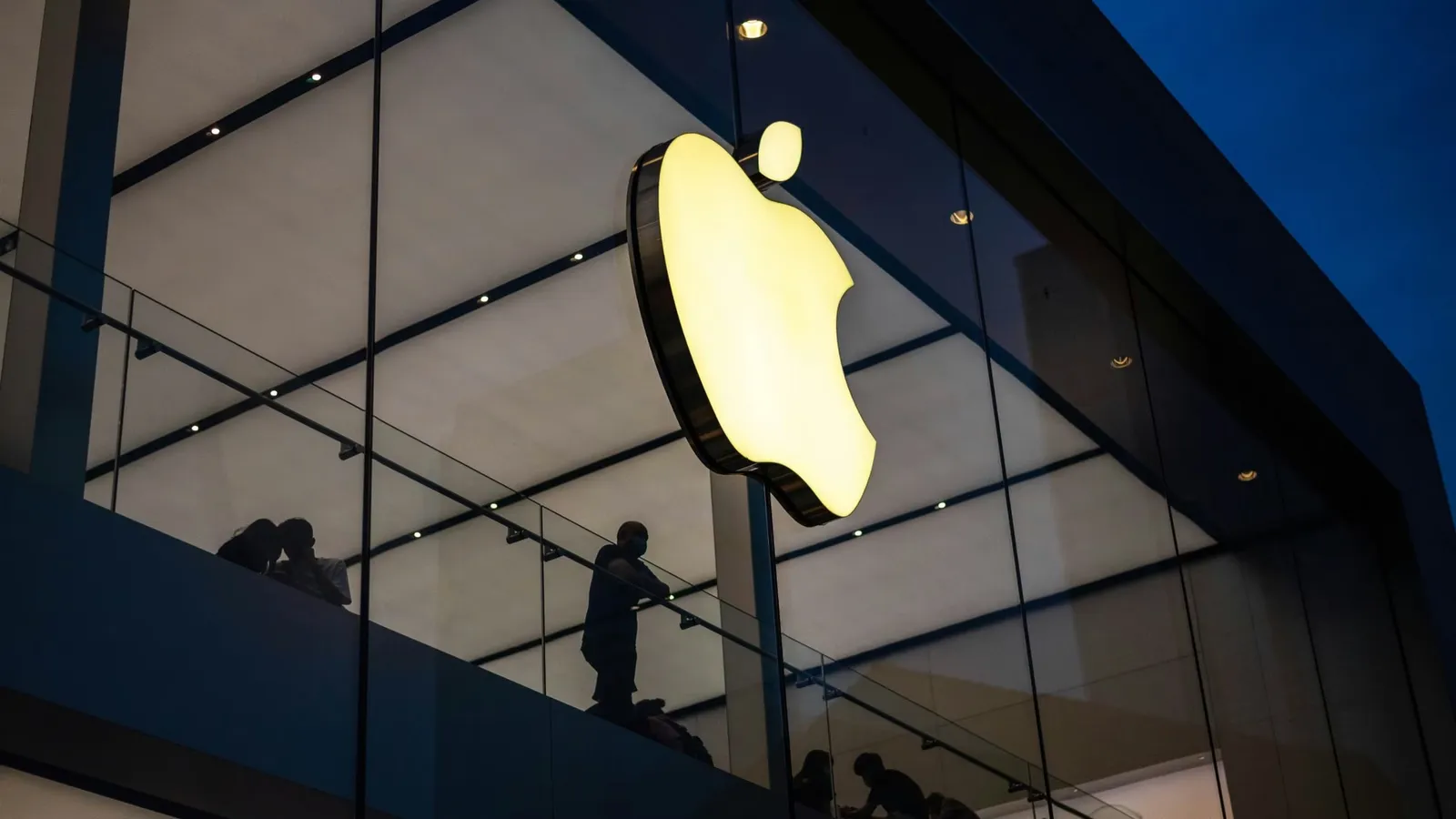
The UK's Investigatory Powers Tribunal ruled on Thursday that the Home Office can no longer keep secret a technical capability notice issued to Apple under the Investigatory Powers Act 2016, rejecting the government's claim that confirming the order would damage national security. For technology executives and boards, the decision converts a silent legal demand into a public one, sharpening the collision between state surveillance powers and encrypted products sold globally.
The UK government has lost its fight to stay quiet about an order it served on Apple. On Thursday, the Investigatory Powers Tribunal rejected the Home Office's argument that confirming the order would damage national security, ruling that the government can no longer keep the demand secret. The order is a technical capability notice issued under the Investigatory Powers Act 2016, one of the most powerful and least visible instruments in British law. The Home Office had argued that even acknowledging the notice existed would harm the country's security. The tribunal disagreed.
That procedural loss is bigger than it looks. A technical capability notice does not simply ask a company to hand over data it already holds. It can require a provider to build or maintain a capability it does not currently have, so that future warrants can actually be executed. In plain English, the state can compel a technology company to change how its products work. Historically, the existence of such notices has been treated as close to a state secret, and the companies on the receiving end have been barred from saying a word about them. Thursday's judgment cracks that seal open.
The tribunal that made the call is not a conventional court. The Investigatory Powers Tribunal is the UK's specialist forum for complaints about surveillance, hearing cases that by design involve material the public never sees. It was set up precisely because ordinary litigation is a poor fit for intelligence matters. That makes its ruling here notable for a second reason: the body built to handle secrets concluded that this particular secret did not need protecting. The Home Office's national security argument did not survive contact with the panel.
For context, this is the latest round in a decade-long argument between governments and technology companies over encryption. The pattern is familiar. A government wants access to a device or a service. The company says it cannot provide that access without weakening security for everyone, including users who have done nothing wrong. The 2016 standoff between Apple and the FBI over a locked iPhone became the defining public example of that clash, and it ended without Apple writing new software to break its own protections. Since then, the battleground has shifted from individual handsets to cloud services and backups, where the volumes are larger and the legal tools are broader.
What changes now is transparency, and transparency changes behaviour. Once the existence of a notice can be confirmed, the people affected can talk about it: the company, its customers, its investors, and the regulators in other countries who take an interest in whether a UK order reaches data stored outside the UK. Secrecy was the load-bearing wall of this regime. Companies could comply, or resist, but they could not explain themselves to their own users. That silence is what the tribunal has now removed, at least for this order.
For boards at technology firms, the practical questions arrive quickly. Does the company operate in the UK market, and does it hold data that a technical capability notice could reach? Has legal counsel mapped the conflict between a UK demand and obligations under other jurisdictions, including rules that restrict exporting data or building interception capability? Is there a documented position on what the company will and will not build, agreed before a notice lands rather than after? And who speaks publicly if the order becomes confirmable, because silence will now read as a choice rather than a legal requirement.
The second-order effects run wider than one company. Every provider selling encrypted products into the UK now has a clearer view of the risk it is underwriting. Every rival jurisdiction watching the case gets a data point about how far the UK will go and how far its courts will let it. And every user of an encrypted service gets a reminder that the strength of a product is only ever as good as the legal environment it sits inside. The tribunal did not rule on whether the underlying order is lawful. It ruled that the government cannot hide it. That is a narrower decision than it sounds, and a more consequential one than the Home Office wanted.
This story's Key Insights and Take-aways are locked.
Create a free account to unlock Executive Actions for one credit.
Register to UnlockAlways free for Executives Club members. Join the Club
More in Technology

Anthropic mathematician claims Claude helped crack the Riemann hypothesis
If the proof holds, AI has toppled math's most famous open problem; if it does not, it is a case study in announcing breakthroughs before anyone verifies them.

AI's $4 Trillion Wipeout Erases Nasdaq's Gains for the Year
A brutal week took roughly $4 trillion off the AI sector and left the Nasdaq flat for the year, and the damage ran the full length of the supply chain.

Anthropic mathematician says AI proved the Riemann hypothesis. Verification will take time.
A single unverified claim from inside Anthropic now sits against more than 160 years of open mathematics, and the gap between asserting a proof and surviving peer review is the entire story.