
ULA Clears Blue Origin's BE-4, Blames Vulcan Failure on Fuel Supply
ULA's preliminary finding moves scrutiny off Blue Origin's engines and onto its own booster plumbing, leaving Vulcan's return-to-flight timeline as the open question for national security launch customers.
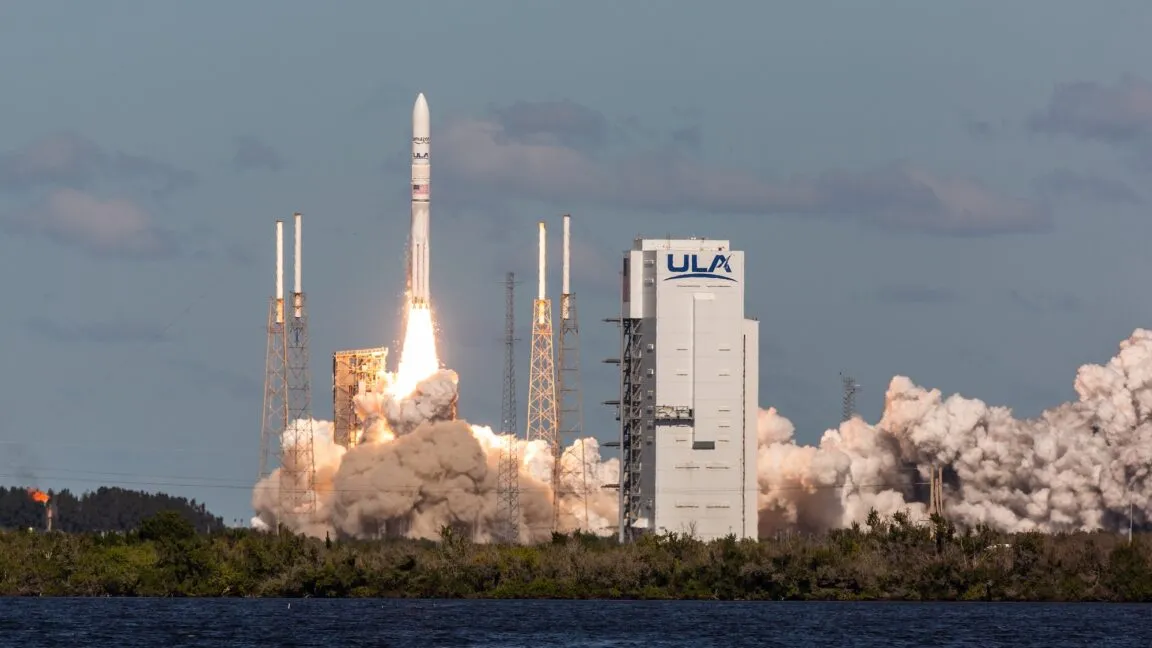
United Launch Alliance said Wednesday that Sunday's Vulcan failure on the Leo 1 mission stemmed from inadequate fuel supply to its Blue Origin-built BE-4 engines, not from the engines themselves, confirming Ars Technica's reporting. For decision-makers, the finding shifts scrutiny from a supplier to ULA's own vehicle integration and leaves the return-to-flight timeline, and every downstream national security launch slot, unresolved.
United Launch Alliance has a culprit for Sunday's Vulcan failure, and it is not the engine everyone was watching. In a statement released Wednesday, ULA said the anomaly on the Leo 1 mission traced back to "inadequate fuel supply from the vehicle to the BE-4 engines, not from the performance of the engines." The company called the finding preliminary, the product of an "initial integrated review of flight data," and was clear that "work remains to determine cause." In plain English: the booster did not produce the thrust it was supposed to, and the problem appears to sit upstream of the engines, in the plumbing and hardware that feeds them propellant, rather than inside the engines themselves.
That distinction is the whole story, because the BE-4 is not just any engine. It is built by Blue Origin, and it is the most scrutinized piece of hardware on the rocket. ULA's statement also confirms reporting from Ars Technica on Tuesday that the failure was not due to the performance of the vehicle's main engines, which Blue Origin supplies. In the immediate aftermath of the anomaly, the open question across the launch industry was whether Blue Origin's engine had a defect. ULA's preliminary answer is no.
Context for anyone who does not track rockets daily: ULA is the Boeing-Lockheed Martin joint venture that spent two decades as the establishment's launch provider, the company that put up national security satellites while SpaceX was still figuring out how to land a booster. Vulcan Centaur is its next-generation vehicle, developed to replace the Atlas V and Delta IV lines and to keep ULA competitive in a market where SpaceX now sets the pricing floor. Two BE-4 engines power Vulcan's first stage. The same engine also powers Blue Origin's own New Glenn rocket. So when a Vulcan booster underperforms, the engine maker gets the first and loudest look, and a finding that clears the engine redirects that scrutiny straight back at ULA's own vehicle design and integration.
The phrase to hold onto is "low booster thrust." Rockets are, at bottom, a plumbing problem wearing a physics costume. Engines get the glory, but they only perform as well as the system that delivers propellant to them at the right pressure, temperature, and rate. If the feed is inadequate, the engine can be flawless and the rocket still underperforms. That is the failure mode ULA is now describing, and it is a meaningfully different problem than an engine defect. One is a supplier crisis that ripples across two rocket programs. The other is an integration problem inside a single company's own vehicle.
The stakes are not abstract. The United States has long wanted at least two independent, viable ways to reach orbit for its most sensitive payloads, on the theory that a single provider is a single point of failure for national security. ULA has been one half of that equation. A grounded Vulcan is not just a bad week for a rocket company; it is a scheduling problem for government customers, a confidence problem for commercial satellite operators, and an opening for competitors. The public tone from the customer side has been notably measured: "ULA is a valued partner, and we look forward to Vulcan's return to flight." That is the sound of an industry that needs ULA flying, not one writing it off.
For Blue Origin, the preliminary finding is close to the best available outcome. The company's engine business is a strategic asset in its own right, and a fuel-supply verdict keeps the BE-4's reputation intact while New Glenn continues its own path toward operational cadence. It also sharpens an uncomfortable asymmetry for ULA: the component it buys from a rival is cleared, while the problem sits in the vehicle it builds itself. Expect that framing to follow this investigation.
What remains genuinely unknown is the root cause and the timeline. ULA's own language, "while work remains to determine cause," is a signal that the preliminary read is not a final one. Investigators will need to establish why the fuel supply was inadequate, whether the issue is a design flaw, a manufacturing defect, a test escape, or something specific to this flight. Each answer carries a different cost. A one-off hardware issue means a relatively fast return. A systemic design problem means redesign, requalification, and a much longer grounding, with every downstream mission slot renegotiated.
For executives outside aerospace, the pattern is worth stealing. The most visible, most expensive, most heavily engineered component is often not where things break. Failures cluster in interfaces, feeds, and handoffs, the unglamorous connective tissue between systems that nobody puts in the press release. ULA's preliminary finding is a reminder that when something goes wrong, the fast and disciplined move is to isolate the subsystem before the narrative hardens around the most famous part. The company did that within days. The harder work, and the part that determines whether Vulcan flies on schedule, is still ahead.
This story's Key Insights and Take-aways are locked.
Create a free account to unlock Executive Actions for one credit.
Register to UnlockAlways free for Executives Club members. Join the Club
More in Technology

Anthropic mathematician claims Claude helped crack the Riemann hypothesis
If the proof holds, AI has toppled math's most famous open problem; if it does not, it is a case study in announcing breakthroughs before anyone verifies them.

AI's $4 Trillion Wipeout Erases Nasdaq's Gains for the Year
A brutal week took roughly $4 trillion off the AI sector and left the Nasdaq flat for the year, and the damage ran the full length of the supply chain.

Anthropic mathematician says AI proved the Riemann hypothesis. Verification will take time.
A single unverified claim from inside Anthropic now sits against more than 160 years of open mathematics, and the gap between asserting a proof and surviving peer review is the entire story.