
ULA pins Vulcan's 40-satellite failure on fuel supply, not Blue Origin's BE-4
The Nov. 18 update clears Blue Origin's engine and puts ULA's fuel feed, plus a possible nine-month grounding, at the center of an FAA-overseen investigation.
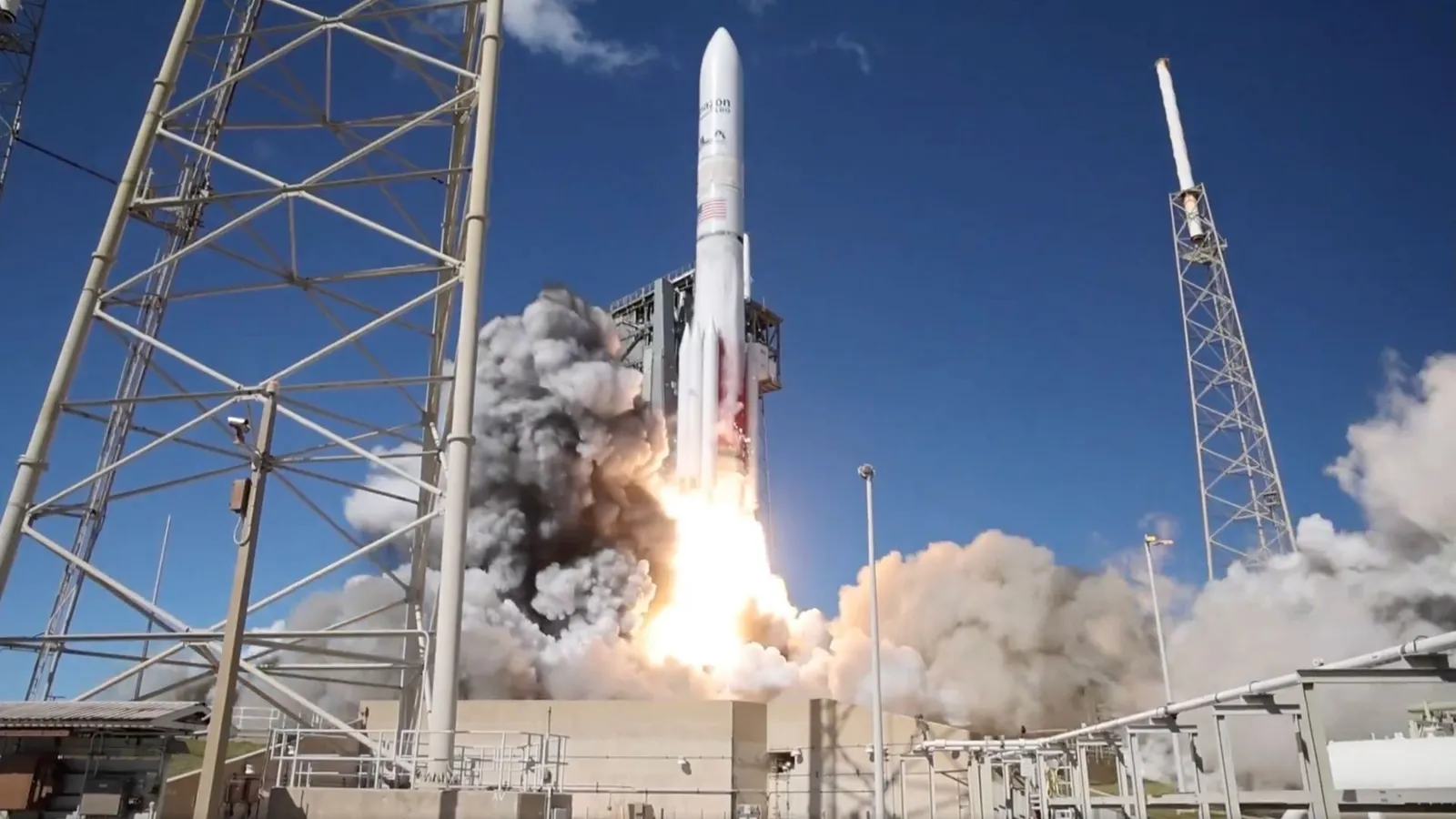
United Launch Alliance has traced the Nov. 15 Vulcan Centaur failure that destroyed 40 Amazon Leo satellites to inadequate fuel supply to its BE-4 engines, clearing engine-maker Blue Origin. For decision-makers, the finding narrows the fix to ULA's own vehicle but leaves the length of Vulcan's grounding, and the launch cadence Amazon and national security customers depend on, unresolved.
United Launch Alliance has narrowed the cause of its Nov. 15 Vulcan Centaur failure to the rocket's own fuel feed, not the engines bolted to it. In a Nov. 18 update, ULA wrote: "While work remains to determine cause, preliminary indications are that the low booster thrust was the result of inadequate fuel supply from the vehicle to the BE-4 engines, not from the performance of the engines." That sentence carries real weight. The launch, from Florida's Space Coast, destroyed 40 Amazon Leo internet satellites. It was the fifth flight ever for the two-stage Vulcan Centaur and the only one of the five to end in failure. And because the BE-4 is built by Blue Origin, Jeff Bezos' aerospace company, the finding lands as much on the engine maker's reputation as on ULA's.
For Blue Origin, the preliminary finding is close to a clean bill of health on the hardware it most needs to work. Two BE-4 engines power Vulcan's first-stage booster. The same engine is the backbone of Blue Origin's New Glenn rocket, which carries seven or nine BE-4s in its first stage depending on configuration. That commonality cuts both ways: a BE-4 design flaw would have grounded two rockets at once, and ULA's update points the finger at the vehicle's fuel supply instead. Blue Origin has its own problems to solve. New Glenn exploded during a test on May 28, and the company is working to return the powerful rocket to flight.
ULA's update also firms up what did work. The rocket's six solid rocket boosters and its Centaur V upper stage, which runs a different engine called the RL-10, appear to have performed well on Sunday, and further analysis is reinforcing that conclusion. That is a meaningful data point given the SRBs' history. On Vulcan's second and fourth flights, in October 2024 and February of this year, an SRB nozzle burned through and fell off about 30 seconds into flight. Both times Vulcan overcame the problem and still delivered its payload to orbit. After the February flight, ULA and Northrop Grumman, which builds the SRBs, tweaked the nozzle design. Based on Sunday's nominal booster performance, that fix appears to have held.
Vulcan's scorecard is the uncomfortable part. The rocket debuted in January 2024 as the successor to ULA's workhorse Atlas V, and it has now logged issues on three of its five flights, though Sunday's was the only outright failure. After the February SRB problem, Vulcan sat out roughly nine months. How long this grounding lasts is unclear, and ULA says the answer depends on what its anomaly investigation finds. The U.S. Federal Aviation Administration is overseeing that investigation, which is standard practice for a commercial launch mishap: the regulator typically keeps a vehicle grounded until the operator can show the root cause is understood and corrected.
The distinction between an engine problem and a fuel supply problem is not cosmetic. An engine flaw would implicate a design that flies on two different rockets and would ripple straight into Blue Origin's plan to return New Glenn to flight. A supply issue sits inside ULA's own vehicle, which makes the eventual fix narrower in scope but keeps the schedule risk squarely on ULA. It also means the corrective work lives in the hardware that feeds the engines rather than in the engines themselves, the kind of unglamorous plumbing that rarely makes headlines until it costs 40 satellites.
The commercial stakes are easy to undercount. Amazon's Leo constellation needs a steady cadence of launches to build out a network that competes for broadband customers, and losing 40 satellites in one flight is a schedule hit as much as a hardware loss. ULA, meanwhile, is trying to establish Vulcan as its post-Atlas V workhorse while competing for national security and commercial missions that reward reliability above all. Three anomalies in five flights is a pattern that customers, insurers, and the FAA will all read closely, even if only one flight failed.
For executives watching the launch sector, the takeaway is about where risk concentrates when vehicles share components. ULA and Blue Origin are separate companies with a shared dependency: the BE-4. Sunday's failure shows how quickly a single anomaly can be misread as an engine problem that would have hit both programs, and how much value sits in being able to rule that out within three days. The open question now is timing. Vulcan's last standdown ran about nine months. If this one runs anywhere close, the cost is measured in delayed satellites, reshuffled launch manifests, and a credibility test for a rocket that ULA needs to be boring.
This story's Key Insights and Take-aways are locked.
Create a free account to unlock Executive Actions for one credit.
Register to UnlockAlways free for Executives Club members. Join the Club
More in Business

S&P 500 Enters Correction, Down 10% From Its High on AI Worries
The index's slide past the 10 percent line is a symbolic verdict on investor mood, and the AI trade that powered the rally is now the thing testing it.

Dow and S&P 500 enter correction as Nasdaq logs worst week since 2020
All 11 S&P 500 sectors fell more than 1% in the same week for the first time since April 2025, a breadth signal that matters more than any single index level.

Chip stocks lose $2.3 trillion in a week, worst run in 25 years
A $2.3 trillion weekly wipeout in semiconductors is forcing every board with an AI story to ask whether it owns a thesis or just a crowded trade.