
ULA's first failure in 20 years wipes out 40 Amazon Leo satellites
A Vulcan anomaly 10 minutes into flight destroys 40 satellites and puts the first of 38 flights Amazon bought from ULA under an open investigation.
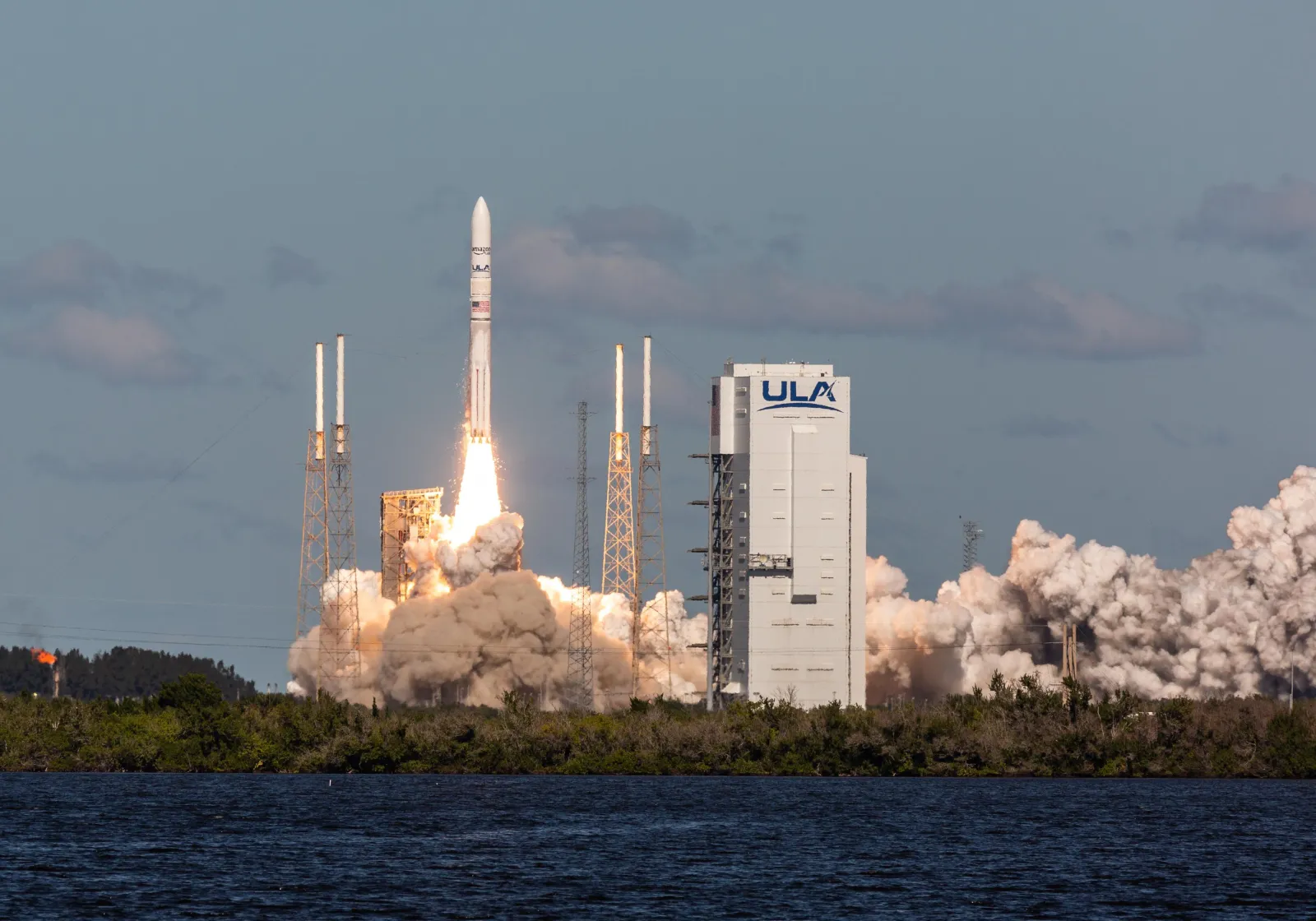
United Launch Alliance's Vulcan rocket suffered an anomaly 10 minutes into its November 15, 2026 flight from Space Launch Complex 41, destroying 40 Amazon Leo broadband satellites in what is reportedly ULA's first mission failure in 20 years. For decision-makers, the loss stalls Amazon's attempt to challenge SpaceX's Starlink and casts doubt over the very first of 38 flights Amazon purchased from ULA.
Forty Amazon Leo broadband satellites are gone, and with them a 20-year streak. United Launch Alliance's Vulcan rocket lifted off from Space Launch Complex 41 on November 15, 2026, and about 10 minutes into flight it suffered an anomaly that kept it from delivering its payload to orbit, the company said in a statement posted on X. ULA's words: "Based on data received by our Launch Director, we confirm that the Vulcan vehicle launched from Space Launch Complex 41 suffered an anomaly 10 minutes into the flight." The post, as captured, breaks off there. The mission is reportedly ULA's first failure in its 20-year history, and it was not a cheap one: 40 satellites, all of them Amazon's, none of them now delivering bandwidth.
The detail that should make operators sit up is what this flight was supposed to be. Today's launch was meant to be the first of 38 flights Amazon purchased from ULA, a multi-launch commitment that turns a single anomaly into a scheduling problem, an investigation, and a negotiation all at once. Amazon Leo is Amazon's competitor to SpaceX's Starlink, and it has struggled to get off the ground so far, putting only a small portion of the satellites it needs to challenge Starlink into orbit. Losing a 40-satellite batch does not simply subtract 40 satellites. It freezes the cadence Amazon needs to build a constellation at all.
Low Earth orbit broadband is a math problem disguised as a space program. To offer continuous coverage, operators typically need satellites spread across many orbital planes, which means the unit of progress is not one spacecraft but a batch, and the unit of failure is not one lost satellite but a gap in the shell. Historically, the companies that win this kind of race are the ones that launch on a metronome, because every grounded rocket pushes deployment back by months and every month of delay gives the incumbent more room to sign subscribers and tune its network. Amazon's 38-flight purchase from ULA shows the scale of capacity a constellation build demands; whether that capacity is spread across providers or concentrated, the loss of a single flight ripples into every downstream date on the plan.
The competitive frame is unforgiving. Starlink is the incumbent Amazon is chasing, and in a subscriber business, time is the product. Every quarter Amazon spends working through a launch anomaly is a quarter Starlink spends adding users and widening the gap Amazon has to close. Amazon's satellite effort is a long-horizon capital bet, the kind that only pays off if hardware gets to orbit on schedule and stays there. A failure on the very first flight of a 38-flight commitment is close to the worst possible place for a schedule to slip, because it puts pressure on the cadence assumptions sitting underneath the entire business case.
For ULA, the damage is reputational as much as physical. A 20-year record without a mission failure is a rare asset in an industry where a rocket's manifest is only as valuable as its reliability record. Commercial and government customers typically weigh flight history when they award multi-year contracts, and insurers price that history into every policy. One anomaly does not erase two decades, but it does invite a question ULA has never had to answer: how does the company respond when its flagship record breaks? The answer usually lives in the investigation, in the transparency of the root-cause findings, and in the pace of return to flight.
What we do not know yet is what went wrong. No cause has been identified in the material available; ULA's statement confirms only that an anomaly occurred 10 minutes into the flight. That matters for everyone downstream, because the fix determines the timeline. An issue traced to process or software can sometimes be resolved quickly, while a propulsion or structural problem can ground a vehicle for months. Until ULA publishes a cause, every customer holding a Vulcan slot and every Amazon planner holding a constellation deadline is sitting on an open question.
Second-order effects tend to show up before the root cause does. Launch insurance claims on a 40-satellite payload typically take time to settle, and replacement satellites have to be built, tested, and re-manifested, which puts them in line behind everything else competing for the same production capacity and the same launch slots. Amazon also has to decide whether to absorb the delay or pay a premium to accelerate elsewhere. Both options cost money. Only one costs schedule.
The broader lesson for anyone running a capital-intensive, hardware-dependent business is about concentration. When a single supplier, a single launch, or a single quarter carries an outsized share of your roadmap, an anomaly 10 minutes into a flight becomes a board-level event. The operators who handle these moments best are the ones who built in slack before they needed it, who have a second path to orbit or to market, and who treat cadence as a first-class risk alongside cost. Amazon and ULA now have to prove they did exactly that. The 20-year streak is over. The open question is what the next stretch of Vulcan's manifest looks like without it.
This story's Key Insights and Take-aways are locked.
Create a free account to unlock Executive Actions for one credit.
Register to UnlockAlways free for Executives Club members. Join the Club
More in Technology

Anthropic mathematician claims Claude helped crack the Riemann hypothesis
If the proof holds, AI has toppled math's most famous open problem; if it does not, it is a case study in announcing breakthroughs before anyone verifies them.

AI's $4 Trillion Wipeout Erases Nasdaq's Gains for the Year
A brutal week took roughly $4 trillion off the AI sector and left the Nasdaq flat for the year, and the damage ran the full length of the supply chain.

Anthropic mathematician says AI proved the Riemann hypothesis. Verification will take time.
A single unverified claim from inside Anthropic now sits against more than 160 years of open mathematics, and the gap between asserting a proof and surviving peer review is the entire story.