

ULA's Vulcan destroys 40 Amazon Leo satellites in a single launch
The rocket built to replace ULA's ultra-reliable Atlas V just wiped out a batch of Amazon's Starlink rival, and both companies now own the delay.
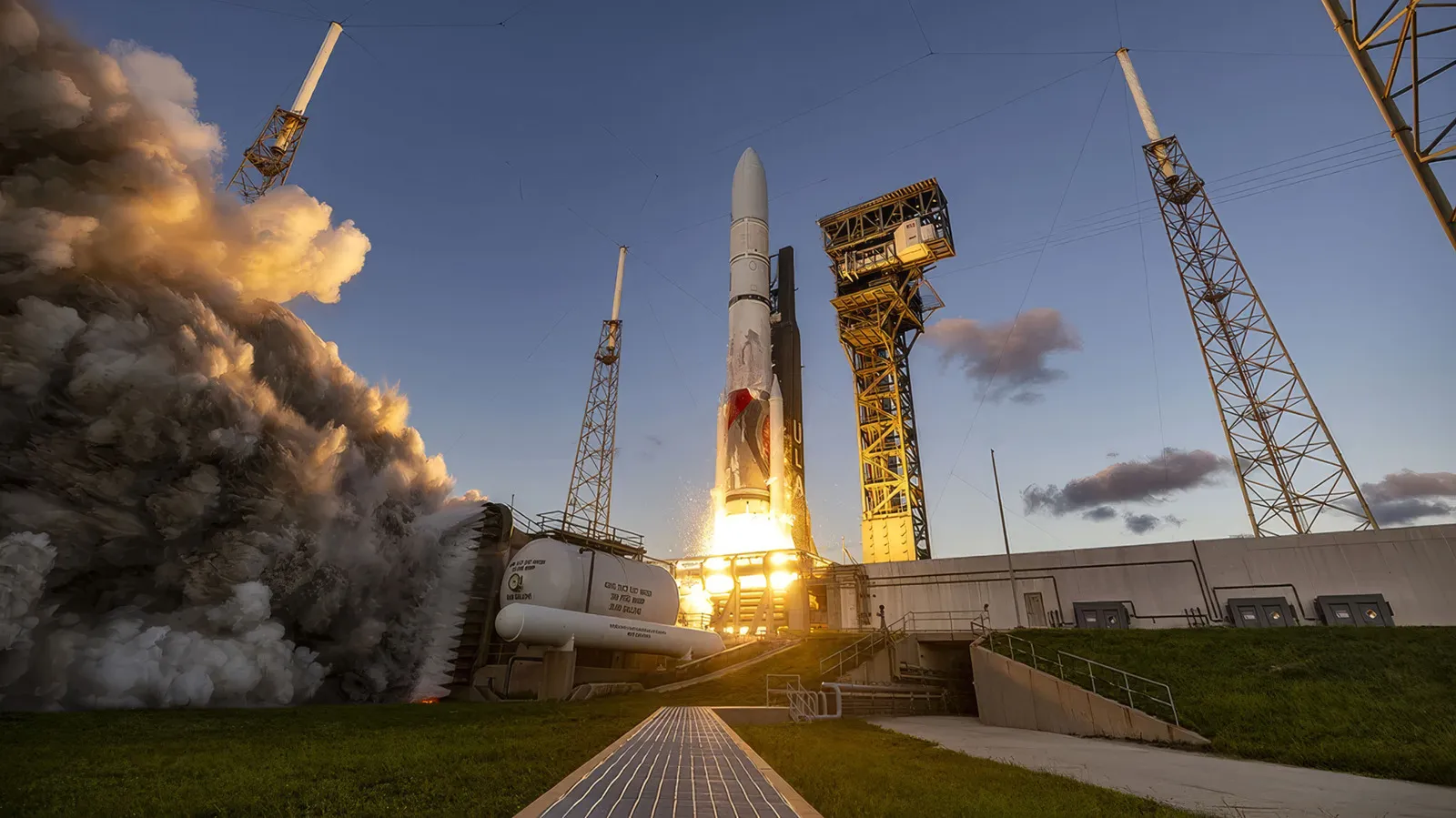
United Launch Alliance's Vulcan rocket failed on a mission carrying 40 Amazon Leo satellites, destroying the entire payload and denting the reputation ULA built on its Atlas V. For decision-makers, the loss is a case study in single-provider launch risk: Amazon's constellation timeline slips, ULA's certification and insurance costs rise, and every satellite operator's schedule assumptions deserve a second look.
Forty satellites. Gone in a single flight.
United Launch Alliance's Vulcan rocket failed on a mission carrying 40 Amazon Leo spacecraft, destroying the entire payload. That is the headline, and it lands on two balance sheets at once. For Amazon, it is 40 satellites it cannot recover and a deployment schedule it now has to rebuild from scratch. For ULA, it is a direct hit on the one asset that has defined the company for two decades: the assumption that its rockets simply work.
The contrast is the whole story. ULA built its reputation on the Atlas V, a vehicle dependable enough that it became the default choice for the US government's most expensive and least forgiving payloads. Vulcan is meant to be the successor, the rocket that carries that reputation into the next decade and keeps ULA relevant in a market it once owned. Instead, as the company's own framing puts it, its latest rocket is off to a shaky start. Reliability is not a feature in launch. It is the product.
Start with Amazon's side of the ledger. Amazon Leo, previously known as Project Kuiper, is the company's satellite internet constellation and its answer to SpaceX's Starlink. Constellations are a volume business. You need hundreds, eventually thousands, of satellites in orbit before the service works at all, which means every launch is a brick in a wall that has to go up fast. Losing 40 spacecraft at once is not a rounding error. Each unit has to be rebuilt, retested, and re-manifested onto a future rocket, and that future rocket is now the subject of an investigation it did not ask for.
Then there is the bottleneck nobody outside the industry thinks about: launch slots. Satellite operators typically book rides years in advance, because the number of rockets capable of lifting a meaningful batch of spacecraft is small. A failure does not just destroy hardware. It grounds a vehicle, triggers a review, and pushes every downstream mission to the right. Amazon's constellation timeline is now hostage to ULA's return to flight, and Amazon does not control that clock.
For ULA, the commercial damage is subtler and slower. The company is a joint venture of Boeing and Lockheed Martin, and it spent years as the dominant player in national security launches, the most lucrative and most reliability-obsessed corner of the market. Vulcan was built to defend that franchise against SpaceX. But launch customers with billion-dollar payloads do not grade on effort. They grade on track record, and every failure gives a customer a documented reason to re-examine the assumption that ULA is the safe pick. That is how market share erodes: not in one dramatic defection, but in a hundred procurement meetings where someone asks a question they did not used to ask.
Money follows the same logic. Launch insurance exists precisely for this scenario, but premiums are priced off history. A failure typically raises rates for the vehicle and complicates the certification path for government missions, which require demonstrated reliability before they will put a national asset on top of a rocket. Those costs outlast the hardware. They show up in the next contract, the next bid, and the next budget cycle.
There is a regulatory clock running too. Satellite constellations operate under spectrum licenses that come with deployment milestones. Miss them and you can lose priority to a competitor. Regulators have historically shown flexibility when operators hit technical trouble, but the clock does not pause for a rocket investigation, and the queue behind you is not sympathetic.
Zoom out and the strategic lesson is about concentration. Amazon placed a critical, time-sensitive program on a new vehicle from a single provider. That is a bet on execution, and execution just failed in the most visible way possible. For any operator building infrastructure at scale, the takeaway is unglamorous but real: diversify your launch providers, build slack into your schedule, and assume the rocket you booked will not fly when you need it.
For ULA, the next flight is the entire story. One failure is a data point. Two is a pattern, and patterns are what customers, insurers, and regulators actually price. The Atlas V earned its reputation over decades of boring, uneventful success. Vulcan now has to earn its own, and it just made that job considerably harder.
This story's Key Insights and Take-aways are locked.
Create a free account to unlock Executive Actions for one credit.
Register to UnlockAlways free for Executives Club members. Join the Club
More in Technology

Anthropic mathematician claims Claude helped crack the Riemann hypothesis
If the proof holds, AI has toppled math's most famous open problem; if it does not, it is a case study in announcing breakthroughs before anyone verifies them.

AI's $4 Trillion Wipeout Erases Nasdaq's Gains for the Year
A brutal week took roughly $4 trillion off the AI sector and left the Nasdaq flat for the year, and the damage ran the full length of the supply chain.

Anthropic mathematician says AI proved the Riemann hypothesis. Verification will take time.
A single unverified claim from inside Anthropic now sits against more than 160 years of open mathematics, and the gap between asserting a proof and surviving peer review is the entire story.