
ULA's Vulcan fails first time in 20 years, grounding rocket and 40 Amazon satellites
The first total mission failure in ULA's 20-year history takes down 40 Amazon Leo satellites and threatens roughly half of US military national security launches.
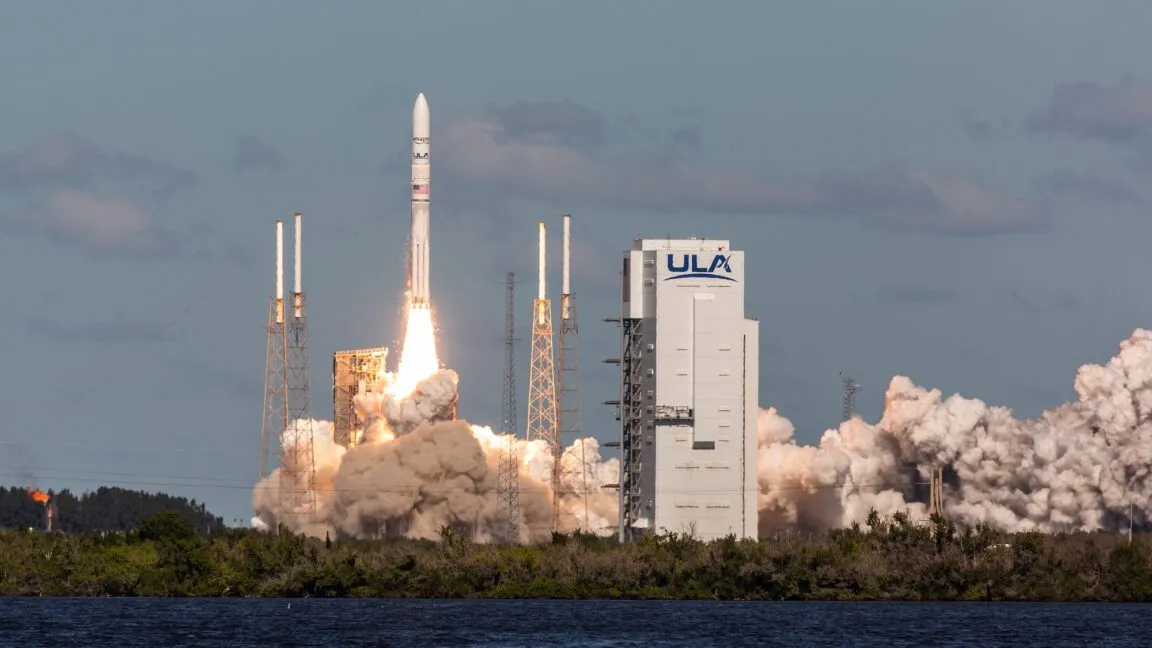
United Launch Alliance's Vulcan rocket suffered the first total mission failure in ULA's 20-year history on Sunday, sending 40 Amazon Leo broadband satellites back to Earth minutes after liftoff. The failure is expected to ground Vulcan indefinitely, jeopardizing roughly half of US military national security launches and the first of 38 Amazon launches meant to challenge SpaceX's Starlink.
United Launch Alliance's Vulcan rocket suffered the first total mission failure in the company's 20-year history on Sunday, when the booster and its payload of 40 Amazon Leo broadband satellites fell back to Earth minutes after liftoff. The loss is not a single-launch mishap. It is a direct hit on two strategic programs at once: ULA's role as a launch provider for roughly half of the US military's national security space missions in the next few years, and Amazon's first of 38 booked Vulcan launches to build a satellite broadband network meant to compete with SpaceX's Starlink.
ULA is expected to ground Vulcan for an indefinite period while it investigates. That timeline matters because Vulcan has been here before, just not this badly. On two of its four previous flights, the rocket overcame failures with its strap-on solid rocket boosters, corrected for the problems, and still reached orbit to deploy its payloads. Those incidents triggered months-long reviews and investigations before ULA could resume Vulcan flights. This time, the rocket did not recover, and the payload did not deploy. The difference between a close call and a total mission failure is the difference between a schedule slip and a strategic reset.
For the US military, the stakes are structural. Vulcan is on contract to launch roughly half of national security space missions in the next few years. Those missions typically carry satellites for communications, missile warning, navigation, and intelligence. When a primary rocket is grounded, the government cannot simply swap in any vehicle overnight. National security launches require certified rockets, specialized integration, and years of mission planning. A months-long Vulcan stand-down would force planners to rework schedules, shift payloads, or lean more heavily on other certified providers. The source does not say which missions are next or how the military will respond, but the contract share alone shows how much of the national security launch manifest is exposed.
For Amazon, the failure is a direct blow to a constellation that needs volume. Sunday's mission was the first of 38 Vulcan launches booked by Amazon to build out its network of broadband Internet satellites aimed at competing with SpaceX's Starlink. Satellite broadband is a scale game: the service depends on having enough satellites in orbit to cover the planet and enough launches to replace and expand the fleet. Losing 40 satellites on the first dedicated Vulcan flight does not just delay one launch. It raises questions about the cadence Amazon can achieve if its primary rocket is unavailable for an unknown period. Amazon can have a long-term plan, but without reliable launch, the constellation does not grow.
The competitive frame is equally sharp. The original report describes the failure as a major blow to SpaceX competitors. ULA and Amazon are two of the most credible challengers to SpaceX's dominant position in launch and satellite broadband. SpaceX's Starlink is the named competitor, and every grounded rival gives it more time to operate without a new challenger in the market. That does not mean the race is over. It means the cost of failure is asymmetric: a competitor with a smaller flight history and a grounded vehicle cannot absorb a bad day the way a frequent launcher can. The longer Vulcan stays on the ground, the more the market's default choice becomes the incumbent.
The investigation itself will shape the next phase. ULA's history with booster anomalies shows that the company can diagnose and return to flight, but it also shows that the process is not quick. Months-long reviews and investigations are standard after serious anomalies, and they involve engineering root-cause analysis, corrective actions, and a return-to-flight review. For boards and investors, the key variable is not just what failed on Sunday. It is how much of the manifest can be reassigned, how much revenue shifts to the right, and whether customers begin to diversify away from Vulcan as a matter of risk management. Launch contracts are often multi-year, but confidence is a real asset, and it can erode faster than a backlog.
The strategic lesson for executives across space, defense, and telecom is that launch is not a commodity when a program depends on it. A rocket failure can become a constellation delay, a national security scheduling problem, and a competitive gift to a rival all at once. ULA now has to prove it can find the cause and return safely. Amazon has to decide how much of its broadband timeline it can protect with other launch options, if any are available. The US military has to plan around a grounded vehicle that was supposed to carry roughly half of its national security missions. And SpaceX, watching from the lead, gets something no amount of marketing can buy: more time.
This story's Key Insights and Take-aways are locked.
Create a free account to unlock Executive Actions for one credit.
Register to UnlockAlways free for Executives Club members. Join the Club
More in Technology

Anthropic mathematician claims Claude helped crack the Riemann hypothesis
If the proof holds, AI has toppled math's most famous open problem; if it does not, it is a case study in announcing breakthroughs before anyone verifies them.

AI's $4 Trillion Wipeout Erases Nasdaq's Gains for the Year
A brutal week took roughly $4 trillion off the AI sector and left the Nasdaq flat for the year, and the damage ran the full length of the supply chain.

Anthropic mathematician says AI proved the Riemann hypothesis. Verification will take time.
A single unverified claim from inside Anthropic now sits against more than 160 years of open mathematics, and the gap between asserting a proof and surviving peer review is the entire story.