
UN court finds Myanmar committed genocide, cites military Facebook posts
The ICJ's ruling ties state-sponsored atrocities against the Rohingya to content Facebook hosted, a precedent platform boards cannot afford to skim.
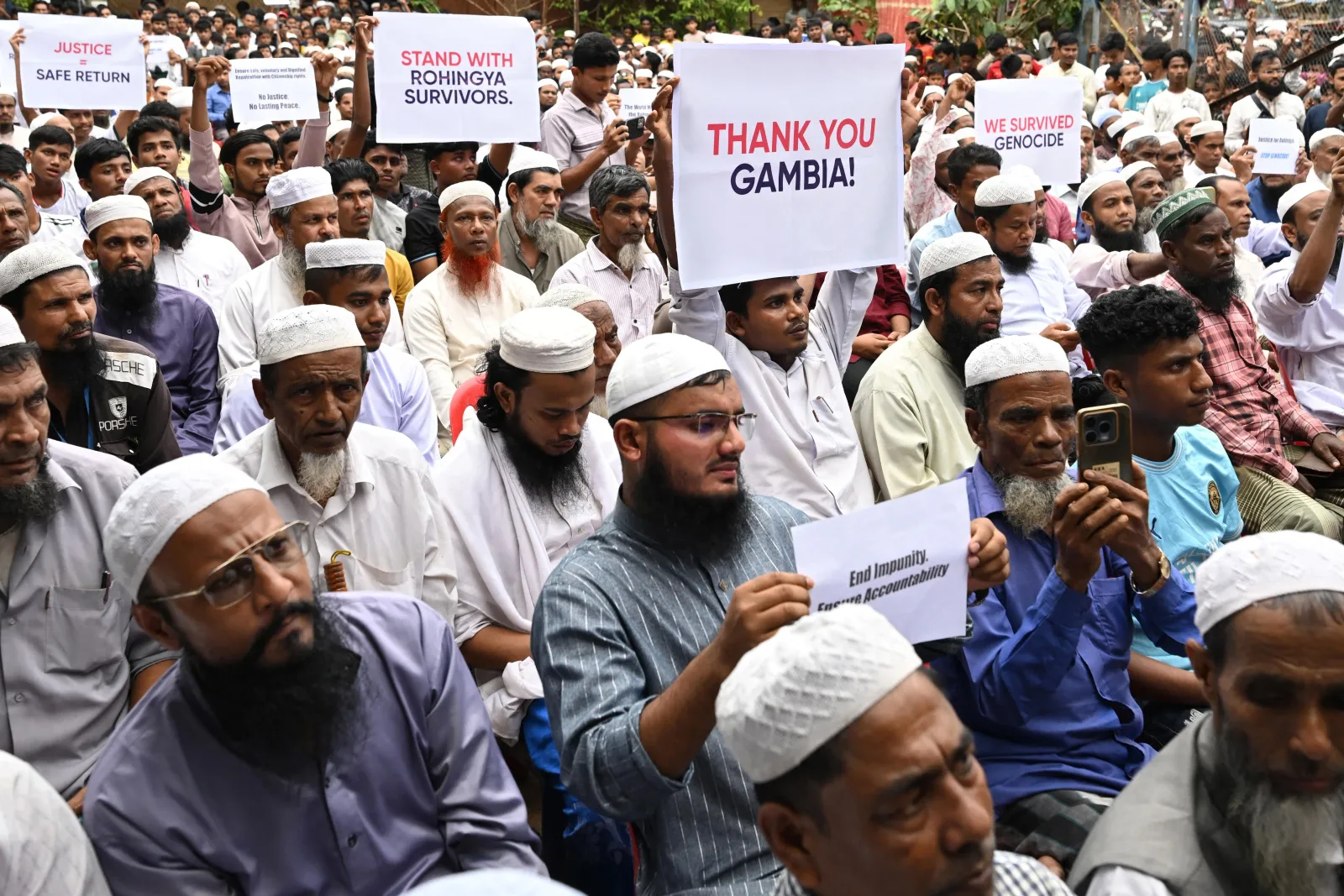
The International Court of Justice ruled that Myanmar committed state-sponsored genocide against the Rohingya in 2016 and 2017, and found that Facebook played a role in helping the military spread hate speech, with military posts that 'dehumanized' the Muslim minority and at times encouraged and legitimized violence against them. For platform executives and boards, the ruling converts content moderation from a product decision into a documented legal artifact in the official record of a genocide.
The United Nations' top court has ruled that Myanmar committed state-sponsored genocide against the Rohingya people in 2016 and 2017, and it did something platform executives should read twice: it wrote Facebook into the factual record. The International Court of Justice found that Facebook posts published by Myanmar's military "dehumanized" the country's Muslim minority "and at times encouraged and legitimized violence against them," as The court also said Facebook played a role in helping the military spread hate speech. Read that again. A judicial finding of genocide now includes, as part of its reasoning, the content a social network hosted and amplified.
The case did not start this week. The Gambia sued Myanmar in 2019 over the military's violent "clearance operations" targeting the Rohingya, a Muslim minority in a majority-Buddhist country. The suit was brought under the Genocide Convention, the 1948 treaty that obligates signatories to prevent and punish genocide. The ICJ, the UN's principal judicial organ, hears disputes between states, and its rulings are binding on the parties, though enforcement historically runs through the Security Council, where a single veto can stall action. That gap between a verdict and its consequences is the backdrop against which this ruling lands.
What makes this ruling unusual is the evidence it leans on. Courts weighing atrocity crimes have traditionally built their records from survivor testimony, forensic analysis, satellite imagery, and internal documents. Here, the court treated public posts as part of the machinery of violence, describing military content that dehumanized the Rohingya and, at times, encouraged and legitimized attacks on them. That is a meaningful shift. It means a moderation decision, a ranking choice, or a policy carve-out for a government account is no longer just a product question. It is a potential exhibit.
Facebook's entanglement with Myanmar is not a new story. The platform became the dominant way many people in the country got online, and by 2018 the pressure had become impossible to ignore. That year, a UN human rights investigation concluded the platform had played a determining role in the violence, and Meta removed accounts linked to the military. Meta also commissioned an independent human rights assessment of its own role in the country, which documented how its systems contributed to the harm. The company has since said it has invested heavily in Burmese-language moderation and safety work. The ICJ ruling does not assign legal liability to Meta. It does something arguably more durable: it fixes the platform's role in the official account of a genocide.
For anyone running a platform, the regulatory weather has been shifting in the same direction for years. Lawmakers in Europe and elsewhere have moved toward rules that require risk assessments, transparency reporting, and faster takedowns of illegal content, with penalties tied to global revenue. The direction of travel is consistent: platforms are being asked to show their work, not just promise good intentions. A court citing posts as evidence of genocide raises the cost of getting that wrong, and it hands regulators and plaintiffs a template.
The second-order effects are where boards should focus. First, content moderation is now an enterprise risk line, not a cost center to be trimmed. Second, conflict-affected markets carry outsized reputational and legal exposure relative to their revenue, which is usually small. Third, the "we are a neutral pipe" defense keeps eroding, and every erosion invites more litigation, more disclosure demands, and more scrutiny from advertisers who do not want their brands next to atrocity content. None of that requires a new law to bite. It bites through reputation, recruiting, and investor patience.
The strategic stakes are simple to state and hard to execute. Platforms operate in dozens of countries with different languages, political pressures, and legal regimes, and the ones with the weakest institutions are often where the harm is greatest and the revenue smallest. The ICJ ruling does not tell companies what to do. It does tell them what the record will look like if they get it wrong, and it tells every executive in the room that the paper trail now includes the feed.
This story's Key Insights and Take-aways are locked.
Create a free account to unlock Executive Actions for one credit.
Register to UnlockAlways free for Executives Club members. Join the Club
More in Technology

Anthropic mathematician claims Claude helped crack the Riemann hypothesis
If the proof holds, AI has toppled math's most famous open problem; if it does not, it is a case study in announcing breakthroughs before anyone verifies them.

AI's $4 Trillion Wipeout Erases Nasdaq's Gains for the Year
A brutal week took roughly $4 trillion off the AI sector and left the Nasdaq flat for the year, and the damage ran the full length of the supply chain.

Anthropic mathematician says AI proved the Riemann hypothesis. Verification will take time.
A single unverified claim from inside Anthropic now sits against more than 160 years of open mathematics, and the gap between asserting a proof and surviving peer review is the entire story.