
UN court rules Myanmar committed genocide, faulting it over evidence destruction
A binding finding from the UN's top court puts Myanmar's military and its economic partners on notice, while enforcement still runs through a deadlocked Security Council.
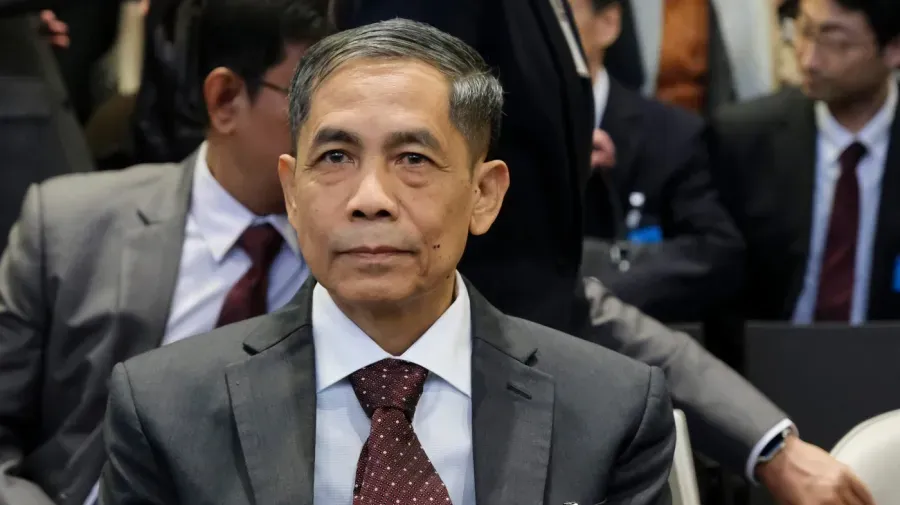
The UN's International Court of Justice ruled Thursday that Myanmar committed genocide against its Rohingya Muslim population during the military's 2017 clearance operations, and found that Myanmar violated its obligation to prevent the destruction of evidence tied to the allegations. For executives, the ruling upgrades Myanmar exposure from a reputational talking point to a live sanctions, financing and personal-liability question.
The United Nations' International Court of Justice ruled Thursday that Myanmar committed genocide against its Rohingya Muslim population, a finding built on the military's 2017 "clearance operations" and the thousands of deaths that followed. The Hague-based court added a second, quieter holding in the same ruling: Myanmar violated its obligation to prevent the destruction of evidence connected to the allegations. That second line is the one lawyers will read twice. Genocide cases are not decided on outrage; they are decided on records, and the court has now formally registered that Myanmar failed to keep that record intact.
Here is the blunt version for anyone who tracks power rather than press releases. The world's principal judicial organ has attached the word genocide to a state's military campaign, and in the same breath flagged the damage done to the evidentiary trail around it. What Myanmar has not been handed is a bill it must pay tomorrow. ICJ rulings are binding on the parties, but the court has no police, no bailiffs and no power to seize a bank account. Enforcement runs through the UN Security Council, where the political arithmetic has historically stalled action on Myanmar. The distance between a legal finding and a practical consequence is the entire story.
Context matters here, because that gap has been wide for years. The Rohingya are a largely Muslim minority concentrated in Myanmar's Rakhine State, and they have been stateless for decades under the country's citizenship framework. In August 2017, after attacks on security posts, the military launched what it called clearance operations across the state, and hundreds of thousands of Rohingya fled across the border into Bangladesh. UN human rights officials have described the campaign in the starkest available terms. Thursday's ruling is the judicial system catching up to that language.
The case itself is a study in patience. The Gambia brought the claim at the ICJ in 2019 under the Genocide Convention, a treaty both countries are party to, which is the legal key that unlocks the court's jurisdiction without needing Myanmar's consent. In early 2020, the court ordered provisional measures requiring Myanmar to prevent genocide and to preserve evidence related to the allegations. That order is the thread running straight to Thursday's evidence finding: when a court tells a state to protect the record and the record degrades anyway, the court notices. Parallel accountability tracks have been moving elsewhere, including a separate international criminal probe and national proceedings in third countries. None of them move fast.
Then comes the part boards actually model: consequence. A genocide finding is not a sanction, but it is a permission slip for one. Governments that have been cautious about new restrictions on Myanmar now have a judicial finding to point at, and companies with exposure to the country have a new line item in the risk register. For context, Myanmar's economy has historically leaned on garments, jade and gemstones, energy and telecoms, with a web of military-linked conglomerates sitting at the center of domestic commerce. Sanctions programs in Washington, Brussels and London have already targeted parts of that web in recent years. A ruling like this tends to accelerate the next round rather than start it.
The second-order effects land on people who never set foot in Rakhine State. Banks with correspondent relationships touching Myanmar-linked counterparties, insurers underwriting assets there, and institutional investors holding sovereign or corporate exposure all inherit a harder due diligence question this week than last. ESG mandates that once treated the country as a gray area now have a court finding to cite. Supply-chain auditors tracing garments or minerals back through Yangon will find their questionnaires getting longer, not shorter.
There is a personal dimension too, and it is the one executives routinely underestimate. Universal jurisdiction statutes in a growing number of countries let prosecutors pursue grave international crimes regardless of where they were committed. A judicial finding that genocide occurred is exactly the kind of document that gives those cases oxygen. For senior figures associated with military-linked enterprises, that converts a reputational problem into a travel and legal one.
So what should a CEO or a board take from a Thursday ruling in The Hague? Three things. First, binding legal findings move markets slower than headlines but further than headlines. Second, the enforcement bottleneck is political, not judicial, which means pressure will show up as sanctions, financing costs and counterparty caution rather than a courtroom verdict with a date attached. And third, the evidentiary finding is a warning shot aimed well beyond Myanmar: courts now treat the failure to protect evidence as a violation in its own right. The ruling answers the question of what happened. The harder question, what it costs, is still being priced.
This story's Key Insights and Take-aways are locked.
Create a free account to unlock Executive Actions for one credit.
Register to UnlockAlways free for Executives Club members. Join the Club
More in Politics

Fifth Circuit Kills Pregnant Workers' Law Over Pandemic Proxy Votes
A procedural ruling, not a policy one, has blocked a federal pregnancy-accommodation law and put every pandemic-era statute in the crosshairs ahead of an expected Supreme Court appeal.

Measles kills a Virginia child under 5, the state's first death of 2026
Virginia's health department confirmed the death but withheld the child's vaccination status, leaving schools, clinics and employers to plan around the one detail that would explain the most.

Former Brazilian President Bolsonaro Hospitalized with Intestinal Obstruction
The health status of the former far-right leader raises immediate questions about political stability and the trajectory of Brazil's conservative movement.