
UN warns against vague 'extremism' laws as UK court weighs Palestine Action ban
The Human Rights Committee's first guidance on freedom of association puts counter-terrorism powers on notice while Britain's highest court decides whether the Palestine Action ban survives.
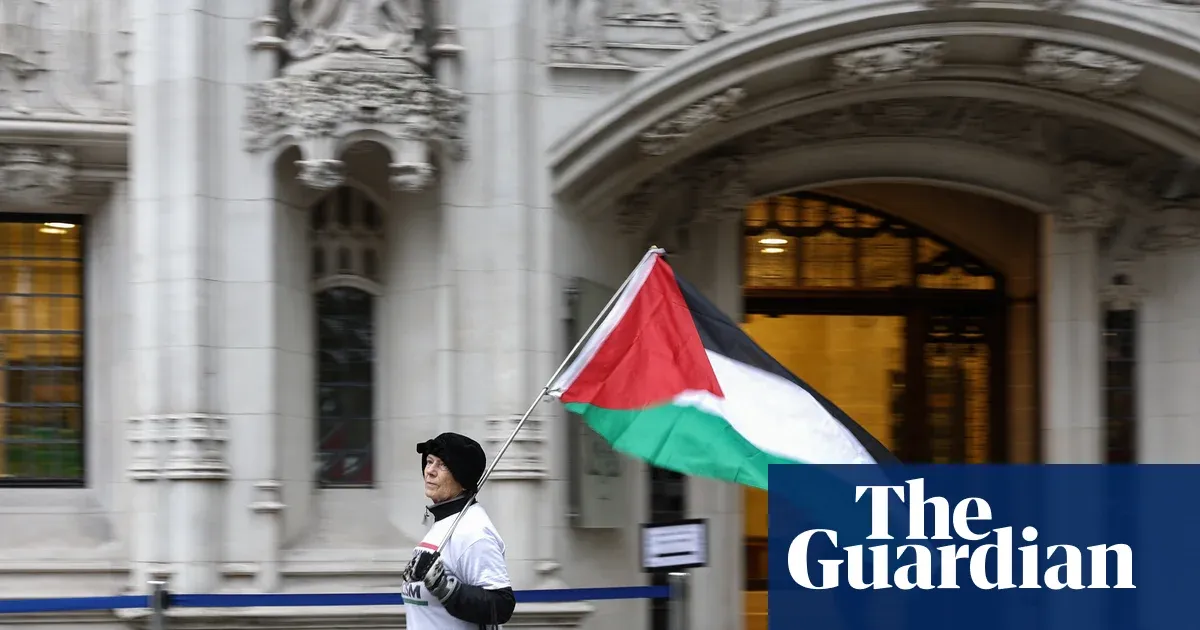
The UN Human Rights Committee published its first comprehensive guidance on freedom of association, warning against misuse of counter-terrorism and national security law and criticising vague statutes targeting 'extremism' or 'undesirable' organisations. The guidance lands as the UK's highest court considers the lawfulness of the ban on Palestine Action, giving boards a live test of how far designation powers can reach into partners, funding and reputation.
The UN Human Rights Committee has warned governments against misusing counter-terrorism and national security laws, publishing its first comprehensive guidance on freedom of association. The guidance singles out vaguely worded statutes aimed at "extremism" or "undesirable" organisations. It lands at a delicate moment in Britain: the UK's highest court is weighing the lawfulness of the ban on Palestine Action, and the committee's intervention hands judges, litigants and legislators a fresh standard to argue over.
That timing is the story. Two processes are running in parallel. One is judicial: a live case in the UK's top court testing how far the state can go in outlawing an organisation. The other is interpretive: a UN treaty body setting out what the right to associate is supposed to protect. They do not formally touch one another. But they are answering the same question, and the answer will shape how aggressively governments can treat protest, membership and funding as security threats.
For context, the Human Rights Committee is the body of independent experts that monitors how states apply the International Covenant on Civil and Political Rights, the treaty whose Article 22 protects freedom of association. It is not the UN Human Rights Council; it is a treaty body, and its general comments are its formal reading of what the treaty text means. They are not binding the way a court judgment is. In practice they are the reference point that domestic judges, UN reviewers and drafters typically reach for, and the committee's past guidance on assembly and on detention has been cited in national litigation and has shaped how states write security law. This is the first time it has issued comprehensive guidance on association itself.
The committee's target is precision, or the lack of it. Terms like "extremism" and "undesirable" are indeterminate by design: they move the decision from the statute book to the discretion of ministers, police and regulators. An organisation cannot audit the standard in advance, because there is no standard to audit. For a charity, a student society, a union or a campaign group, that produces the classic chilling effect. Lawyers advise retreat. Donors get nervous. Banks derisk. None of it requires a charge, let alone a conviction.
Bans of the kind at issue in the UK case typically criminalise membership and support, restrict fundraising and give financial institutions a reason to walk away. That is why the court's ruling will be read well beyond the organisation named in it. Every group that has ever wondered how much political risk sits in its bank account is watching. So are the compliance teams who decide, quietly and quickly, whether a customer or partner is worth the paperwork.
Companies rarely file association rights under risk. But designation regimes are plumbing. Screening lists, know-your-customer checks, sanctions tooling and reputational reviews all run on the same logic: when the underlying legal standard is vague, the safe move is caution. Caution is cheap for the institution applying it and expensive for whoever receives it. Payment processors, insurers, landlords, platforms and universities typically apply that logic faster than any court can review it, which is how a legal question about one group becomes an operational problem for hundreds of unrelated ones.
For boards, there are two failure modes and they pull in opposite directions. Under-compliance invites enforcement, criminal exposure and headlines. Over-compliance invites litigation, lost partners and its own reputational damage, because cutting off a lawful customer is now a story too. Guidance like this shifts the calculus slightly: it gives litigants and civil society a new citation, and it gives regulators who overreach a new set of questions to answer. Multinationals operating across jurisdictions should assume the standard will be tested unevenly, country by country, and that inconsistency is itself the risk.
What to watch is straightforward. First, the UK court's decision on the ban, which will define the outer edge of the state's power in this specific case. Second, whether the committee's framing starts appearing in formal reviews of how states comply with the covenant, which is slower but wider in reach. The boundary between security and association is being redrawn in real time, and the organisations that get caught in the middle are rarely the ones who chose to be.
This story's Key Insights and Take-aways are locked.
Create a free account to unlock Executive Actions for one credit.
Register to UnlockAlways free for Executives Club members. Join the Club
More in Politics

Fifth Circuit Kills Pregnant Workers' Law Over Pandemic Proxy Votes
A procedural ruling, not a policy one, has blocked a federal pregnancy-accommodation law and put every pandemic-era statute in the crosshairs ahead of an expected Supreme Court appeal.

Measles kills a Virginia child under 5, the state's first death of 2026
Virginia's health department confirmed the death but withheld the child's vaccination status, leaving schools, clinics and employers to plan around the one detail that would explain the most.

Former Brazilian President Bolsonaro Hospitalized with Intestinal Obstruction
The health status of the former far-right leader raises immediate questions about political stability and the trajectory of Brazil's conservative movement.