
United flights hit again: IT outage disrupts departures days after FAA halt
A week that already included a global Outlook shutdown and a nationwide FAA takeoff halt now has a third entry, and United is saying almost nothing about what broke.
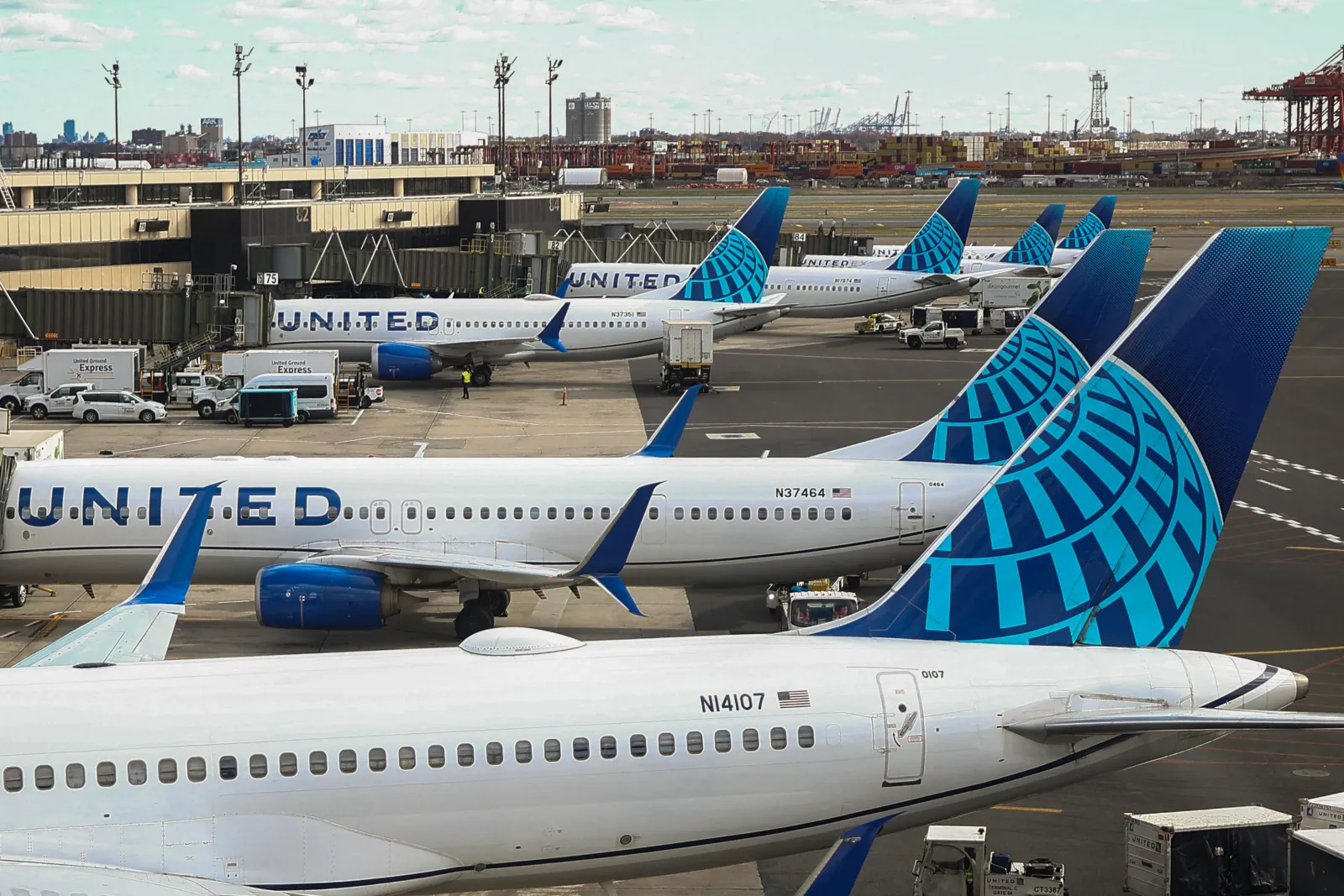
United Airlines is working to restore departing flights after an outage disrupted operations, less than a week after the FAA halted takeoffs nationwide over air traffic control communications and radar issues. For operators and boards, the back-to-back failures make system resilience and outage communications a board-level risk rather than an IT footnote.
United Airlines is working to restore departures after an outage disrupted its flights, less than a week after a separate problem with air traffic control communications and radar pushed the FAA to halt takeoffs nationwide. The airline said it is working to get things up and running again as quickly as possible, and it has offered little detail about the issue itself. Passengers did not wait for the corporate version. According to posts on social media, a number of people onboard planes heard from their pilots that a systemwide IT outage at United had caused problems, which means the most specific account of what went wrong came from the cockpit, not the press office.
The timing is what turns a bad travel day into a pattern. The United disruption lands after last week's global Microsoft Outlook shutdown and after what The Verge described as the great-bank-outage-that-wasn't earlier Monday afternoon. Three separate scares, roughly one week, all of them touching systems that millions of people depend on at the same moment. For travelers, the practical result is a creeping suspicion that the digital plumbing behind daily life is running hotter than usual. For the companies operating that plumbing, the result is a reputational tax that compounds every time a status page goes amber.
It is worth separating this outage from last week's. The FAA halt was a regulator-imposed, nationwide pause on takeoffs, triggered by issues with air traffic control communications and radar. That is the aviation equivalent of a circuit breaker: broad, blunt, and applied from the top. A United-specific departure outage is narrower and, in some ways, more awkward. It is the airline's own problem, on the airline's own clock, with the airline's own customers standing at the gate. The FAA can point to a safety trigger. An airline has to explain why its own systems failed while its planes sat at gates.
Modern airline operations run on a chain of interdependent systems that most passengers never see: crew scheduling and legality tracking, dispatch and flight planning, check-in and boarding, baggage reconciliation, and the weight-and-balance calculations that have to be signed off before a door closes. Historically, carriers have built these as separate platforms stitched together over decades, which means a failure in one link can stall the whole departure sequence even when the aircraft, the crew, and the weather are all fine. That is why an IT outage can look, from the terminal, exactly like a weather event: long lines, delayed boards, and no one at the desk who can tell you when it ends.
The consumer-protection backdrop has gotten less forgiving. Under US Department of Transportation rules, passengers are generally entitled to a refund when an airline cancels a flight, regardless of the cause, and carriers have faced sustained political pressure over how quickly they rebook and communicate. Airlines typically do not owe cash compensation for delays under federal rules the way European carriers do, but the refund obligation and the reputational cost are real. Every hour an outage drags on, the airline is accumulating both a customer-service liability and a story that will be cited the next time a regulator or a lawmaker wants to make an example of the industry.
What United has not done is fill the vacuum. There is no public count of affected flights, no root-cause explanation, and no timeline beyond the promise to get things running again as quickly as possible. In an outage, that gap gets filled by pilots' announcements, social posts, and speculation, and the airline loses control of the narrative at exactly the moment customers are most anxious. The playbook that works is boring and fast: say what is broken at the level you know it, say what you are doing about it, and give a next update time. Silence reads as chaos.
For executives outside aviation, the more useful lesson is about concentration. The same week produced a global Microsoft Outlook shutdown, a bank outage scare that turned out not to be one, and now an airline's departure systems. Boards that have not asked recently where their single points of failure sit, and how fast they can communicate when one fails, should treat this stretch as a free stress test. The question is not whether your systems will have a bad day. It is whether your customers hear it from you first, or from someone else.
United's planes will fly again, probably soon, and this outage will fade into a footnote. But the sequence matters: an FAA ground stop, a global email platform failure, a bank scare, and now an airline IT disruption, all inside roughly a week. The pattern is the story. Infrastructure failures are no longer rare enough to be news on their own, and that is precisely what should worry the people who run them.
This story's Key Insights and Take-aways are locked.
Create a free account to unlock Executive Actions for one credit.
Register to UnlockAlways free for Executives Club members. Join the Club
More in Technology

Anthropic mathematician claims Claude helped crack the Riemann hypothesis
If the proof holds, AI has toppled math's most famous open problem; if it does not, it is a case study in announcing breakthroughs before anyone verifies them.

AI's $4 Trillion Wipeout Erases Nasdaq's Gains for the Year
A brutal week took roughly $4 trillion off the AI sector and left the Nasdaq flat for the year, and the damage ran the full length of the supply chain.

Anthropic mathematician says AI proved the Riemann hypothesis. Verification will take time.
A single unverified claim from inside Anthropic now sits against more than 160 years of open mathematics, and the gap between asserting a proof and surviving peer review is the entire story.