
US cleared Nvidia and AMD AI chip sales to firms the Pentagon flagged
Newly released House Foreign Affairs Committee records show Washington approved export licenses for advanced AI chips to Chinese buyers with suspected PLA ties, and that puts every chipmaker's compliance playbook under a microscope.
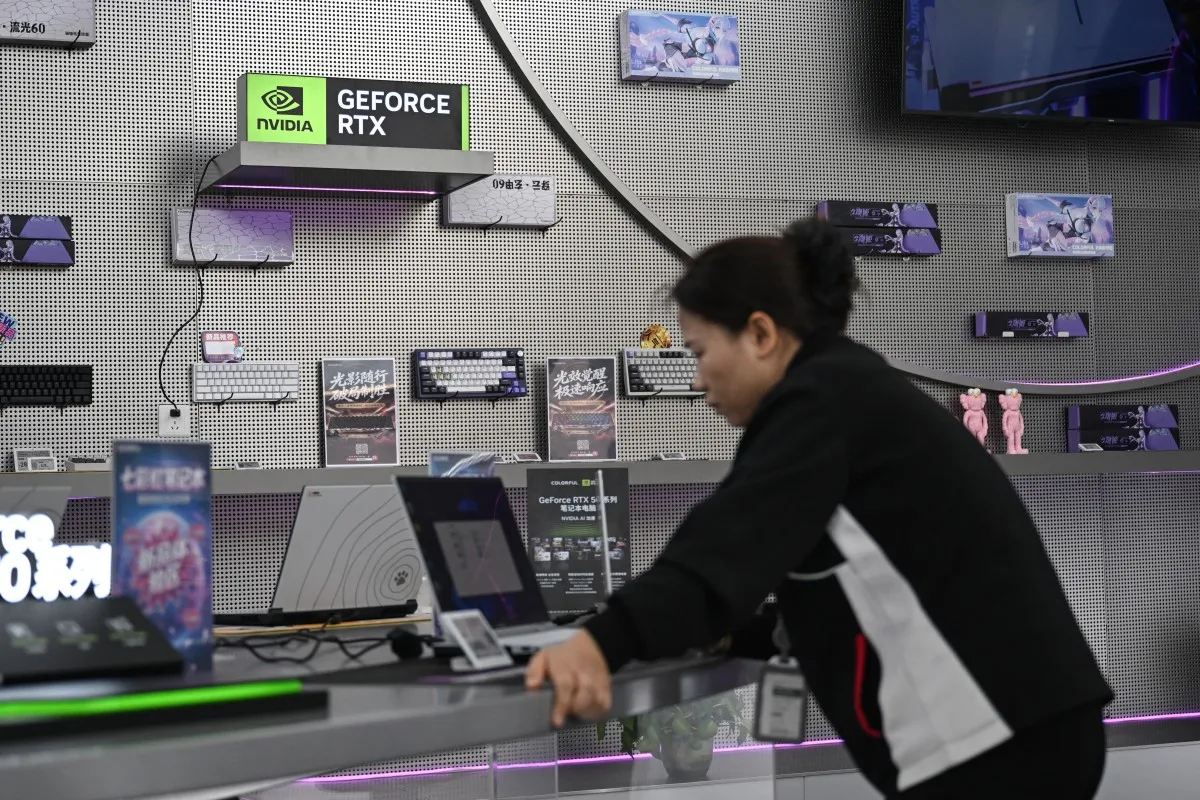
The US government approved Nvidia and AMD export applications to ship advanced AI chips to several Chinese companies, including some the Pentagon believed had links to the People's Liberation Army, according to previously confidential documents released Thursday by the Republican-led House Foreign Affairs Committee and reported by the Financial Times. The disclosure exposes a gap between national security objections and licensing outcomes that boards, investors, and any company selling dual-use tech into China now have to price in.
The US government approved Nvidia and AMD export applications to ship advanced AI chips to several Chinese companies, including buyers the Pentagon believed had links to the People's Liberation Army. That is not a leak or a rumor. It comes from previously confidential records released Thursday by the Republican-led House Foreign Affairs Committee and reported by the Financial Times. The approvals put two of the most valuable chip designers on the planet, and the licensing machinery that governs them, directly in the middle of a fight over how America polices the technology it still treats as its single most important strategic asset.
The documents cover a six-month window beginning in December, during which US companies sought government permission to ship AI hardware to Chinese buyers. The committee's decision to publish those records turns what is normally a quiet interagency paper exercise into a public accounting. Until now, license decisions were effectively invisible. Companies filed, agencies conferred, and outsiders learned almost nothing. Now there is a paper trail, and it shows the export control system producing outcomes that at least one part of the US national security apparatus did not want.
The mechanics matter here. Commerce runs the licensing process; Defense gets a seat at the table and files its own risk assessments. Since 2022, Washington has restricted exports of advanced AI chips to China, tightening the rules more than once and pushing Nvidia and AMD to design China-market parts that sit just under the performance thresholds regulators set. Companies must apply for licenses for anything above those lines, and those applications get reviewed across agencies. A Pentagon judgment that a buyer has PLA links is precisely the kind of red flag that is supposed to stop a shipment cold. In these cases, per the newly released records, it did not.
For Nvidia and AMD, the commercial stakes are enormous and awkward. China has historically been one of the largest markets for American data center silicon, and the controls have visibly shrunk it. Every approved license is therefore two things at once: a revenue line and a reputational question. Nvidia dominates the market for AI accelerators that train and run large models, and AMD has been pushing its own data center chips into the same demand. Both have spent years redesigning products to stay inside the rules while keeping Chinese customers on the hook. The committee's release suggests those customers were not always the ones Washington's defense analysts felt comfortable with.
The political economy is the second shoe. A Republican-led House committee choosing to declassify and publish these records is a lever, not a footnote. Lawmakers who argue the executive branch has been too permissive on China tech now have specific, named approvals to point at. That pressure can move in several directions: tighter license review, new reporting requirements, or legislation that narrows agency discretion. It can also chill the licensing process from the inside, as career reviewers weigh the risk of ending up in a headline against the risk of approving a sale. Either way, the era of quiet approvals is over for now.
Zoom out and the disclosure lands in a broader argument about whether export controls actually work. The US has spent years assembling a coalition of allied governments around semiconductor equipment and chip restrictions, on the theory that choking off the most advanced compute slows a rival's AI progress. That theory depends on enforcement credibility. If documents show licenses flowing to buyers the Pentagon itself flagged, the gap between the stated policy and the executed policy becomes the story, and it becomes harder for Washington to ask allies to hold the same line.
For founders, operators, and investors, the practical read is narrower and more immediate. Any company with dual-use technology and Chinese customers should assume its licensing history can become public. That raises the value of clean customer diligence, documented end-use checks, and a compliance function that can survive congressional scrutiny, not just an agency audit. For public market investors, the takeaway is that Nvidia's and AMD's China exposure is not a settled number. It is a political variable, reset by committee hearings, agency memos, and elections. For boards, the question to ask management is simple: if your last twelve months of export licenses were printed on the front page, would you be comfortable? The House Foreign Affairs Committee just answered that question for two of the biggest names in semiconductors.
This story's Key Insights and Take-aways are locked.
Create a free account to unlock Executive Actions for one credit.
Register to UnlockAlways free for Executives Club members. Join the Club
More in Technology

Anthropic mathematician claims Claude helped crack the Riemann hypothesis
If the proof holds, AI has toppled math's most famous open problem; if it does not, it is a case study in announcing breakthroughs before anyone verifies them.

AI's $4 Trillion Wipeout Erases Nasdaq's Gains for the Year
A brutal week took roughly $4 trillion off the AI sector and left the Nasdaq flat for the year, and the damage ran the full length of the supply chain.

Anthropic mathematician says AI proved the Riemann hypothesis. Verification will take time.
A single unverified claim from inside Anthropic now sits against more than 160 years of open mathematics, and the gap between asserting a proof and surviving peer review is the entire story.