
US Loses Measles Elimination Status After 26 Years as Cases Top 5,400
Global health authorities confirm continuous spread, forcing US executives to plan for a vaccine-preventable disease that now circulates endemically.
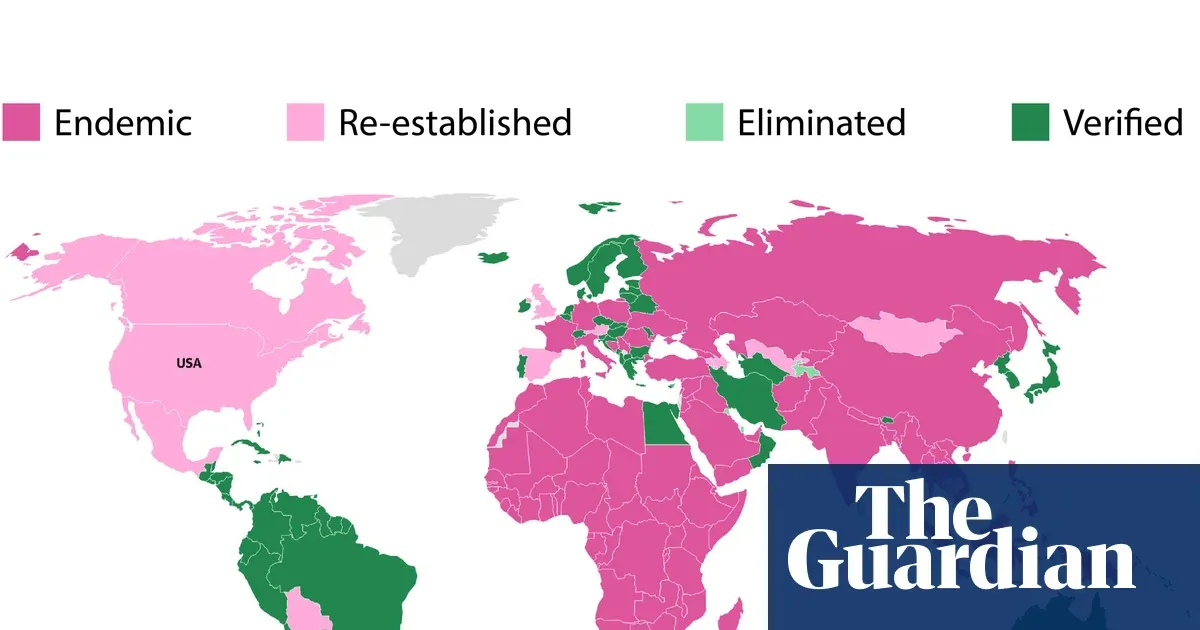
Global health authorities announced the US has lost its measles elimination status after 26 years, with more than 5,400 cases and eight deaths in 2026. For decision-makers, the shift means a vaccine-preventable disease is now a permanent operational risk, not a rare outbreak to manage.
The United States has lost its measles elimination status, global health authorities announced, ending a 26-year run in which the disease was considered no longer continually spreading across the country. The official recognition comes as the US endures its worst measles outbreak since 1991, with more than 5,400 cases and eight deaths in 2026. That is the headline number, and it is not a rounding error. Elimination status is a binary label: a country either has continuous transmission or it does not. According to the announcement, the US now does. The disease is endemic here again.
For anyone who has treated measles as a historical footnote, the shift is jarring. The US had held elimination status for 26 years. That does not mean measles disappeared. It means that when cases arrived from abroad, they did not spark sustained chains of transmission. The virus was contained. Now, global health authorities say the infectious disease is continually spreading. The practical consequence is that measles is no longer a rare importation event to be managed and forgotten. It is a persistent presence in US communities, and that changes the risk calculus for schools, hospitals, employers, and households.
To understand why this matters, start with what measles is. It is one of the most contagious viruses known. For context, it can spread through the air and linger in a room after an infected person has left. Public health systems typically rely on high two-dose vaccination coverage to keep transmission from taking hold. When coverage is high, outbreaks are small and short. When it slips, measles finds the gaps. The source does not detail vaccination rates, but the loss of elimination status is itself evidence that transmission is sustained. A country does not lose elimination status because of a single cluster. It loses it because the virus keeps finding new people to infect.
The human toll is already severe. More than 5,400 cases and eight deaths in 2026. Those eight deaths are a reminder that measles is not a mild childhood illness. It can cause serious complications, and for infants, pregnant people, and immunocompromised individuals, the risk is especially high. For executives, the numbers translate into operational pressure. A vaccine-preventable disease that circulates continuously can drive absenteeism, strain healthcare capacity, and disrupt schools and workplaces. It can also create uncertainty for global travel and events. The US outbreak is now the worst since 1991, and the end of elimination status means the country is no longer in a contained phase.
The announcement by global health authorities is more than a label. It is a signal that the US public health baseline has changed. Historically, elimination status affects how countries assess risk, allocate resources, and coordinate outbreak response. Losing it can reshape how international partners view US outbreaks. It can also force a harder look at vaccination policy, public health funding, and communication. For boards, this is a governance issue, not just a medical one. Companies with operations in the US, or with US-based employees and customers, should ask whether their continuity plans still assume measles is rare. The answer, according to the announcement, is no.
Second-order effects will play out across sectors. Healthcare providers may see more cases and higher demand for isolation and treatment. Insurers may reassess risk. Schools and universities may face outbreaks that force closures or remote learning. Hospitality and travel businesses may confront cancellations or new health requirements. Employers may need to revisit sick leave, vaccination policies, and remote work flexibility. None of these outcomes is certain, but the direction is clear: a disease that was eliminated for 26 years is now continually spreading. That means the cost of complacency rises. The strategic question is not whether measles will appear, but how often and where.
The US had 26 years of elimination status. That streak is over. The worst outbreak since 1991, with more than 5,400 cases and eight deaths in 2026, is the immediate context. The longer-term context is that global health authorities have officially recognized endemic spread. For CEOs, CFOs, and boards, the takeaway is that public health infrastructure is part of business infrastructure. When elimination status is lost, the baseline changes. Risk models, workforce plans, and community strategies should change with it. The announcement is a warning that the US is now in a different phase of measles control, and the numbers are already moving in the wrong direction.
This story's Key Insights and Take-aways are locked.
Create a free account to unlock Executive Actions for one credit.
Register to UnlockAlways free for Executives Club members. Join the Club
More in Science

Anthropic's I.P.O. Made Rank-and-File Researchers Worth Tens of Millions
Researchers who joined just a few years ago are now worth tens of millions, and the windfall resets the pay benchmark for every private A.I. lab still paying in paper.

NASA's Mars relay lost a wheel, and Perseverance lost both radios
Odyssey's backup wheel stopped spinning with only months of hydrazine left, while Perseverance's primary and backup radios are both sidelined, pausing science on the surface.

Three Hours With Elizabeth Holmes, and Not One Question About the Fraud
Nathan Fielder's 'You Can See Everything' bets that eye contact can out-truth a fraud conviction, and the Guardian's critic argues that is an insult to objective truth.