
US loses measles elimination status won in 2000 as cases top 5,400
Health authorities stripped the designation Tuesday, but the outbreak now accelerating past 5,400 cases and 10 deaths is not even the data that cost it.
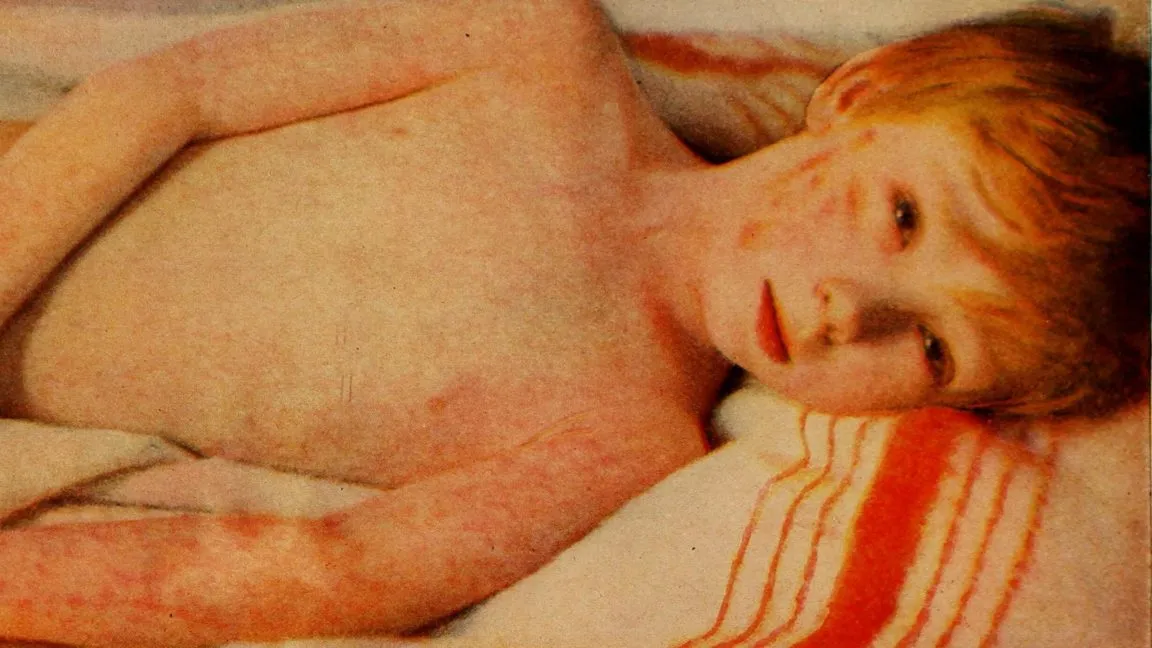
International health authorities formally stripped the United States of its measles elimination status on Tuesday, ending a designation the country had held since 2000, as cases this year top 5,400 and 10 deaths are confirmed across three states. For decision-makers, the designation is a lagging indicator: the status was lost on earlier data, so the current outbreak, including a Pennsylvania cluster of more than 1,500 cases, is a still-accelerating epidemic rather than a closing chapter.
The United States no longer has measles elimination status. International health authorities formally announced Tuesday that the designation, first won in 2000 after decades-long vaccination efforts, has been stripped, and the reaction was immediate and blunt: public health experts, doctors, and political leaders called the backslide "shameful" and a "national embarrassment." The numbers behind the moment are ugly. Measles cases this year have climbed past 5,400, more than in any year since 1991. A single explosive outbreak in Pennsylvania accounts for more than 1,500 of them. Ten deaths have been confirmed across three states, several of them in just the last week.
Now the part that should stop you cold. Almost none of that factored into the decision. The cases, the Pennsylvania cluster, the deaths, none of it drove the loss of status. The US lost elimination earlier, on data that predates the current surge. What is happening now is not the reason the designation fell; it is what came after. The official verdict is a lagging indicator, and the epidemic it describes is still accelerating. That is the real story buried under Tuesday's headlines: the country is not at the end of a bad stretch, it is in the middle of one.
It helps to be precise about what was actually lost. Elimination status is not eradication. It means a country has stopped continuous transmission of measles within its borders for a sustained period, even though the virus still circulates globally and can be reintroduced by a traveler at any time. The US earned the label in 2000, the payoff of a decades-long vaccination push that turned one of childhood's most feared diseases into a rarity. Measles is the most contagious virus known on Earth, which is why the margin for error is so thin. Historically, keeping chains of transmission from sustaining requires roughly 95 percent two-dose vaccination coverage, and even small pockets of unvaccinated people are enough to restart the fire.
The mechanics of the designation explain why the timing feels strange. Elimination is typically assessed over a rolling 12-month window: a country keeps the label as long as continuous transmission of the same viral chain stops within a year. That makes the judgment retrospective by design. By the time authorities announce a loss, the transmission that caused it is already months old. So the announcement that landed Tuesday was, in effect, a verdict on a period that had already closed, delivered into a present that is far worse.
Which is why the current numbers deserve more attention than the ceremony. More than 5,400 cases is the highest annual count since 1991, a year when the US was still years away from elimination. The Pennsylvania outbreak alone, at over 1,500 cases, would rank as a serious national event on its own. And the deaths, 10 confirmed across three states with several in the last week, mark a shift from an abstract case count to a body count. For context, measles deaths are typically caused by complications such as pneumonia or brain swelling, and they are preventable with a vaccine that has been available for more than six decades.
The second-order effects are where this stops being a public health story and becomes an operating reality. Elimination status is a signal that other countries, health systems, and institutions use when they assess risk. Losing it changes how outbreaks are traced, how travel-related exposures are managed, and how much resources get pulled into containment. Schools and employers, which typically rely on public health guidance to decide when to exclude sick students or staff, face harder calls when transmission is widespread rather than contained. And every additional case is a chance for the virus to find another unvaccinated pocket, which is how a contained outbreak becomes a runaway one.
There is also a credibility cost that is harder to quantify. The 2000 designation was a public health triumph, and losing it reverses a generation of progress in a single announcement. Experts had expected the loss for months, and the decision leaked to the press last week, which means the surprise was never the outcome. The surprise is the speed. A status that took decades to earn was surrendered on data that is already out of date, while the outbreak that will define the next year is still climbing.
For leaders outside of public health, the takeaway is not to wait for the next official verdict. The designation is a rearview mirror. The forward-looking signal is the case curve, the vaccination gaps in your own community, and the fact that the most contagious virus known to science does not need a formal announcement to keep spreading. The US lost the label on Tuesday. The epidemic that matters is the one still happening.
This story's Key Insights and Take-aways are locked.
Create a free account to unlock Executive Actions for one credit.
Register to UnlockAlways free for Executives Club members. Join the Club
More in Technology

Anthropic mathematician claims Claude helped crack the Riemann hypothesis
If the proof holds, AI has toppled math's most famous open problem; if it does not, it is a case study in announcing breakthroughs before anyone verifies them.

AI's $4 Trillion Wipeout Erases Nasdaq's Gains for the Year
A brutal week took roughly $4 trillion off the AI sector and left the Nasdaq flat for the year, and the damage ran the full length of the supply chain.

Anthropic mathematician says AI proved the Riemann hypothesis. Verification will take time.
A single unverified claim from inside Anthropic now sits against more than 160 years of open mathematics, and the gap between asserting a proof and surviving peer review is the entire story.