
Van Gogh Sells for Record $190 Million After Last-Minute Nazi-Era Settlement
The sale only closed because the owners and a Jewish family's descendants settled a duress claim at the wire, a reminder that provenance now prices into every trophy asset.
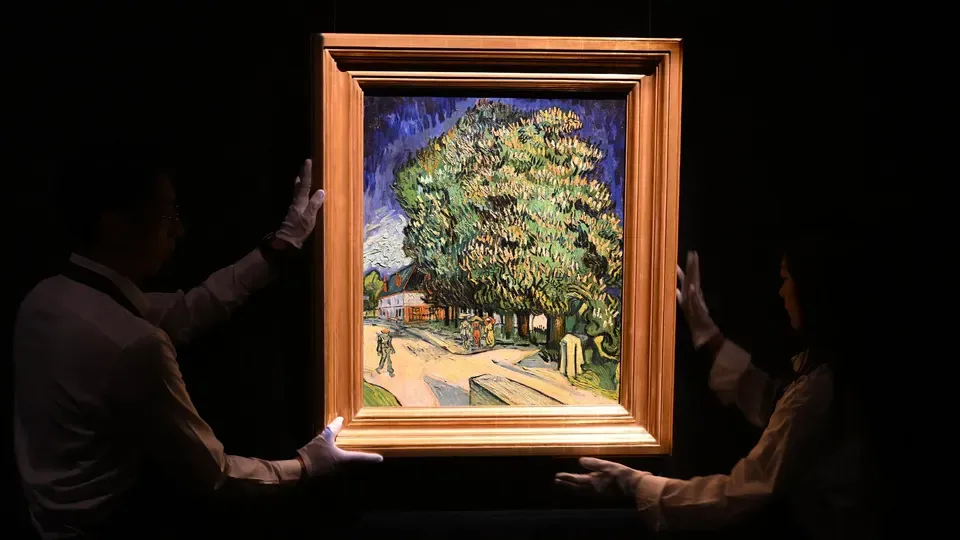
The owners of a Van Gogh sold the painting for a record $190 million after reaching a last-minute agreement with the descendants of a Jewish family who said the artwork was sold under duress during the Nazi era. For collectors, museums, and family offices, the deal shows that unresolved provenance is now a closing risk that can stall or sink a trophy transaction.
A Van Gogh has sold for a record $190 million, and the transaction nearly did not happen at all. The painting's owners and the descendants of a Jewish family who claimed the work was sold under duress during the Nazi era reached a last-minute agreement, clearing the way for the sale to proceed. That single resolution, negotiated at the wire, is the difference between a headline price and a lawsuit. For anyone who holds, lends against, or insures art, the sequence matters more than the number: the asset was only worth $190 million once its history was settled.
The claim at the center of it is a familiar one in the art world, and it is rarely simple. The family argued the painting changed hands under duress during the Nazi era, meaning the seller's consent was shaped by persecution rather than a free market. Duress claims do not require proof that a gun was held to anyone's head. Historically, they rest on the conditions surrounding a sale, including flight, frozen assets, and the pressure of a regime that had stripped Jewish families of property rights. Rather than litigate the claim, the owners struck an agreement, and the sale proceeded.
For context, the legal architecture around these disputes is relatively young. The Washington Principles, agreed by dozens of countries in 1998, asked governments to identify Nazi-confiscated art and to seek just and fair solutions with the families involved. In the United States, the Holocaust Expropriated Art Recovery Act of 2016 gave claimants a fresh window to bring suits over works they said were lost between 1933 and 1945. The practical effect has been a steady drip of claims against museums, dealers, and private collectors, many of them arriving decades after the sale in question.
Why does this always seem to resolve at the last minute? Because a pending claim is a kill switch on a transaction. Buyers at this level do not want to inherit litigation, lenders will not finance against a contested title, and insurers price the risk accordingly. Sellers therefore have a strong incentive to clear claims before a deal closes, and claimants know it. The result is a negotiation with a hard deadline, which is exactly when the seller's leverage is weakest. The terms of this agreement were not spelled out, which is standard practice in these resolutions.
Zoom out and the price itself tells you something about the top of the art market. A $190 million result sits in territory reached by only a handful of artworks in history, a tier where buyers are as motivated by scarcity and permanence as by any return calculation. Van Gogh is about as scarce as it gets: a small, closed catalogue of works, enormous global recognition, and demand that does not track the economic cycle the way mid-market art does. At the very top, art behaves less like a collectible and more like a store of value, which is precisely why a clouded provenance is so expensive to carry.
There is also a signal here for sellers with complicated histories. The market has effectively priced in the risk: works with clean, documented provenance command a premium, and works with gaps get discounted, litigated, or quietly withdrawn. A record price achieved after a settlement is not evidence that provenance does not matter. It is evidence that provenance was the last thing standing between the seller and the money, and that resolving it was worth doing at the final hour.
The second-order effects land well beyond this one canvas. Provenance research is now a permanent line item for collectors, dealers, and museums, and the cost of getting it wrong is not just legal fees. A contested work can sit unsold for years, bleed insurance and storage costs, and damage the reputation of whoever is holding it. Family offices that treat art as an alternative asset have to underwrite title the way they underwrite a company's cap table. Museums face the same math with a public trust overlay: a claim that surfaces after a gift or a purchase becomes a governance problem for the board, not just a curatorial one.
The strategic read for anyone in a similar seat is straightforward. Provenance is not paperwork; it is pricing. Institutions and collectors that audit their holdings before a claim arrives keep their options, their buyers, and their reputations. Those that wait until a sale is on the table end up negotiating from the weakest position, at the last minute, with a deadline they did not set. This Van Gogh closed at a record $190 million because the owners did the deal. The next one may not be so lucky.
This story's Key Insights and Take-aways are locked.
Create a free account to unlock Executive Actions for one credit.
Register to UnlockAlways free for Executives Club members. Join the Club
More in Business

S&P 500 Enters Correction, Down 10% From Its High on AI Worries
The index's slide past the 10 percent line is a symbolic verdict on investor mood, and the AI trade that powered the rally is now the thing testing it.

Dow and S&P 500 enter correction as Nasdaq logs worst week since 2020
All 11 S&P 500 sectors fell more than 1% in the same week for the first time since April 2025, a breadth signal that matters more than any single index level.

Chip stocks lose $2.3 trillion in a week, worst run in 25 years
A $2.3 trillion weekly wipeout in semiconductors is forcing every board with an AI story to ask whether it owns a thesis or just a crowded trade.