
Verizon's CEO prices Musk's Starlink phone play: $300B and six years
Schulman tells Fortune that Musk would end up with a network 'exactly like our network today', and become the sixth entrant into a market already at war.
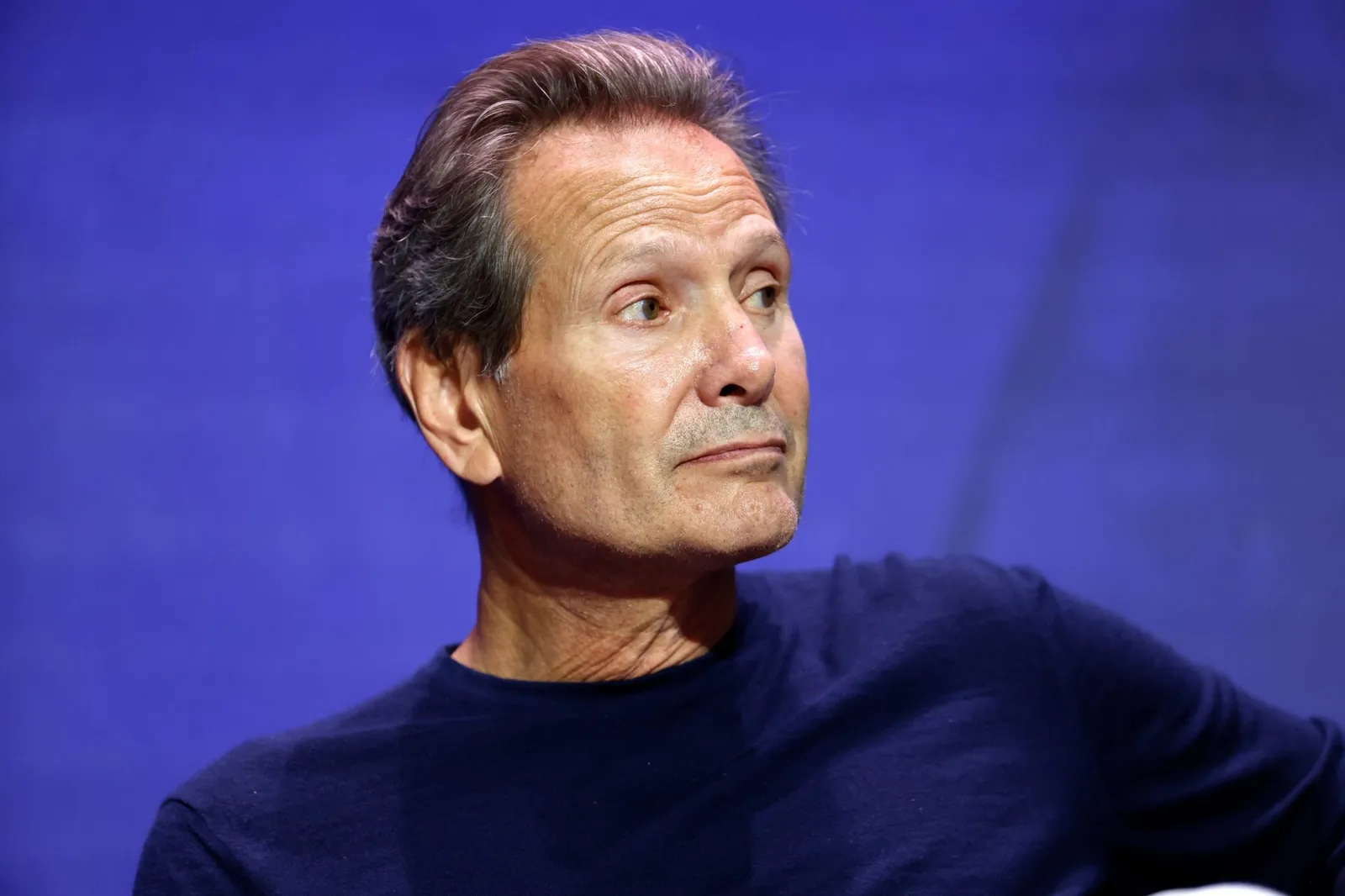
Verizon CEO Dan Schulman says Elon Musk's push to turn Starlink into a major U.S. mobile carrier would cost SpaceX roughly $300 billion and four to six years, ending with a network much like Verizon's and Musk as the market's sixth entrant. For telecom incumbents and their boards, the fight is now about capital and spectrum endurance rather than technology surprise, after the sector lost $50 billion in market cap on the initial announcement.
Dan Schulman, Verizon's CEO, has run the numbers on Elon Musk's plan to turn Starlink into a major U.S. phone carrier, and he thinks the bill is enormous. If Musk pulls it off, Schulman told Fortune Editor in Chief Alyson Shontell on the Titans and Disruptors of Industry podcast, he will have spent four to six years and about $300 billion building a copy of Verizon. "At the end of the day, he might have a network that is pretty much exactly like our network today," Schulman said. "There's no secret sauce, there's no magic wand, there's no structural cost advantage that will come out. He'll have a network, and in four years, five, six years, he'll be the sixth entrant into the market." That is the whole argument in one breath: not that Musk cannot do it, but that doing it buys him a seat at a table that already has five players.
The market did not wait for the math. Last month SpaceX announced plans for Starlink to become "a major mobile carrier in the U.S.," and telecom stocks plunged. The three major U.S. carriers shed $50 billion in market cap. Verizon alone dropped 8.7%, its worst single-day performance since 2002. Musk added to the picture Wednesday, telling the New York Times DealBook Summit that SpaceX is looking into production of "micro cell towers" for Starlink Mobile as early as next year. Those are ground-based hardware, and in Schulman's telling they are precisely what turns SpaceX from a satellite curiosity into just another carrier.
The groundwork is already poured. SpaceX acquired wireless spectrum from telecommunications company EchoStar in a $17 billion deal in September 2025, and FCC approval in May laid the foundation for Starlink Mobile. The service would differ from traditional carriers in one visible way: no dish, no router, with phones connecting directly to satellites. In October, SpaceX said the FCC had approved 15,000 new satellite launches under Starlink Mobile, and that it had acquired an additional 14 MHz of paired 800 MHz low-band spectrum licenses from Grain Management. Low-band spectrum is the unglamorous, valuable stuff: it travels far and penetrates buildings, which is exactly why carriers fight over it.
Here is what makes the threat real rather than rhetorical. Starlink, with 12 million paying subscribers, remains the only profitable arm of SpaceX's business as of the company's latest earnings. The satellite business is not a side project bankrolled solely by Musk's balance sheet; it generates cash. That cash can buy spectrum, launch satellites, and eventually subsidize handsets or service pricing. It is the rare competitive threat that arrives pre-funded.
Wall Street is not entirely sold. In a note to investors last month, JPMorgan Chase analysts wrote that without a deal with an existing wireless carrier, SpaceX would need to construct its own terrestrial network to go toe-to-toe with competitors, an undertaking that would require even more capital than the satellite company is already spending on the spectrum that enables wireless communications in the first place. "We continue to see limited near-term risk to U.S. wireless incumbents given the time, infrastructure and capital required to build a competitive terrestrial network," the analysts said. Schulman's $300 billion figure and JPMorgan's "limited near-term risk" are two versions of the same observation: the barrier is capital and time, not cleverness.
Schulman is not treating that as comfort. He already describes the market as competitive, with two major cable companies and three mobile network operators occupying it, and expects the industry to look and feel "radically different" three or four years out. An incoming 6G world, he says, will pave the way for high-speed broadband nationally, plus an AI fabric across Verizon's network that ushers in new uses for agentic technologies. The need to keep moving exists whether or not SpaceX becomes a main player. "I think the right thing to do is to believe everything that SpaceX says they're going to do, that they do, and they do it with excellence," Schulman said. "There's no downside to thinking that and preparing for that. The downside is when you're complacent about it."
What Schulman cannot do is predict the play. He said he has not recently spoken with Musk and that Musk's strategy remains unclear to him, though he listed the options: SpaceX could invest further in data centers in space, or pursue a "whole host of high ROI potential returns." That distinction matters enormously for Verizon and its peers. A direct-to-satellite network that partners with an incumbent is a wholesale deal. A network that buys a carrier, or builds one for $300 billion, is an existential fight. "What is clear is any scenario or any possibility, we are thinking about it and getting prepared for any of it, and that is, you know, what I tell the company: let's be ready," Schulman said. "No matter what the scenario is, be prepared and shape the market, not react."
For every executive whose moat is infrastructure, the past month is a case study in how fast a distribution advantage can be repriced. Carriers have long been valued on the assumption that replicating their networks is prohibitively expensive and slow. Musk just made the price tag explicit, and $50 billion of market cap evaporated anyway. That is the real lesson from Schulman's interview: the number that protects you is only protective if you keep spending to make it true. Verizon's answer, in his words, is to assume the competitor executes, and to shape the market before it does.
This story's Key Insights and Take-aways are locked.
Create a free account to unlock Executive Actions for one credit.
Register to UnlockAlways free for Executives Club members. Join the Club
More in Business

S&P 500 Enters Correction, Down 10% From Its High on AI Worries
The index's slide past the 10 percent line is a symbolic verdict on investor mood, and the AI trade that powered the rally is now the thing testing it.

Dow and S&P 500 enter correction as Nasdaq logs worst week since 2020
All 11 S&P 500 sectors fell more than 1% in the same week for the first time since April 2025, a breadth signal that matters more than any single index level.

Chip stocks lose $2.3 trillion in a week, worst run in 25 years
A $2.3 trillion weekly wipeout in semiconductors is forcing every board with an AI story to ask whether it owns a thesis or just a crowded trade.