
Verstappen-Russell feud resurfaces in Vegas, and they share the front row
Two of F1's least forgiving rivals start side by side in Las Vegas, turning a title fight into a personal one with real money riding on the first corner.
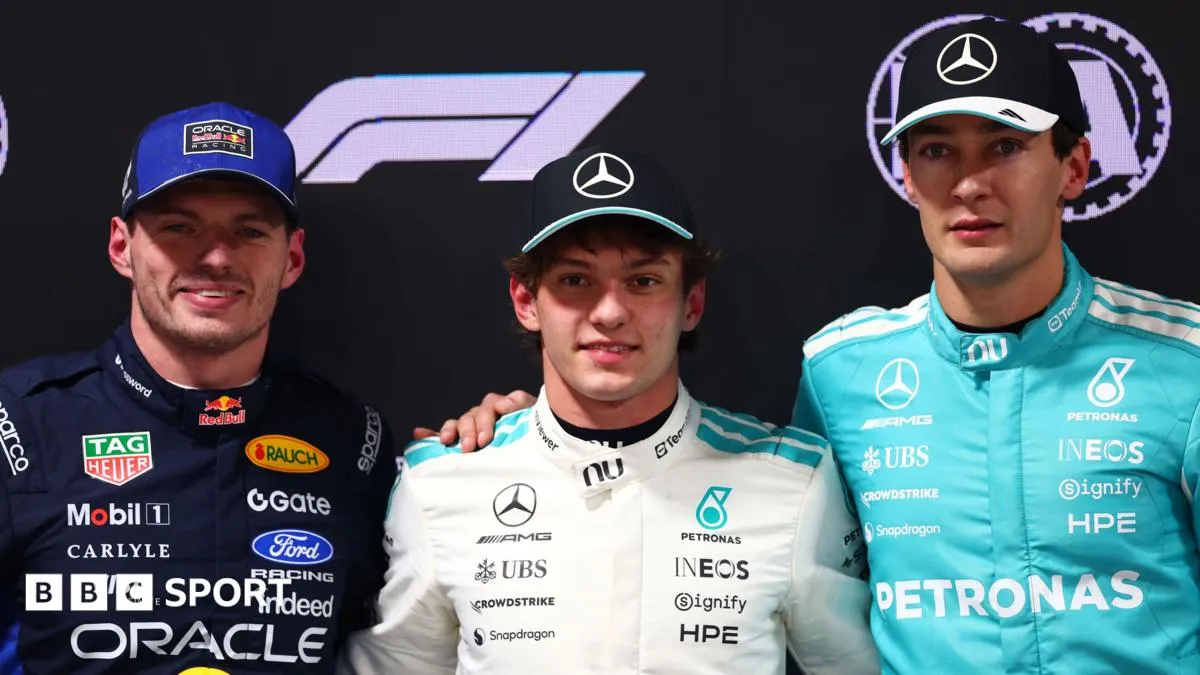
George Russell and Max Verstappen will start the Las Vegas Grand Prix from the front row, with their long-running feud resurfacing to add spice to the race. For decision-makers in sport, media and sponsorship, the pairing is a reminder that personality-driven rivalries now drive broadcast value, ticket demand and brand exposure, while raising first-lap risk for the teams paying the bills.
The George Russell-Max Verstappen feud is back, and Las Vegas is the stage. The two will start the race from the front row, side by side at the sharp end of the grid, which means the argument that has been simmering between them now has a physical address: the first corner of a street circuit lined with walls. That is the entire setup in one sentence, and it is enough to make this the race to watch.
The line that has come to define the rivalry is blunt: "Somebody has to stand up to that guy." It is the kind of quote that does not need a press release. It surfaced again in Las Vegas, per BBC Sport, adding spice to a race where the two will line up first and second. For anyone who has watched these two trade barbs, the pattern is familiar: respect on the record, friction underneath, and a willingness on both sides to let the other know exactly where the line is.
For context on why a front row matters more than a headline: in Formula 1, qualifying is not a beauty contest, it is a negotiation with the track. The front row gets clean air, the inside line into turn one, and the strategic freedom to control the pace of the cars behind. On a street circuit like Las Vegas, where the walls are close, the surface is slick and the race runs at night in cool temperatures, that advantage compounds. Track position is worth more than raw pace because overtaking is expensive: dirty air costs downforce, and a driver stuck behind a rival burns tyres and time trying to find a way past.
Now add the personal dimension. Russell and Verstappen are not teammates. Russell leads Mercedes; Verstappen leads Red Bull. They do not share a garage, a strategist or a set of engineers, which means there is no internal mechanism to cool things down. When two drivers on the same team fall out, the team principal can sit them in a room. When two drivers on rival teams fall out, the only referee is the stewards' panel, and the only currency is points. That is what makes this different from a normal on-track battle: every inch of asphalt becomes a statement.
The commercial logic underneath is just as sharp. Formula 1's commercial rights are held by Liberty Media, and the sport's growth in the United States has been the single biggest driver of its valuation over the past several years. Rivalries are the fuel. A clean, polite championship fight is good for the purists; a fight with a grudge in it is good for the broadcast, the clips, the group chats and the sponsors who pay for the exposure. Las Vegas, for context, is F1's most overtly commercial stop: a night race on a street circuit carved around the Strip, staged with the hospitality and sponsorship apparatus of a major American sporting event. The sport did not build that to host a procession.
There is a harder, less glamorous layer too. Prize money in F1 is distributed largely according to where teams finish in the constructors' championship, and driver contracts, sponsor renewals and seat security all move with results. A front-row start is worth real money to a team's season, and a collision between two front-row rivals is worth real money in the other direction: damaged cars, lost points, and a stewards' investigation that can follow a driver into the next race weekend. Both Russell and Verstappen know this. Both also know that the other knows it. That is the game.
For the executives who run the sport and the brands attached to it, the second-order effects are the interesting part. A rivalry between two front-row starters does three things at once. It raises the value of the race itself, because viewers tune in for the confrontation and stay for the outcome. It raises the risk profile of the teams involved, because a first-lap incident can wipe out a weekend's worth of development and points in three seconds. And it raises the value of the individual drivers as commercial properties, because personality travels further than lap times. The drivers are the product now, not just the cars.
What to watch is not simply who wins. It is how the first lap is driven, whether either driver backs out of a gap that a teammate would have taken, and how the stewards read it if they do not. A feud that resurfaces in Las Vegas does not stay in Las Vegas; it follows the pair to the next round, into the press conferences, into the contract talks, and into the highlight reels that the sport's next media rights negotiation will be priced against. The front row is the story. The first corner is where it gets settled.
This story's Key Insights and Take-aways are locked.
Create a free account to unlock Executive Actions for one credit.
Register to UnlockAlways free for Executives Club members. Join the Club
More in Entertainment

GTA 6 banks $3.8bn in one day, torching every launch record
One game just out-earned every video game launch and every single-day film box office haul in history, and the fallout lands on every media CEO's forecast.

GTA VI Racked Up $3.79 Billion in a Single Day, Topping Every Film Ever
A 13-year wait produced a $3.79 billion day, more than any movie has made in its entire run, and it resets the launch math for every studio, streamer, and brand chasing the same attention.

GTA 6 sells 32.5M pre-sales and $3.79B day one, torches 13-year record
Rockstar's sequel didn't just beat Grand Theft Auto V's 13-year-old benchmark; it reset what a launch can be, with 32.5 million pre-sale copies and $3.79 billion in a single day.