
Warren Buffett's Son Has Given Ukraine $1.5 Billion Across 28 Visits
Howard Buffett, the farmer and Berkshire Hathaway chairman, is Ukraine's largest private donor, and his 28 trips reveal a playbook that government checks cannot replicate.
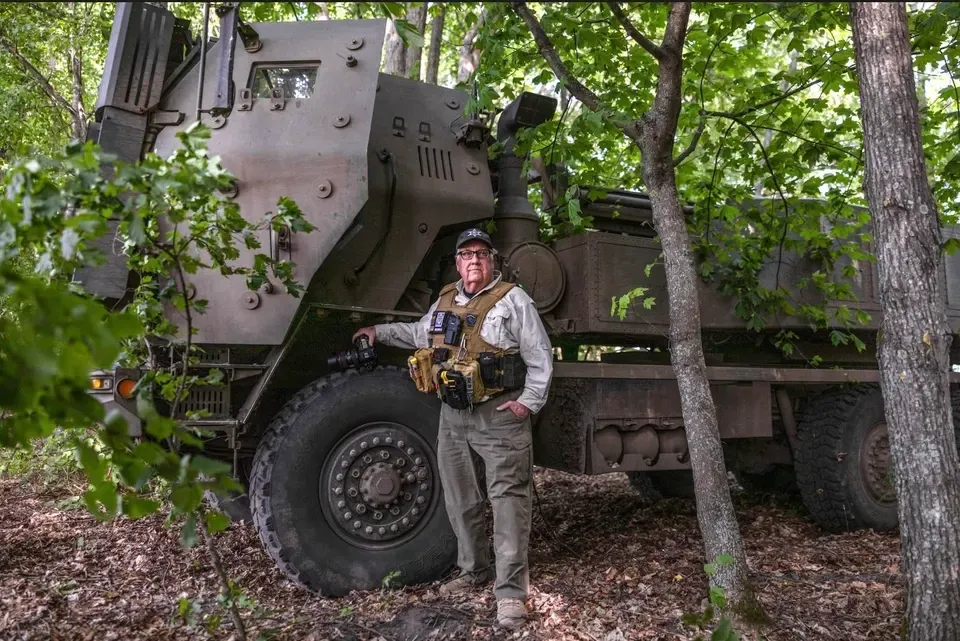
Howard Buffett, the farmer and chairman of Berkshire Hathaway, has made 28 visits to war-torn Ukraine and donated more than $1.5 billion to help the country's people, making him Ukraine's largest private donor. For executives and boards, his approach is a case study in how repeated personal presence, not just capital, buys the trust and deployment speed that institutions structurally cannot.
Howard Buffett has made 28 visits to war-torn Ukraine and donated more than $1.5 billion to help the country's people, according to Forbes. That combination, relentless presence plus a billion-dollar-plus checkbook, is what makes the farmer and chairman of Berkshire Hathaway the largest private donor to Ukraine. It is a title built less on one grand gesture than on repetition. He has also formed great friendships there, which in a war zone is not a soft detail. It is the mechanism.
The $1.5 billion is the number that will get quoted, so start there. Private philanthropy at that scale is rare anywhere. Directed at a single country in the middle of a war, it is close to unheard of. Government assistance to Ukraine from the United States and Europe has run into the tens of billions, so one family's contribution is not going to fund a war. What it can do is move. Private money typically skips the procurement layers, the committee approvals and the multi-year budget cycles that shape official aid, which means a foundation can push funds to a hospital, a farm cooperative or a food program in weeks rather than quarters. Speed, in a country where infrastructure is being destroyed faster than it can be rebuilt, is the product.
Then there is the man himself. Howard Buffett is one of Warren Buffett's children, and the Buffett name carries a specific kind of weight: it signals patient capital, plain-spoken pragmatism and a fortune that has been publicly earmarked for giving rather than dynasty. Warren Buffett has spent years pledging to give away the overwhelming majority of his wealth, and Berkshire Hathaway, the conglomerate he built, sits on one of the largest cash reserves in corporate history. That context shapes how the younger Buffett's Ukraine work gets read. He is not a financier buying influence or a celebrity chasing a photo op. He is a farmer with a famous last name and a long record of writing checks that do not come with a ribbon-cutting.
The 28 visits are the part worth studying. Anyone with a foundation and a wire transfer can send money to a war zone. Very few donors go back 28 times. Presence does something capital cannot: it builds the local relationships that tell a donor which organizations actually deliver, which officials are trustworthy and which projects are quietly falling apart. The friendships Buffett describes are the infrastructure underneath the grants. In practice, that means his money can be deployed through people he has known for years rather than through intermediaries he met last quarter, and it means he hears about problems before they become line items in a report.
That model has limits, and honest donors say so. Conflict-zone philanthropy carries real risk: funds can be diverted, goods can be stolen, and the verification that large institutional donors build into their grants is expensive and slow. Private foundations often trade some of that rigor for speed. The trade-off is not free, and it is the reason most large philanthropies, historically, have preferred to route money through established multilateral organizations rather than directly to the ground. Buffett's approach sits at the other end of that spectrum, and the fact that he keeps returning is itself a form of oversight.
Zoom out and the story is about a shift in how big money shows up in geopolitics. Private donors, family offices and foundations now operate in spaces that used to belong almost entirely to states, and they bring different incentives. They can be faster and more flexible. They can also be less accountable, harder to coordinate and prone to duplicating what someone else is already funding. For a country absorbing a war, the ideal is not private money replacing public money. It is private money doing the things public money structurally cannot.
For executives and boards watching this, the Buffett playbook is portable. Pick a lane narrow enough to master. Go deep rather than wide. Show up in person, repeatedly, because trust is the scarce asset in any market where the rules are unstable. And build the measurement in from the start, so the story you tell about your giving is one you can defend line by line. The $1.5 billion is the headline. The 28 visits are the strategy.
This story's Key Insights and Take-aways are locked.
Create a free account to unlock Executive Actions for one credit.
Register to UnlockAlways free for Executives Club members. Join the Club
More in Business

GTA VI hauls $3.79bn in one day, out-earning every film ever made
Rockstar's own estimate covers a single Thursday plus a record 32.5m prerelease units, and it lands on every board weighing IP concentration, pricing power and launch risk.

FBI's crime database breached again, the second hack in months
CNN reports hackers hit the National Crime Information Center, the shared backbone of US policing, and the repeat timing is the part every security team should study.

S&P 500 Enters Correction, Down 10% From Its High on AI Worries
The index's slide past the 10 percent line is a symbolic verdict on investor mood, and the AI trade that powered the rally is now the thing testing it.